Numerical simulation of electric furnaces for green and efficient melting separation of vanadium-titanium magnetite: A review of research progress and future perspectives
-
摘要: 在钢铁行业绿色低碳转型发展背景下,钒钛磁铁矿的非高炉冶炼技术,特别是“直接还原-电炉熔分”短流程工艺,成为实现资源高效综合利用与节能减排的重要路径。电炉(包括矿热炉SAF、电弧炉EAF及新兴的电熔炉ESF)作为该工艺的核心熔炼装备,其内部涉及电磁、传热、流动、化学反应等多物理场强耦合过程。由于极端高温环境难以直接原位观测,因此计算流体力学(CFD)与磁流体动力学(MHD)等数值模拟方法已成为揭示电炉内部机理、优化工艺参数和进行装备放大的关键手段。系统梳理并综述了近年来电炉数值模拟领域的研究进展:重点探讨了矿热炉(SAF)多物理场耦合建模、电弧炉(EAF)电弧等离子体MHD模拟、废钢与直接还原铁(DRI)熔化过程及精炼期脱碳反应等关键环节的数值模拟成果。在此基础上,结合钒钛磁铁矿熔分工艺特点,对电熔炉(ESF)数值仿真技术的未来发展方向进行了展望。可为钒钛磁铁矿绿色高效熔分技术的研发与产业化发展提供参考。Abstract: Against the backdrop of the green and low-carbon transition of the steel industry, non-blast-furnace smelting technologies for vanadium-titanium magnetite, particularly the short-flow process of direct reduction electric furnace melting/separation, has emerged as an important route for achieving efficient comprehensive resource utilization, energy conservation, and emission reduction. Electric furnaces, including the submerged arc furnace (SAF), electric arc furnace (EAF), and the emerging electro-smelting furnace (ESF), serve as the core smelting units in this process. Their internal operation involves strongly coupled multi-physical-field phenomena, including electromagnetics, heat transfer, fluid flow, and chemical reactions. Owing to the extremely high-temperature environment, direct in situ observation remains highly challenging. Consequently, numerical simulation approaches such as computational fluid dynamics (CFD) and magnetohydrodynamics (MHD) have become essential tools for elucidating furnace-internal mechanisms, optimizing process parameters, and scaling up equipment design. This paper systematically reviewed recent advances in numerical simulation of electric furnaces, with particular emphasis on multi-physics coupled modeling of SAF, MHD simulation of arc plasma in EAF, and numerical studies on key stages such as scrap and direct reduced iron (DRI) melting as well as decarburization during the refining period. On this basis, and in light of the specific characteristics of vanadium-titanium magnetite melting/separation processes, future development directions for numerical simulation technologies of ESF were further discussed. This study is expected to provide useful references for the development and industrial application of green and efficient melting/separation technologies for vanadium-titanium magnetite.
-
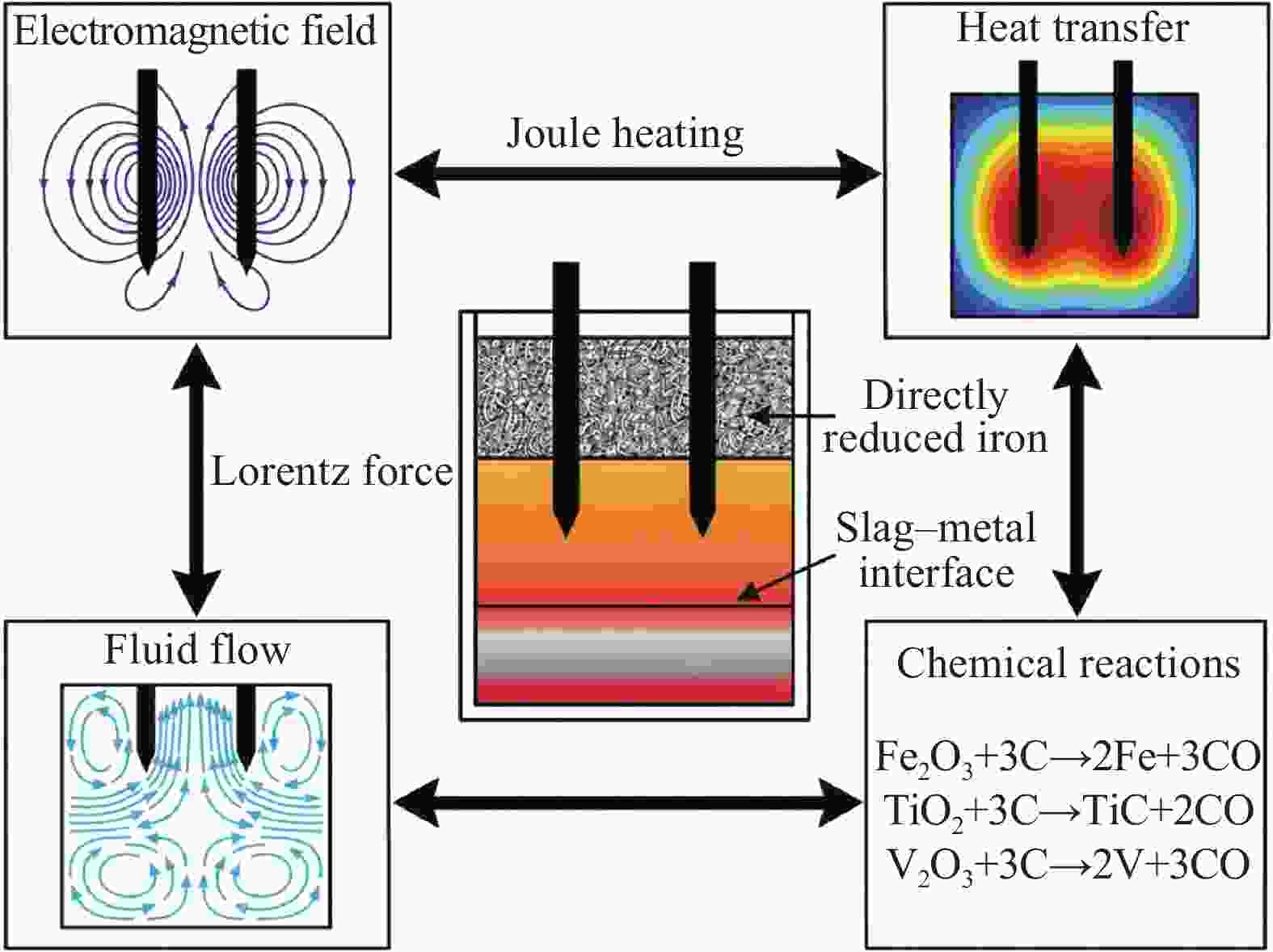
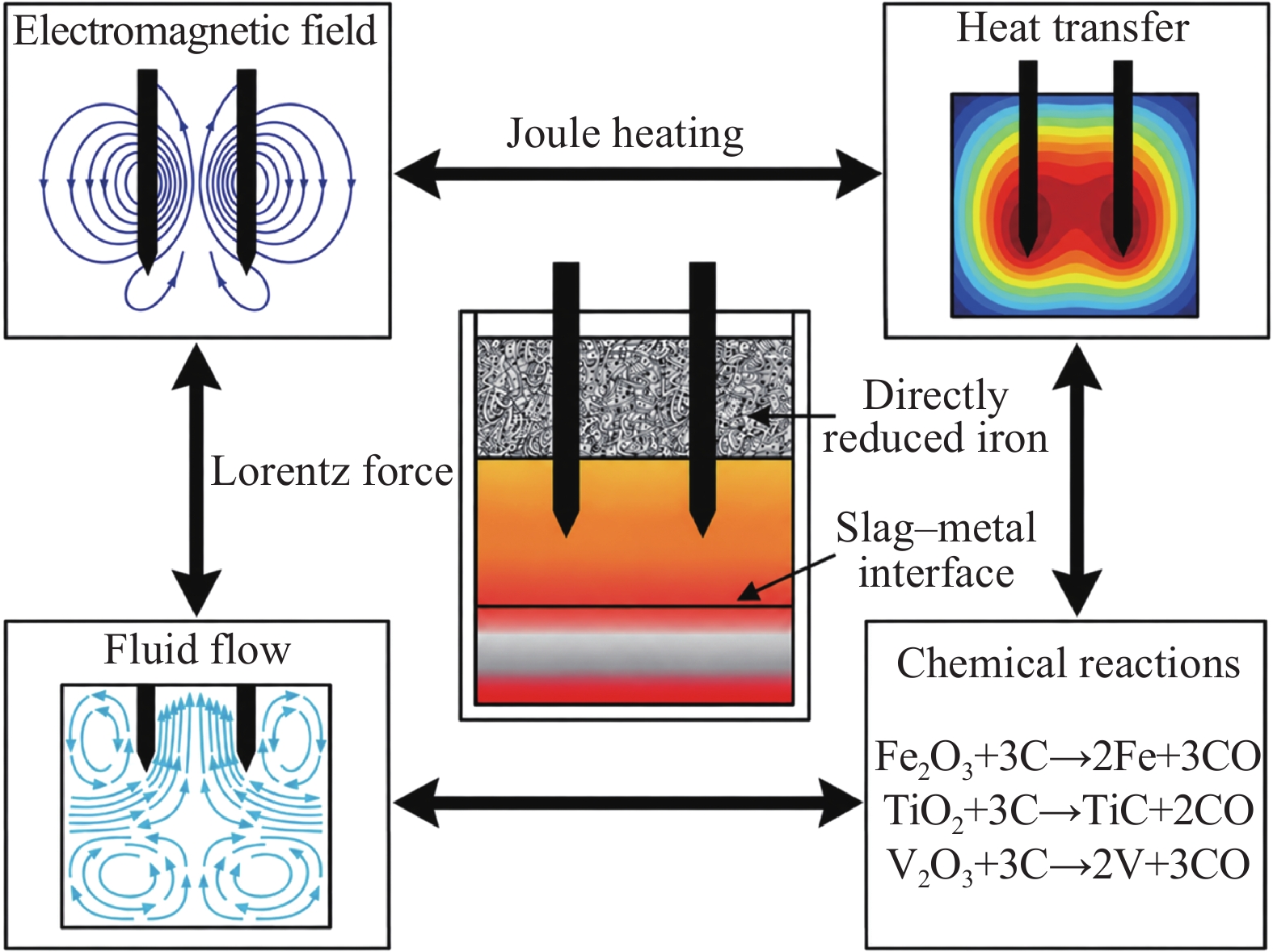
图 1 电炉内多物理场耦合关系示意
Figure 1. Schematic diagram of the multiphysics coupling relationships in the electric furnace
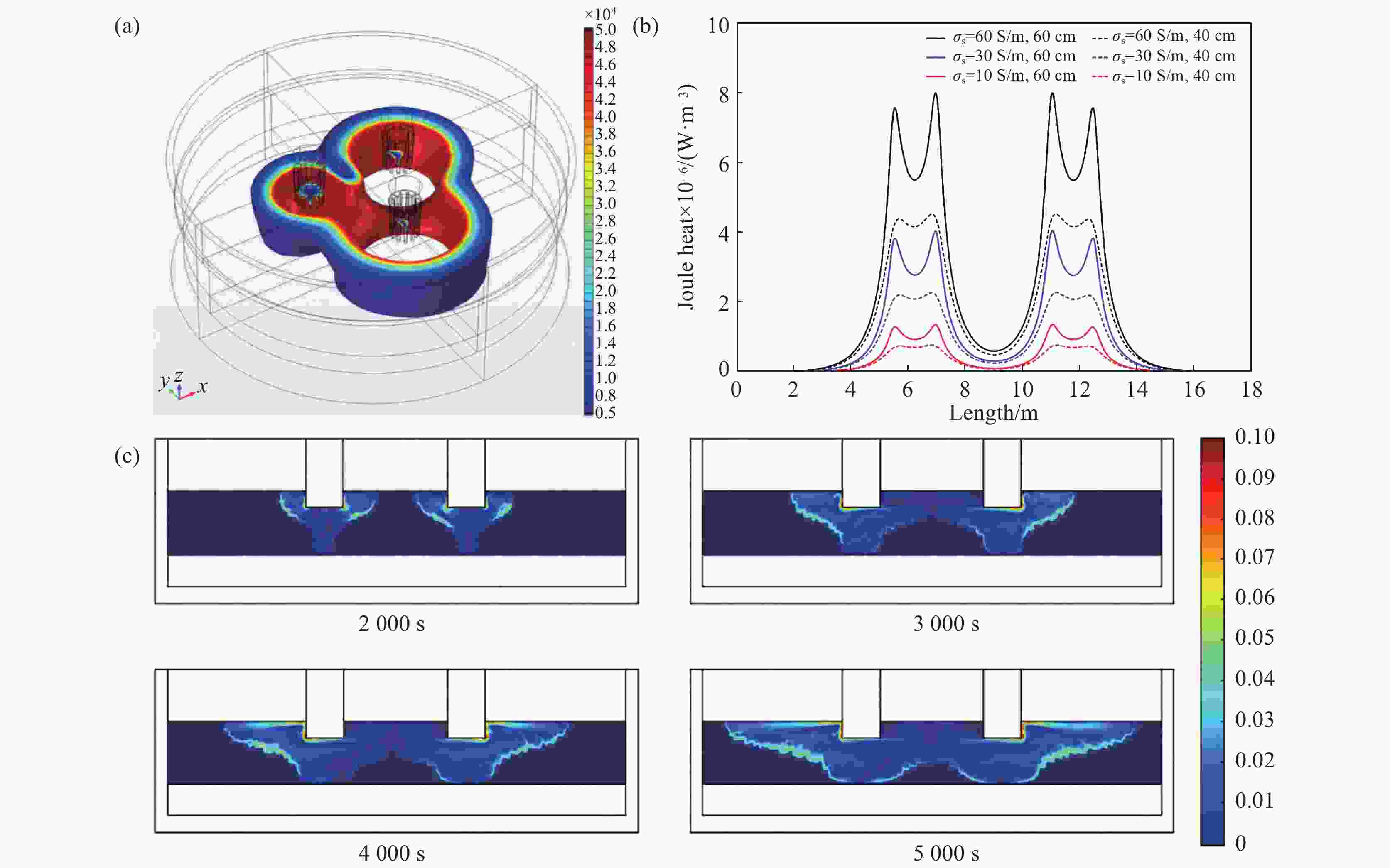
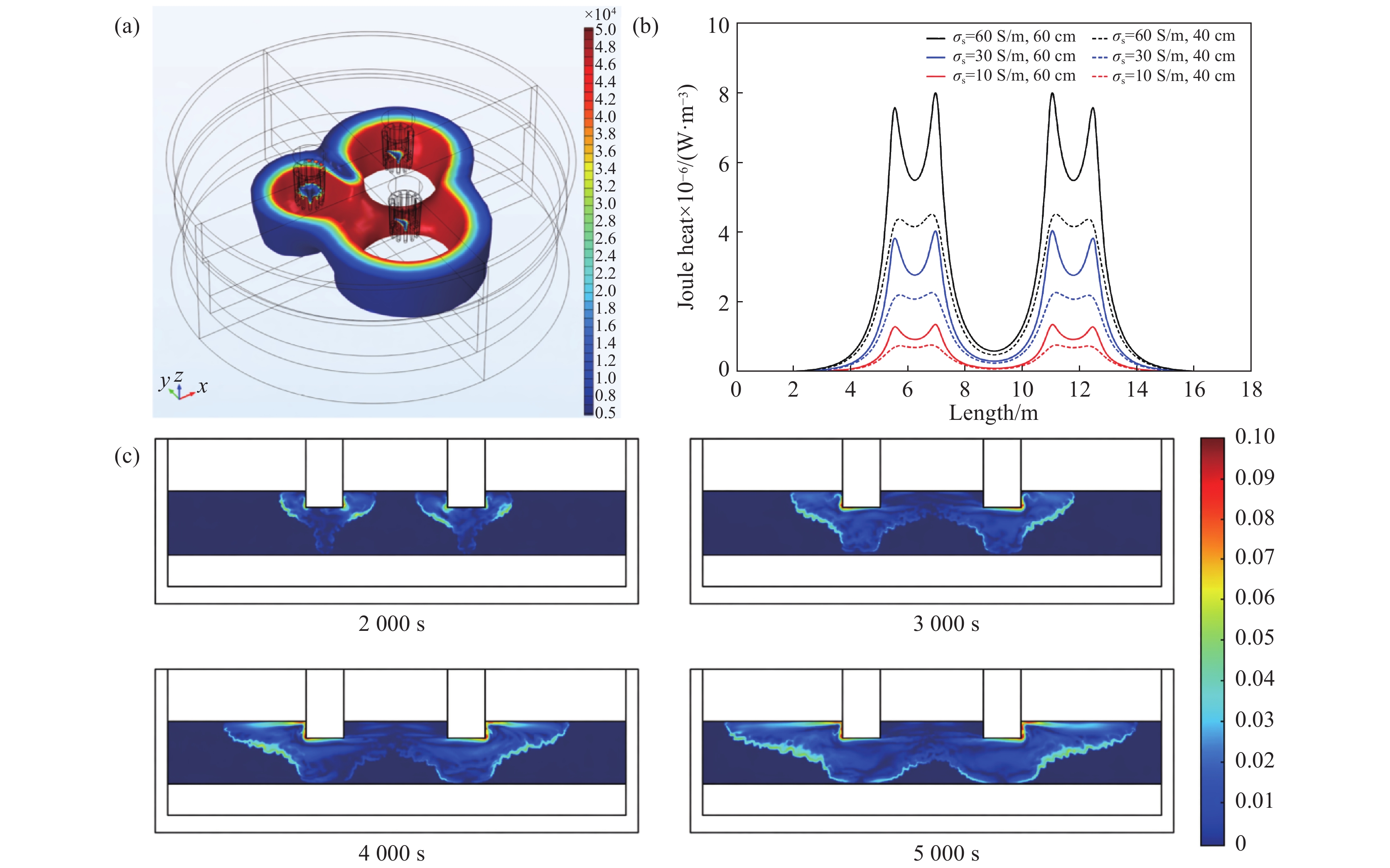
图 2 电炉内焦耳热分布及熔池流动演化的典型数值模拟
(a) 0.007 s时刻的焦耳热等值面(W/m3);(b) 焦耳热分布随电极浸入深度和炉渣电导率的变化;(c)
2000 、3000 、4000 s和5000 s时刻炉渣区域的速度分布(m/s)[22]Figure 2. Typical numerical simulation of Joule-heating distribution and melt-flow evolution in electric furnaces
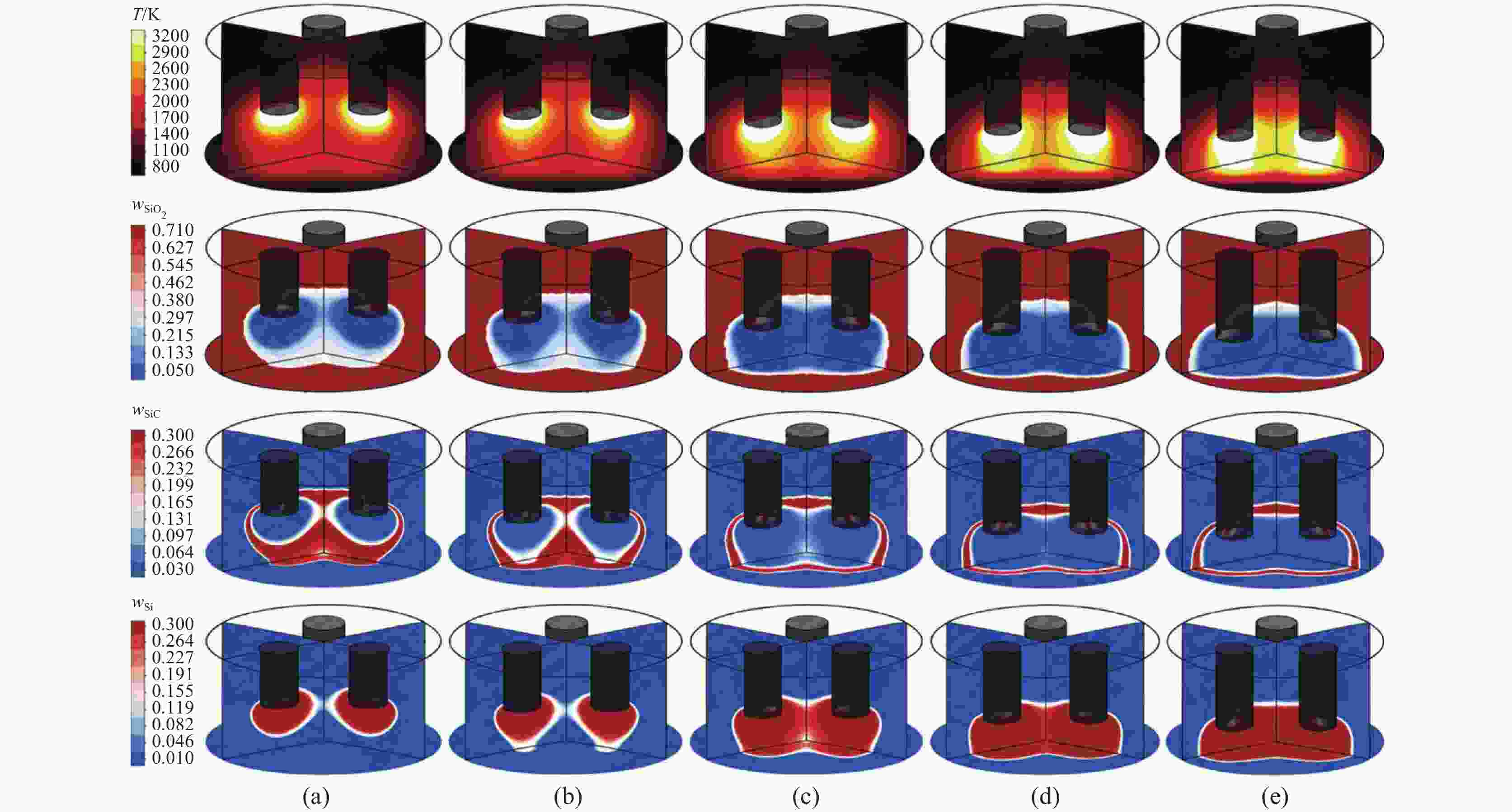
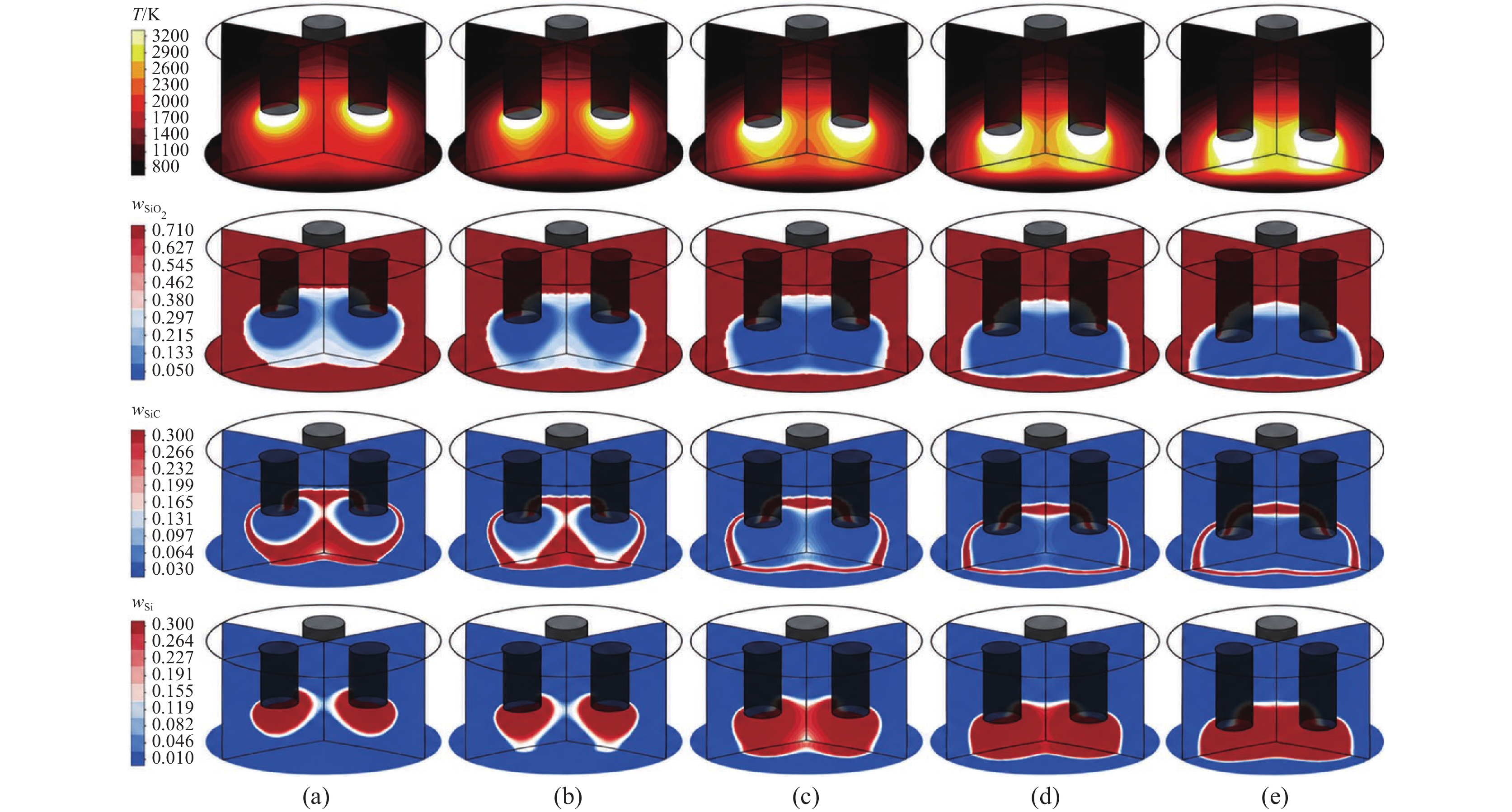
图 3 不同电极插入深度条件下的温度场与炉芯组分场
Figure 3. Temperature field and core components field at different electrode immersion depth
(a) l1 = 1.6 m,(b) l2 = 1.8 m,(c) l3 = 2.0 m,(d) l4 = 2.2 m,(e) l5 = 2.4 m[30]
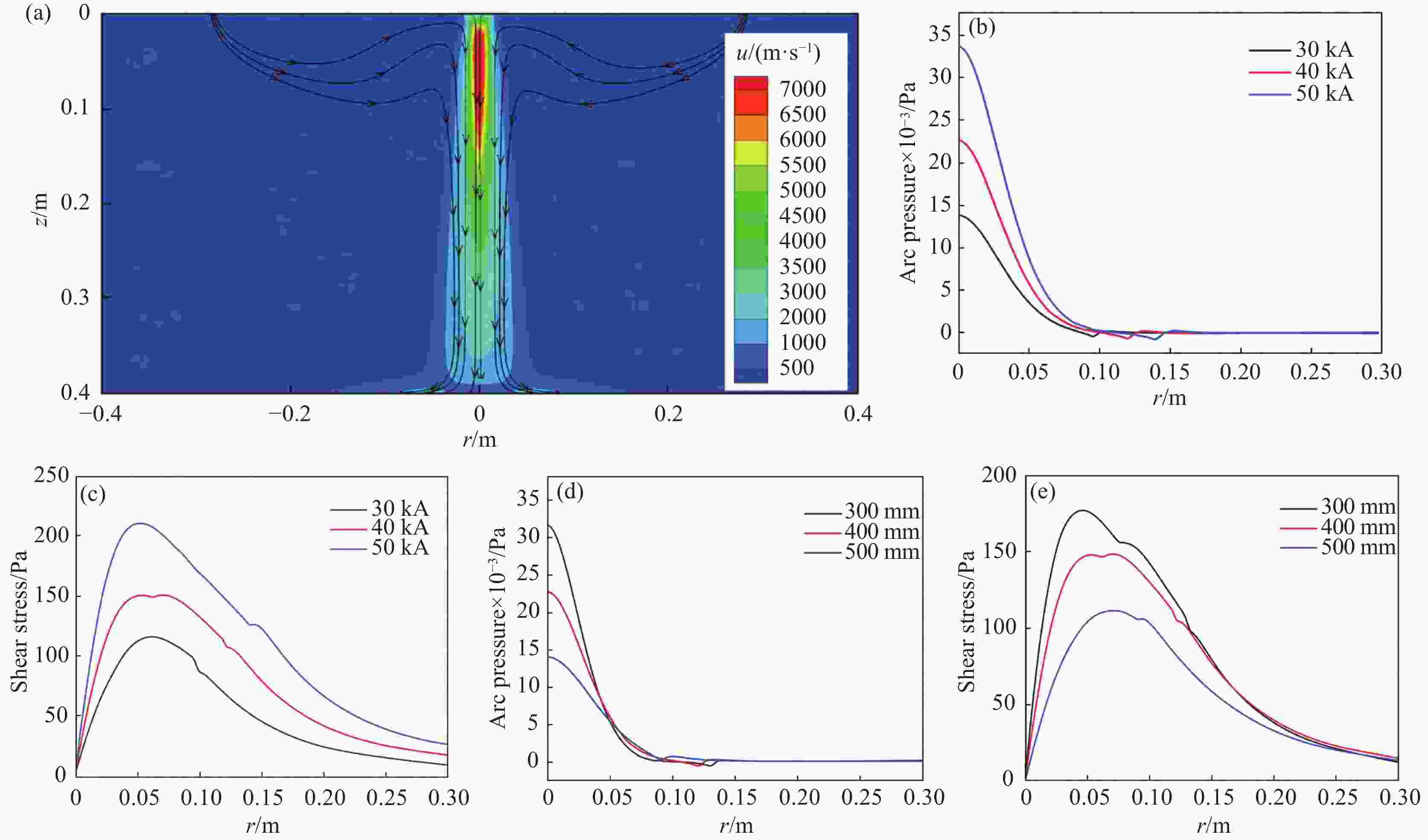
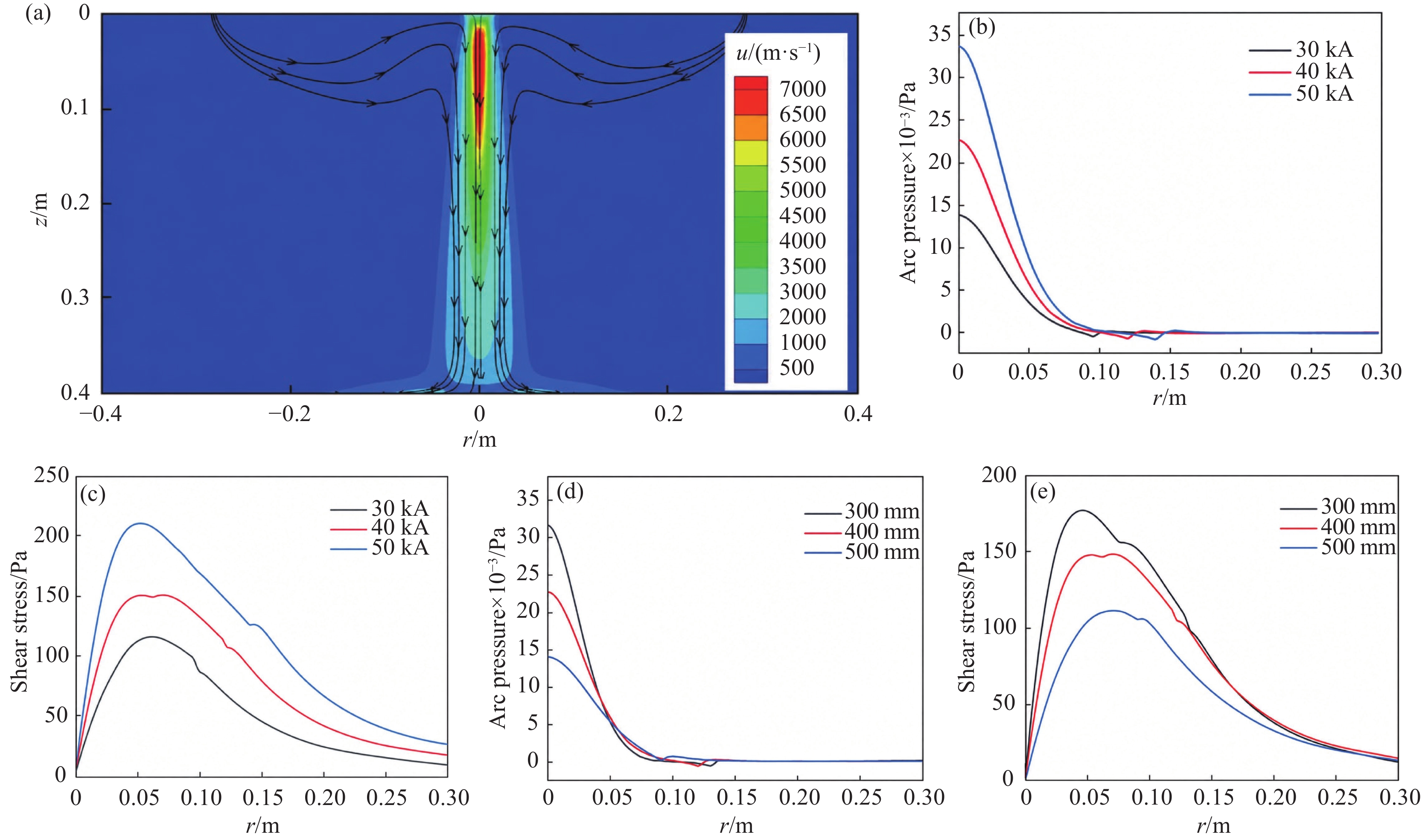
图 4 电弧等离子体流动及电弧压力和气体剪切应力的数值模拟
(a) 40 kA-400 mm工艺条件下电弧速度分布;(b)(c) 不同电流大小对电弧压力和气体剪切力的影响;(d)(e) 不同弧长对电弧压力和气体剪切力的影响[10]
Figure 4. Numerical simulation of arc-plasma flow, arc pressure, and gas shear stress
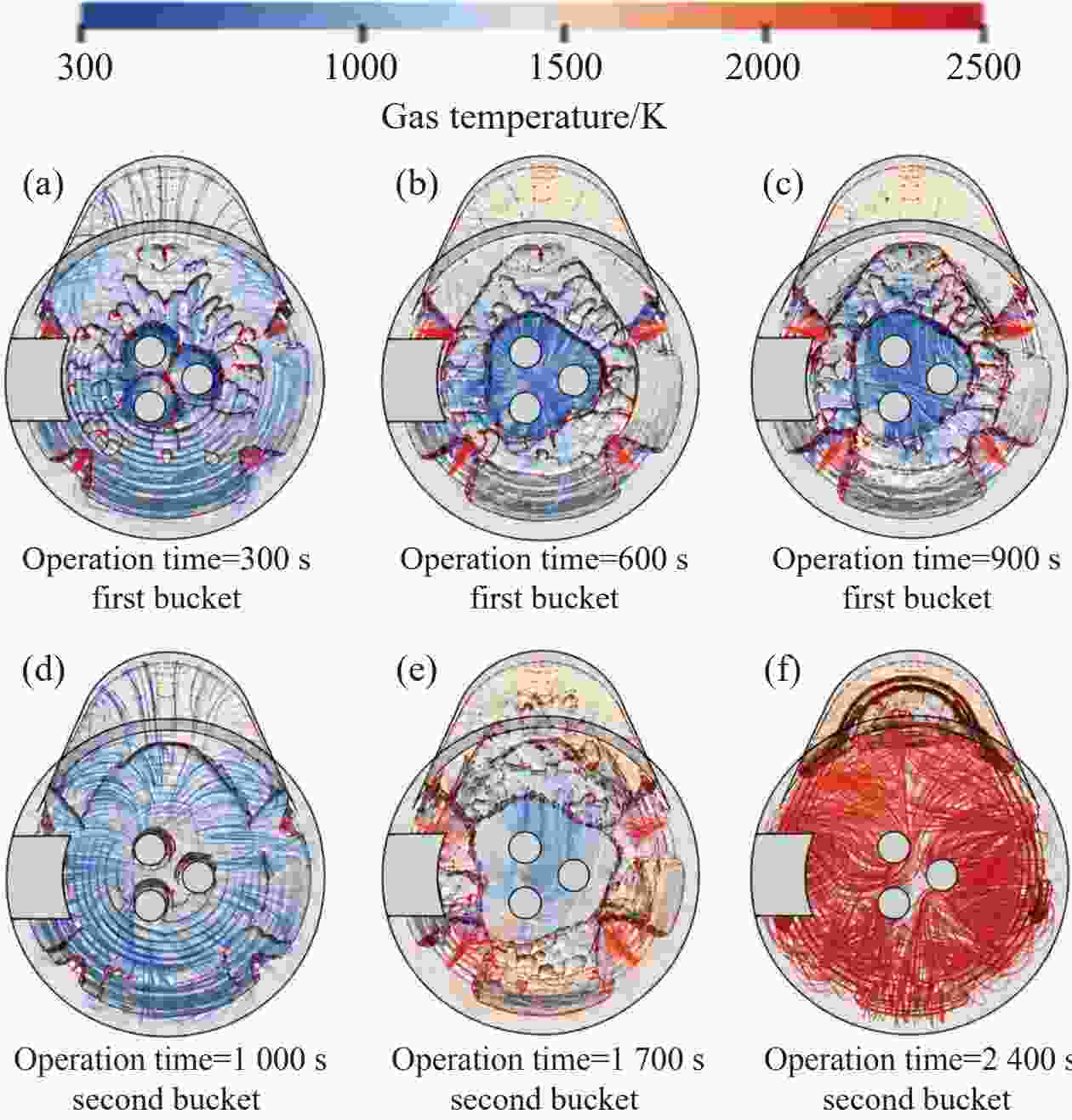
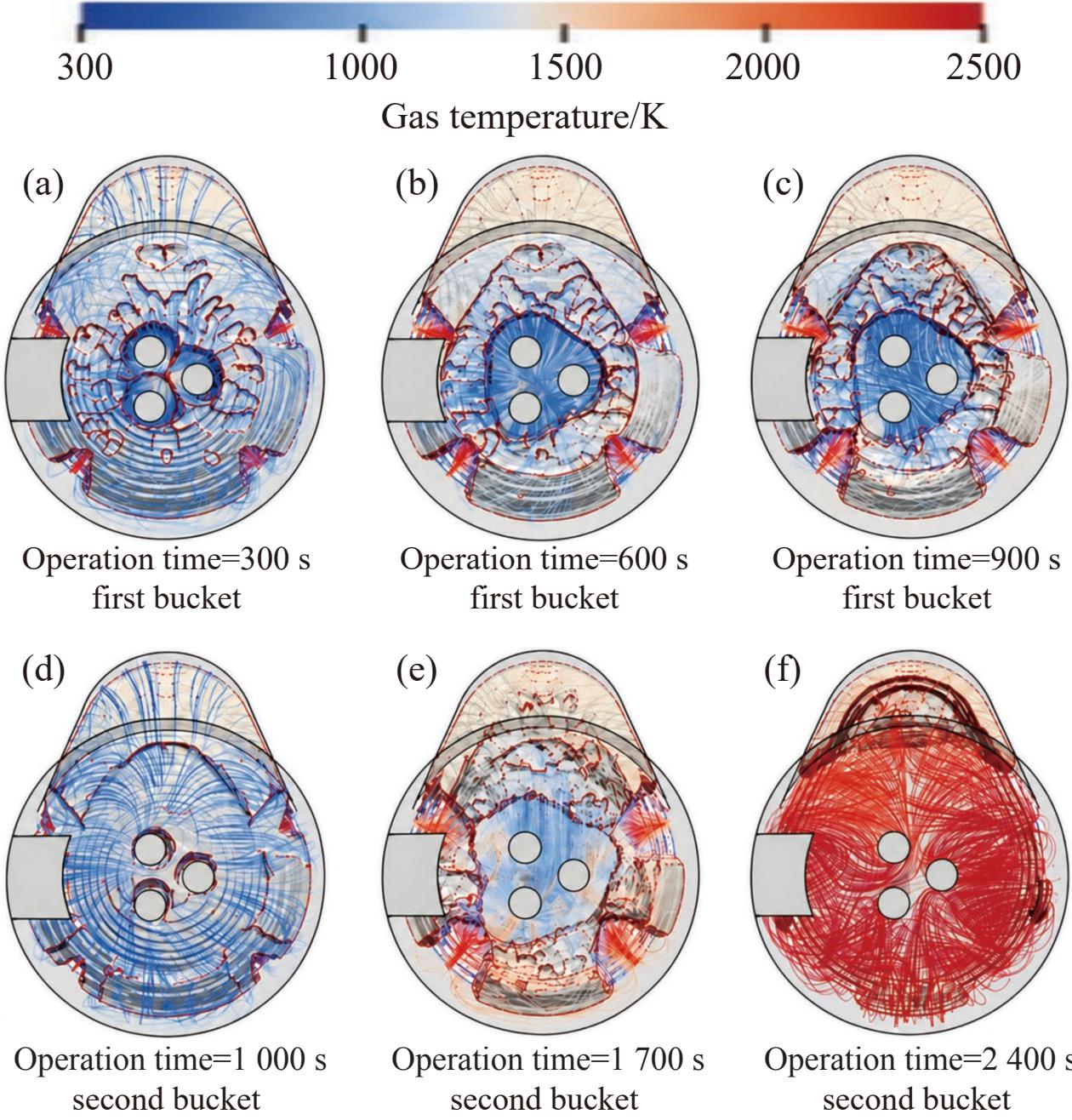
图 5 烧嘴流线分布
(a)(b)(c) 第一批炉料冶炼过程中300、600 s和900 s时的气体流线分布;(d)(e)(f) 第二批炉料冶炼过程中
1000 、1700 s和2400 s时的气体流线分布,流线颜色表示气体温度[25]Figure 5. Streamlines from burners
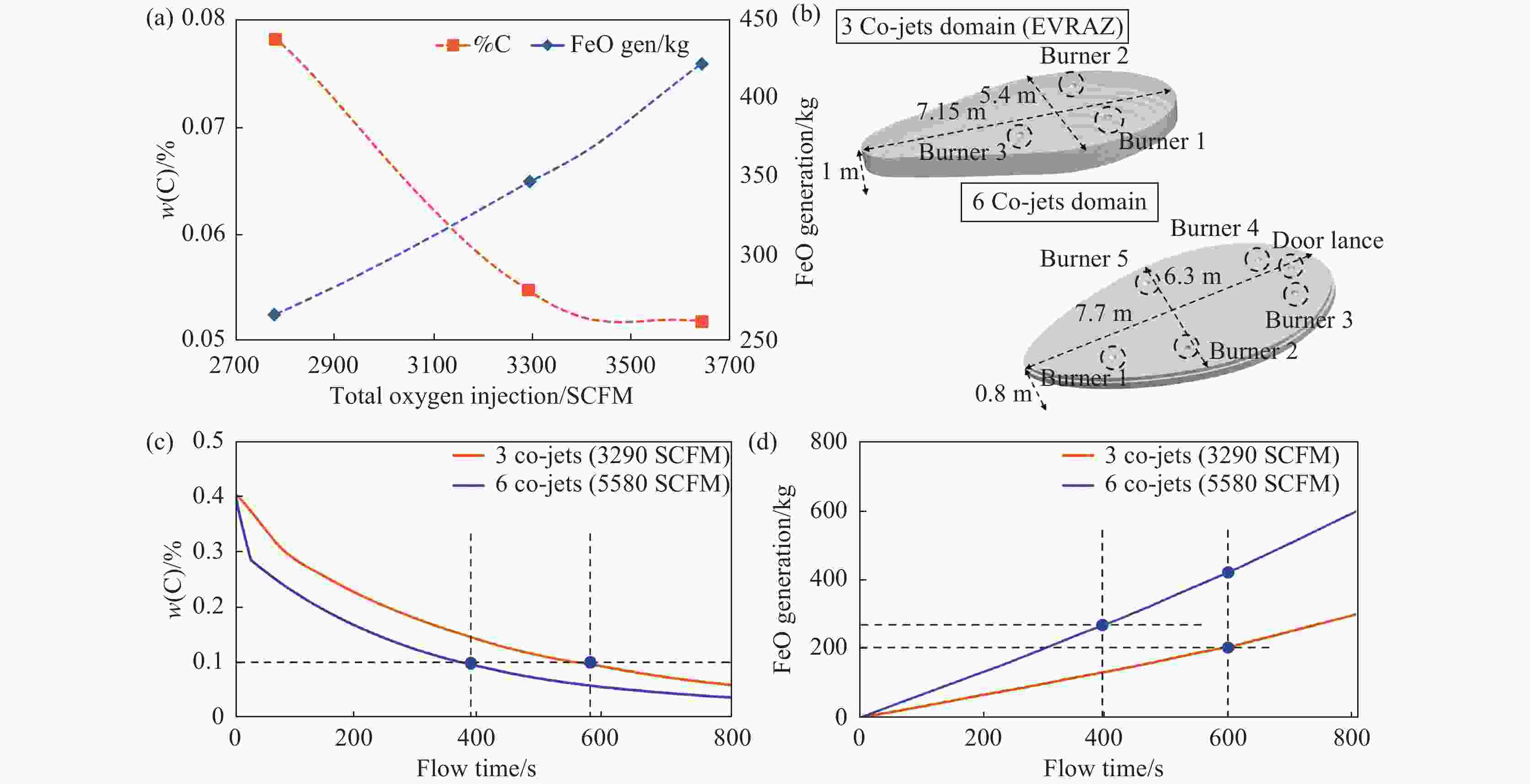
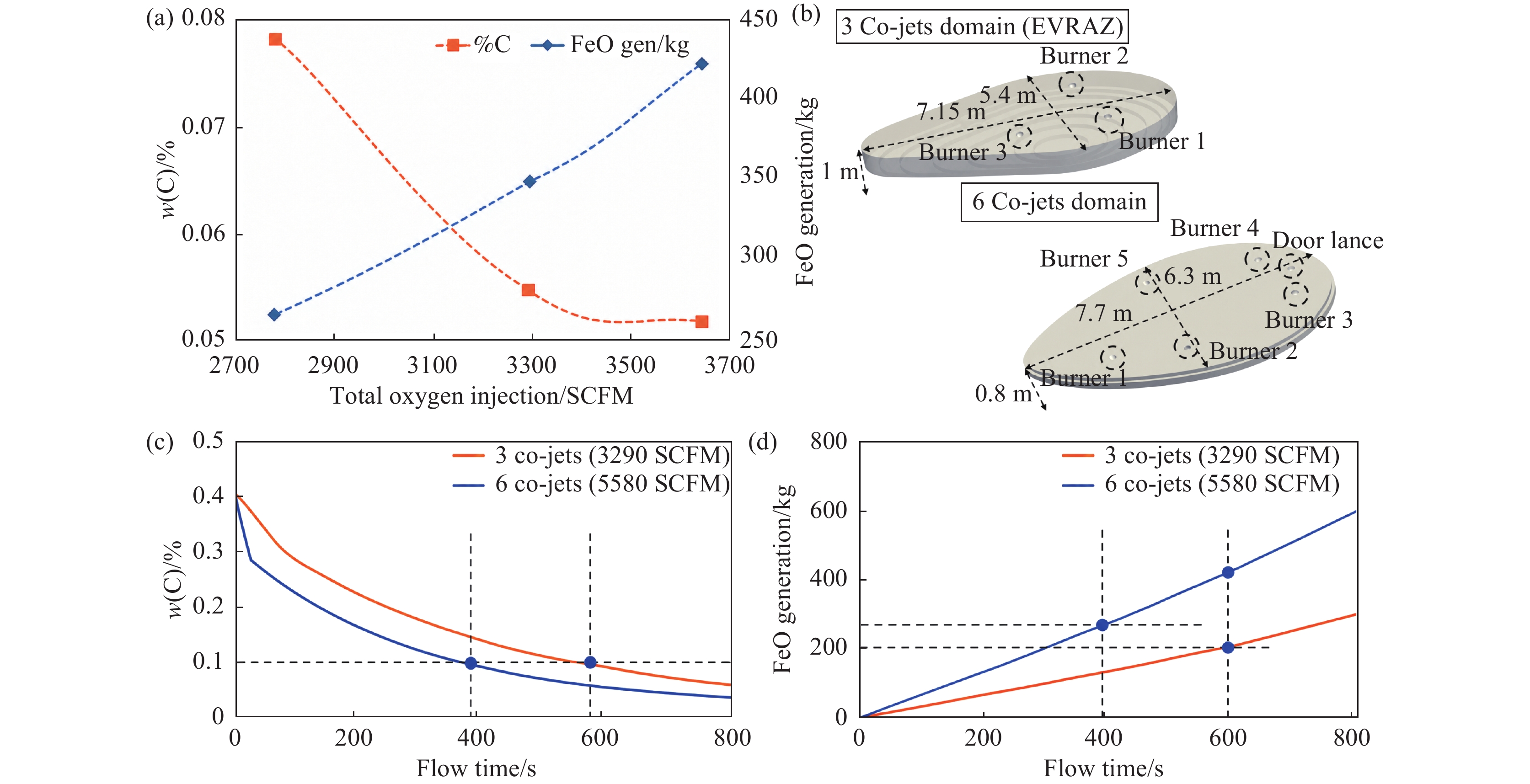
图 6 氧气喷吹方式对电炉脱碳与FeO生成行为的数值模拟
(a) 在900 s时脱碳与FeO生成随氧气注入量的变化; (b) 具有三个集束射流烧嘴和六个集束射流烧嘴、显示相似几何构型的CFD计算域; (c) 在碳含量为0.1%时评估的脱碳与FeO生成情况[38]
Figure 6. Numerical simulation of the effects of oxygen-jet configuration on decarburization and FeO generation in electric furnaces
表 1 钒钛磁铁矿非高炉熔分主要工艺路线对比
Table 1. Comparison of the main process routes for non-blast-furnace smelting separation of vanadium-titanium magnetite
Process route Reductant Reduction temperature/℃ Metallization degree/% Main advantages Main challenges Rotary kiln-electric furnace
route (RK-EF)Solid coal 1000 ~1100 60~80 Mature technology and relatively high level of
industrial applicationHigh carbonemissions, relatively
low reduction efficiencyRotary hearth furnace-electric
furnace route (RHF-EF)Solid carbonaceous
reductant1200 ~1350 70~85 Rapid reduction and broad
adaptability to raw materialsHigh pellet-strength requirement,
severe refractory wearHydrogen-based shaft furnace-electric furnace route (SFEF) Natural gas/
hydrogen850~ 1050 85~95 Low carbon emissions and
high-quality DRIDependence onclean gas supply,
relatively high capital cost 下载: 导出CSV
表 2 电炉数值模拟中常用多相流处理方法对比
Table 2. Comparison of common multiphase flow treatment methods used in electric furnace numerical simulations
Method Key features Typical applications Volume of Fluid
(VOF) methodCaptures interfaces between immiscible phases by solving the phase volume-fraction equations; particularly suitable for well-defined free surfaces and phase interfaces Slag-metal interfaces, free surfaces, jet-induced
cavities, and large-scale interfacial deformationEnthalpy-porosity
methodModels solid-liquid phase change based on the enthalpy balance and liquid fraction, without explicitly tracking the melting/solidification front Local melting of scrap, DRI/HBI melting,
and solid–liquid phase-change regionsEuler-Lagrange
approachTreats the continuous phase in an Eulerian framework while tracking dispersed particles or bubbles individually in a Lagrangian framework; most suitable for relatively dilute dispersed phases Transport of dispersed DRI particles, injected particles/droplets, and trajectories of dispersed gas bubbles CFD-DEM
couplingCouples continuum fluid-flow calculations with discrete particle dynamics, allowing particle–particle and particle-wall contact, collision, and packing to be resolved Solid burden or scrap packing, charging, settling,
collapse, and particle-contact processes
下载: 导出CSV
-
[1] Rippy K, Bell R T, Leick N. Chemical and electrochemical pathways to low-carbon iron and steel[J]. npj Materials Sustainability, 2024, 2: 33. doi: 10.1038/s44296-024-00036-6 [2] 高建军, 迪林, 王彬, 等. 钒钛磁铁矿金属化球团电炉熔分钒钛竞争还原机理[J]. 钢铁钒钛, 2025, 46(2): 112-117. Gao Jianjun, Di Lin, Wang Bin, et al. Competitive reduction mechanism of vanadium and titanium of vanadium-titanium magnetite metallized pellets smelted by electric arc furnace[J]. Iron Steel Vanadium Titanium, 2025, 46(2): 112-117. doi: 10.7513/j.issn.1004-7638.2025.02.016Gao Jianjun, Di Lin, Wang Bin, et al. Competitive reduction mechanism of vanadium and titanium of vanadium-titanium magnetite metallized pellets smelted by electric arc furnace[J]. Iron Steel Vanadium Titanium, 2025, 46(2): 112-117. doi: 10.7513/j.issn.1004-7638.2025.02.016 [3] Zhang Shiqiu, Yang Han, Xu Geng, et al. Review on utilization of Ti-bearing blast furnace slag from the past decade: Whole-component utilization and Ti component recovery[J]. Chemical Engineering Journal, 2025, 514: 163115. doi: 10.1016/j.cej.2025.163115 [4] Chen Liang, Deng Guozhi, Wang Zhenghao, et al. Hydrogen-based direct reduction of vanadium-titanium magnetite raw ore: Process optimization and mechanism insights[J]. Chemical Engineering Journal, 2025, 505: 159152. doi: 10.1016/j.cej.2024.159152 [5] Huang Yun, Tang Jue, Chu Mansheng, et al. Modeling and carbon emission assessment of novel low-carbon smelting process for vanadium-titanium magnetite[J]. Metals, 2025, 15(4): 461. doi: 10.3390/met15040461 [6] Liu Hongqiang, Manojlovic V, Wang Shiwei, et al. An integrated hydrogen metallurgy route of vanadium-titanium magnetite for efficient recovery of Fe, V and Ti[J]. Minerals, 2026, 16(2): 177. doi: 10.3390/min16020177 [7] Souza Filho I R, Springer H, Ma Yan, et al. Green steel at its crossroads: Hybrid hydrogen-based reduction of iron ores[J]. Journal of Cleaner Production, 2022, 340: 130805. doi: 10.1016/j.jclepro.2022.130805 [8] Abadi M M, Tang H, Rashidi M M, et al. A review of simulation and numerical modeling of electric arc furnace (EAF) and its processes[J]. Heliyon, 2024, 10(11): e32157. doi: 10.1016/j.heliyon.2024.e32157 [9] Visuri V V, Echterhof T. Electric arc furnace steelmaking[J]. Metals, 2025, 15(12): 1285. doi: 10.3390/met15121285 [10] 姚聪林, 朱红春, 姜周华, 等. 电弧炉内长电弧等离子体的数值模拟[J]. 工程科学学报, 2020, 42(S): 60-67. Yao Conglin, Zhu Hongchun, Jiang Zhouhua, et al. Numerical simulation of a long arc plasma in an electric arc furnace[J]. Chinese Journal of Engineering, 2020, 42(S): 60-67.Yao Conglin, Zhu Hongchun, Jiang Zhouhua, et al. Numerical simulation of a long arc plasma in an electric arc furnace[J]. Chinese Journal of Engineering, 2020, 42(S): 60-67. [11] Odenthal H J, Kemminger A, Krause F, et al. Review on modeling and simulation of the electric arc furnace (EAF)[J]. Steel Research International, 2018, 89(1): 1700098. doi: 10.1002/srin.201700098 [12] Hay T, Visuri V V, Aula M, et al. A review of mathematical process models for the electric arc furnace process[J]. Steel Research International, 2021, 92(3): 2000395. doi: 10.1002/srin.202000395 [13] Liu Zhaoyang, Wang Bo, Ding Xueyong, et al. Optimizing pre-reduction of vanadium-titanium magnetite through recycling and integrating of top gas from melting furnace and tail gas from rotary kiln[J]. Process Safety and Environmental Protection, 2024, 185: 86-95. doi: 10.1016/j.psep.2024.03.003 [14] 陈双印, 郭鹏辉, 吴祥龙, 等. 钒钛磁铁矿金属化还原-选分-电热熔分新工艺[J]. 东北大学学报(自然科学版), 2013, 34(3): 378-382. Chen Shuangyin, Guo Penghui, Wu Xianglong, et al. New process of metallization reduction-magnetic concentration-electroheat melting separation for vanadium titano-magnetite[J]. Journal of Northeastern University (Natural Science), 2013, 34(3): 378-382.Chen Shuangyin, Guo Penghui, Wu Xianglong, et al. New process of metallization reduction-magnetic concentration-electroheat melting separation for vanadium titano-magnetite[J]. Journal of Northeastern University (Natural Science), 2013, 34(3): 378-382. [15] Zhang Jinghua, Guo Haoyu, Yang Gaiyan, et al. Sustainable transition pathways for steel manufacturing: Low-carbon steelmaking technologies in enterprises[J]. Sustainability, 2025, 17(12): 5329. doi: 10.3390/su17125329 [16] Dong Xuefeng, Longbottom R, Guo Baoyu, et al. Transitional path to low-carbon steel production: A review of current pathways and modeling of the electric smelting furnace process[J]. Journal of Sustainable Metallurgy, 2026, 12(2): 1128-1145. doi: 10.1007/s40831-025-01292-z [17] Wang Shuai, Li Guang, Guo Yufeng, et al. Effects of MnO on the smelting process of vanadium titanomagnetite pre-reduced pellets in an electric furnace[J]. Journal of Materials Research and Technology, 2022, 20: 2262-2270. doi: 10.1016/j.jmrt.2022.08.006 [18] Mendoza S, Garlick C, Singh T, et al. Melting behavior of hydrogen-reduced vanadium-bearing titanomagnetite ironsand pellets in a laboratory-scale electrode smelter[J]. Journal of Sustainable Metallurgy, 2026, 12(2): 1176-1188. doi: 10.1007/s40831-025-01389-5 [19] Schnalzger M, Spanring A, Kirschen M, et al. Electric melting furnaces for green steel transformation of integrated steel plants-requirements, challenges and solutions from a refractory perspective[J]. RHI Magnesita Bulletin, 2023: 10-17. [20] Garlick C, Singh T, Paymooni K, et al. Electrode smelting of hydrogen-reduced hematite–goethite at laboratory scale[J]. Journal of Sustainable Metallurgy, 2026, 12(2): 1114-1127. doi: 10.1007/s40831-025-01281-2 [21] 党杰, 谭钞文, 余万权, 等. 基于氢冶金的低品位钒钛磁铁矿中有价组元全回收方法: CN121518786A[P]. 2026-02-13. Dang Jie, Tan Chaowen, Yu Wanquan, et al. Method for completely recovering valuable components in low-grade vanadium titano-magnetite based on hydrogen metallurgy: CN121518786A[P]. 2026-02-13.Dang Jie, Tan Chaowen, Yu Wanquan, et al. Method for completely recovering valuable components in low-grade vanadium titano-magnetite based on hydrogen metallurgy: CN121518786A[P]. 2026-02-13. [22] Karalis K, Karalis N, Karkalos N, et al. Three-dimensional computational fluid dynamics analysis of an electric submerged arc furnace[J]. Scientific Reports, 2021, 11: 17637. doi: 10.1038/s41598-021-96085-1 [23] Wang Shiyu, Ugarte O, Ryan S, et al. Computational fluid dynamics simulation of industrial electric arc furnace operation: Validation and performance of melting phenomena[J]. Steel Research International, 2025, 96(7): 2400509. doi: 10.1002/srin.202400509 [24] Tesfahunegn Y A, Magnusson T, Tangstad M, et al. Comparative study of AC and DC solvers based on current and power distributions in a submerged arc furnace[J]. Metallurgical and Materials Transactions B, 2020, 51(2): 510-518. doi: 10.1007/s11663-020-01794-z [25] Chen Yuchao, Ryan S, Silaen A K, et al. Simulation of scrap melting process in an AC electric arc furnace: CFD model development and experimental validation[J]. Metallurgical and Materials Transactions B, 2022, 53(4): 2675-2694. doi: 10.1007/s11663-022-02559-6 [26] Cui Henan, Li Tao, Bai Chenguang, et al. Numerical simulation of the interaction between arc plasma and molten slag in electric arc furnace for high-titania slag smelting[J]. Metallurgical and Materials Transactions B, 2023, 54(4): 1687-1704. doi: 10.1007/s11663-023-02775-8 [27] González O J P, Ramírez-argáez M A, Conejo A N. Mathematical modeling of the melting rate of metallic particles in the electric arc furnace[J]. ISIJ International, 2010, 50(1): 9-16. doi: 10.2355/isijinternational.50.9 [28] Baumgartner S J, Reynolds Q G, Akdogan G. Prediction of burden distribution and electrical resistance in submerged arc furnaces using discrete element method modelling[J]. Journal of the Southern African Institute of Mining and Metallurgy, 2024, 124(3): 123-132. doi: 10.17159/2411-9717/3042/2024 [29] Zhao Jincheng, Zhang Xiuheng. Numerical simulation analysis of three-phase submerged arc furnace using the multi-field method[J]. Journal of Physics: Conference Series, 2023, 2541(1): 012018. doi: 10.1088/1742-6596/2541/1/012018 [30] Tang Xiaoqing, Li Baokuan, Yu Yang, et al. Analysis and optimization about heat and mass transfer in silicon submerged arc furnace[J]. Applied Thermal Engineering, 2025, 281: 128737. doi: 10.1016/j.applthermaleng.2025.128737 [31] Karalis K T, Karkalos N, Cheimarios N, et al. A CFD analysis of slag properties, electrode shape and immersion depth effects on electric submerged arc furnace heating in ferronickel processing[J]. Applied Mathematical Modelling, 2016, 40(21-22): 9052-9066. doi: 10.1016/j.apm.2016.05.045 [32] Yu Yang, Li Baokuan, Liu Zhongqiu, et al. Analysis of electrical energy consumption in a novel direct current submerged arc furnace for ferrochrome production[J]. Metallurgical and Materials Transactions B, 2023, 54(5): 2370-2382. doi: 10.1007/s11663-023-02838-w [33] Huang Zhengzong, Liu Liu, Zhao Ting, et al. Investigation on heat transfer and fluid flow of a plasma arc in a plasma melting furnace: Model validation and parameter effects[J]. Applied Thermal Engineering, 2024, 257: 124301. doi: 10.1016/j.applthermaleng.2024.124301 [34] Fathi A, Saboohi Y, Škrjanc I, et al. Low computational-complexity model of EAF arc-heat distribution[J]. ISIJ International, 2015, 55(7): 1353-1360. doi: 10.2355/isijinternational.55.1353 [35] Chen Yuchao, Ryan S, Silaen A K, et al. An investigation into EAF burner preheating and melting characteristics: CFD model development and experimental validation[J]. Metallurgical and Materials Transactions B, 2023, 54(3): 1068-1087. doi: 10.1007/s11663-023-02741-4 [36] Ugarte O, Li Jianghua, Haeberle J, et al. CFD modeling of HBI/scrap melting in industrial EAF and the impact of charge layering on melting performance[J]. Materials, 2024, 17(21): 5139. doi: 10.3390/ma17215139 [37] Prakash S, Mukherjee K, Singh S, et al. Simulation of energy dynamics of electric furnace steelmaking using DRI[J]. Ironmaking & Steelmaking, 2007, 34(1): 61-70. doi: 10.1179/174328107x155169 [38] Kottapalli S, Ugarte O, Konar B, et al. CFD modelling of refining behaviour in EAF: Influence of burner arrangement and oxygen flow rates[J]. Metals, 2025, 15(7): 775. doi: 10.3390/met15070775 [39] Ramírez-argáez M A, Conejo A N. CFD study on the effect of the oxygen lance inclination angle on the decarburization kinetics of liquid steel in the EAF[J]. Metallurgical Research & Technology, 2021, 118(5): 516. doi: 10.1051/metal/2021069 -

计量
- 文章访问数: 3
- HTML全文浏览量: 0
- PDF下载量: 2
- 被引次数: 0