Effects of hydrogen-enriched smelting on the softening-melting behavior and slag phase evolution of vanadium-titanium magnetite pellets
-
摘要: 为揭示富氢冶炼条件下钒钛磁铁矿球团在高炉软熔带中的演变规律,进行了高温荷重还原软熔滴落试验,在固定体积分数φ(CO)=30%的前提下,采用H2以体积分数0、5%、10%、15%、20%梯度等量替代N2配制还原气体,系统研究了H2含量对钒钛磁铁矿球团软化收缩特征温度、压差演化、料柱透气性指数(S值)的影响,并对中断样品和终态残渣进行化学成分及场发射电子探针显微分析仪(EPMA/WDS)分析。结果表明:随H2含量升高,填充床软化开始温度T10(收缩率10%)由
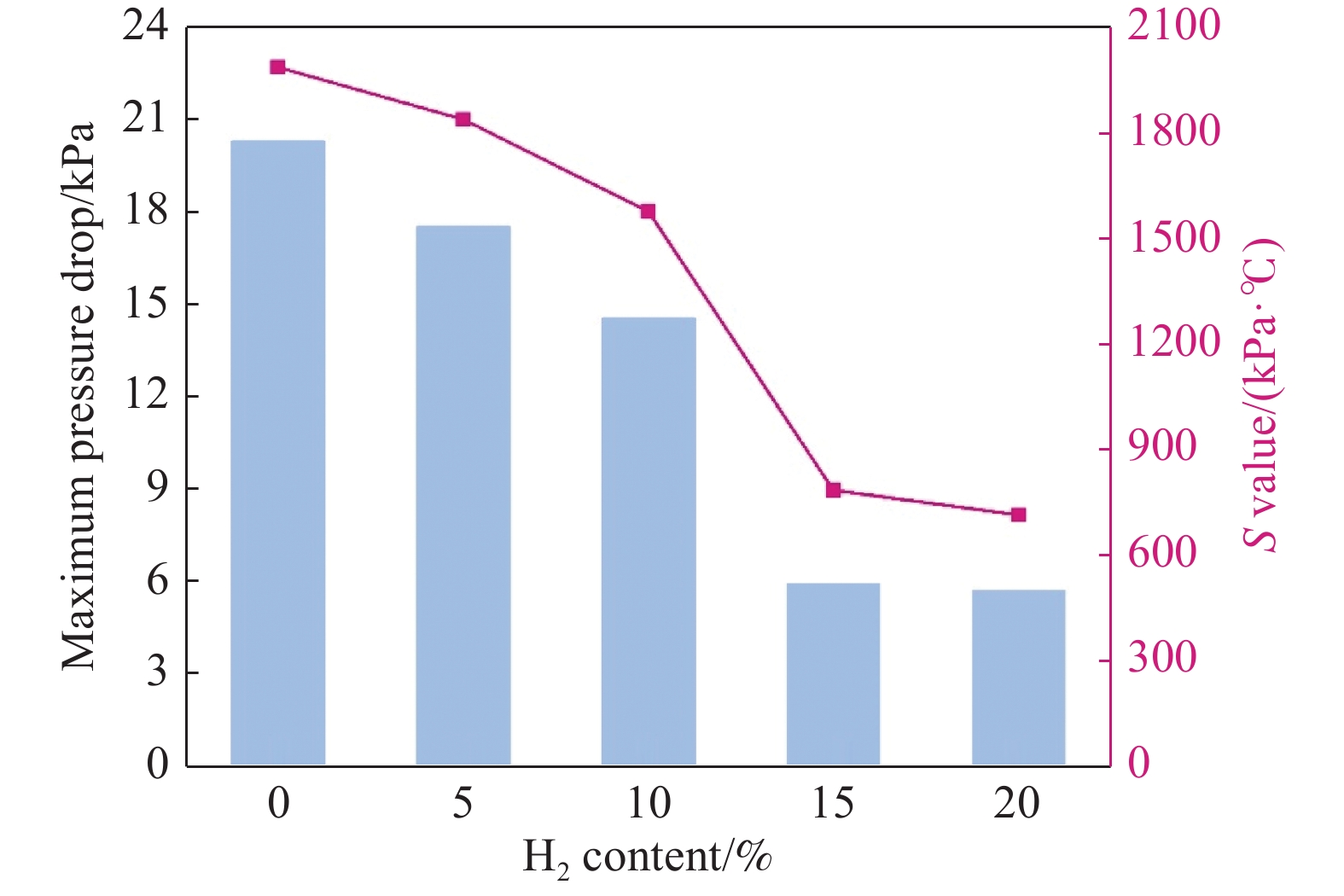
1139 ℃微幅波动至1110 ~1115 ℃,软化区间ΔT1由98 ℃增加至130 ℃。熔融开始温度Ts由1253 ℃最终升至1315 ℃,滴落温度Td由1491 ℃升至1513 ℃,熔化滴落区间ΔT2由238 ℃显著收窄至198 ℃;最大压差由20.29 kPa降至5.71 kPa,透气性综合指数(S值)由1 986 kPa·℃大幅降至715 kPa·℃,降幅达64%。H2促进铁氧化物及含钛铁相的还原,形成多孔金属铁骨架,延缓连续液相引起的床层压差上升;高H2条件下残渣中FeO含量降低且出现Ti (C,N),预示局部深还原风险。在试验条件范围内,H2体积分数 15% 时可兼顾料柱透气性改善与渣相稳定性,可作为进一步工业验证的优选条件。Abstract: To elucidate the evolution behavior of vanadium-titanium magnetite pellets within the blast furnace cohesive zone under H2-enriched smelting conditions, high-temperature load-reduction softening and melting experiments were conducted. With the CO volume fraction fixed at φ(CO) = 30%, H2 was used to replace N2 at gradients of 0, 5%, 10%, 15%, and 20% to prepare the reducing gases. The effects of H2 content on the softening-shrinkage characteristic temperatures, pressure drop evolution, and bed permeability index (S-value) of the pellets were systematically investigated. Chemical composition analysis and EPMA/WDS characterization were performed on both interrupted samples and final residues. The results indicate that as H2 content increases, the softening onset temperature T10 (10% shrinkage) fluctuates slightly from 1139 ℃ to1110 -1115 ℃, while the softening interval ΔT1 increases from 98 ℃ to 130 ℃. The melting onset temperature Ts rises from1253 ℃ to1315 ℃, and the dripping temperature Td increases from1491 ℃ to1513 ℃, narrowing the melting-dripping interval ΔT2 significantly from 238 ℃ to 198 ℃. The maximum pressure drop decreases markedly from 20.29 kPa to 5.71 kPa, and the comprehensive permeability index (S-value) drops sharply from1986 kPa·℃ to 715 kPa·℃, representing a 64% reduction. H2 facilitates the reduction of iron oxides and titanium-bearing iron phases, promoting the formation of a porous metallic iron skeleton that delays the rise in bed pressure difference caused by continuous liquid phase formation. Under high H2 conditions, the FeO content in the residual slag decreases, and Ti(C,N) appears, indicating a risk of localized deep reduction. Within the tested conditions of this study, an H2 volume fraction of 15% offers an optimal balance between improved permeability and slag stability, serving as a preferred condition for further industrial validation. -
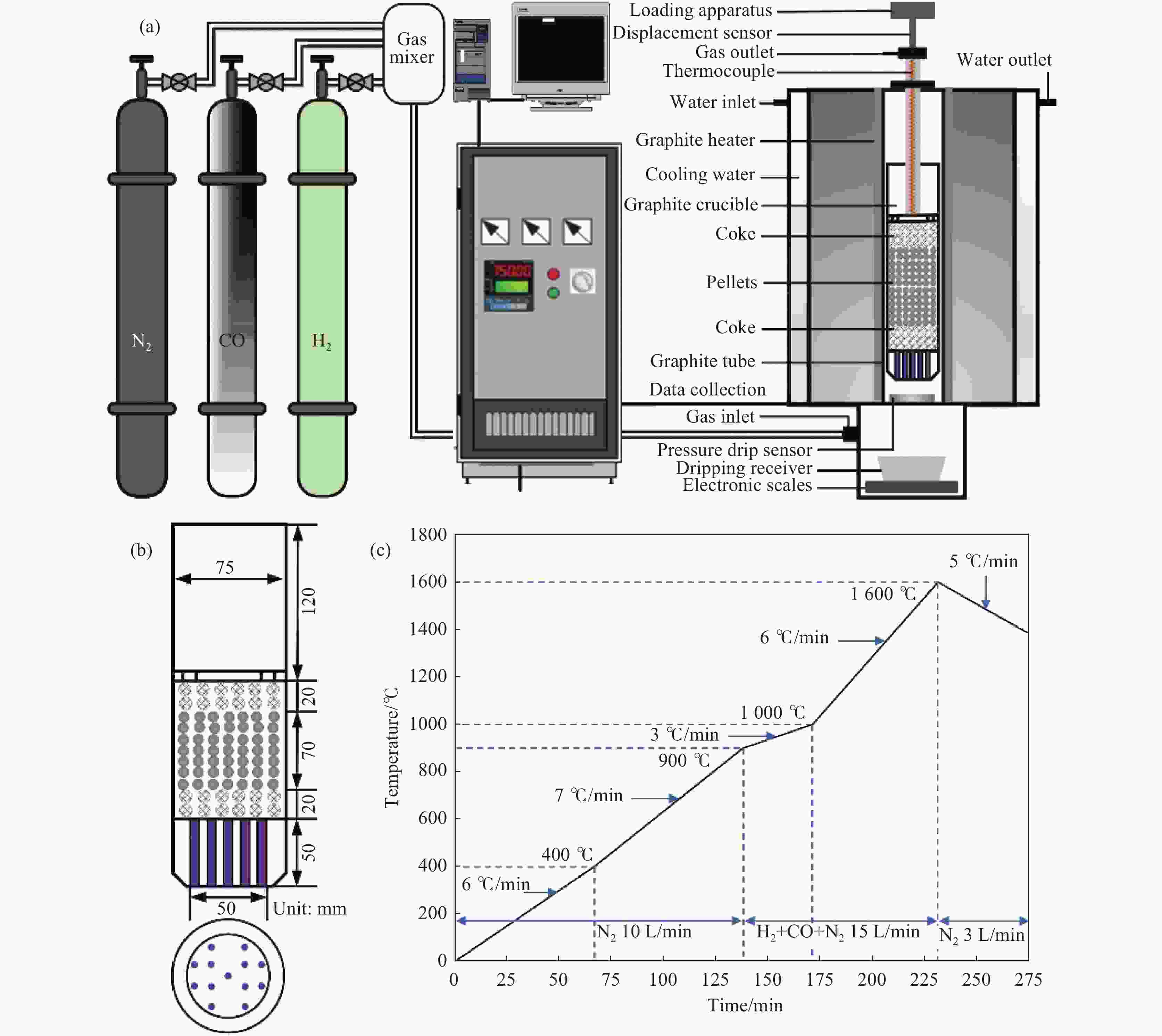
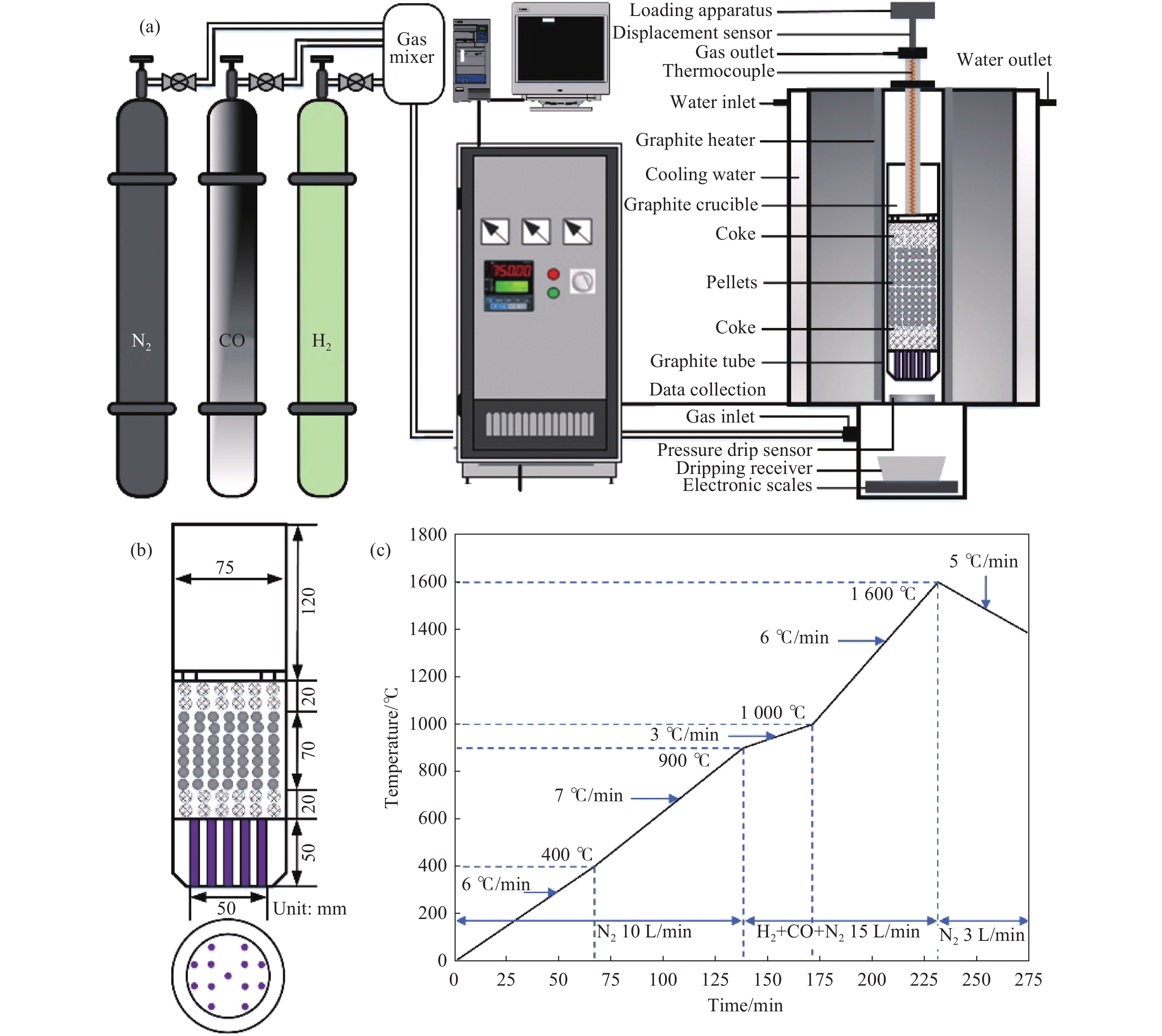
图 1 软熔滴落试验装置示意及升温制度
(a)试验装置;(b)石墨坩埚尺寸;(c)升温制度
Figure 1. Schematic diagram of softening and melting test apparatus and thermal schedule

图 2 软熔滴落试验所得的典型特征参数
Figure 2. Characteristic parameters for a typical result of the softening and melting experiment
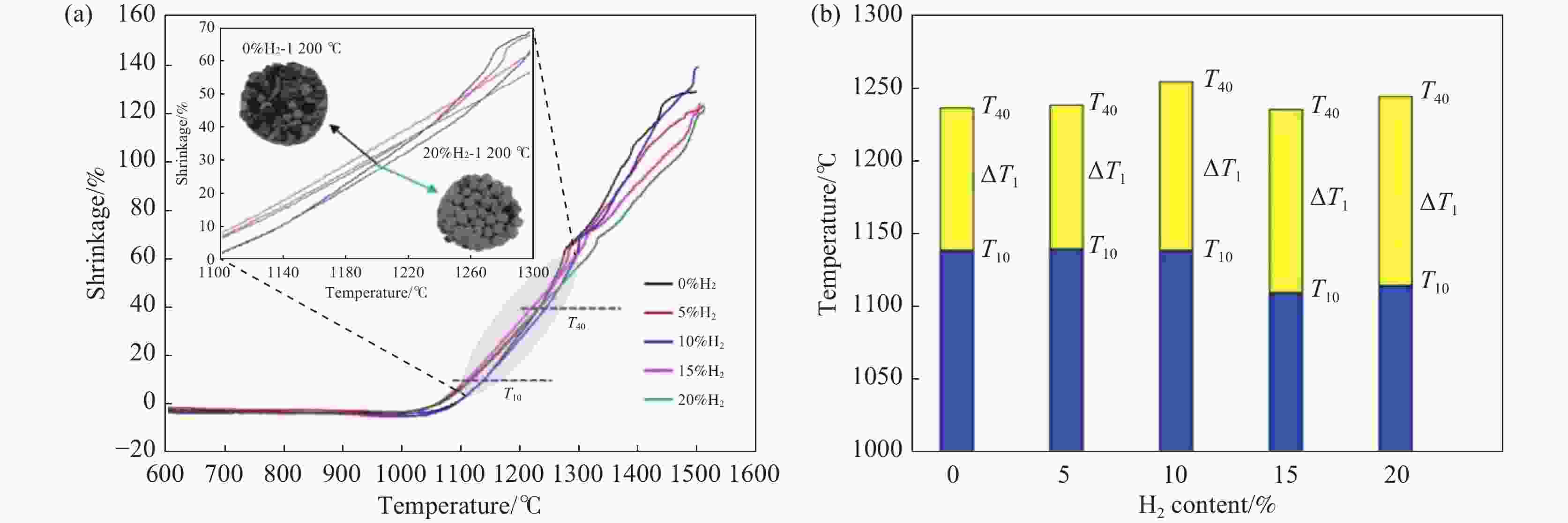
图 3 填充床软化收缩过程及特征参数
(a)填充床瞬态收缩与温度的比较;(b)填充床软化过程中的特征参数
Figure 3. The softening process of the packing bed and its characteristic parameters
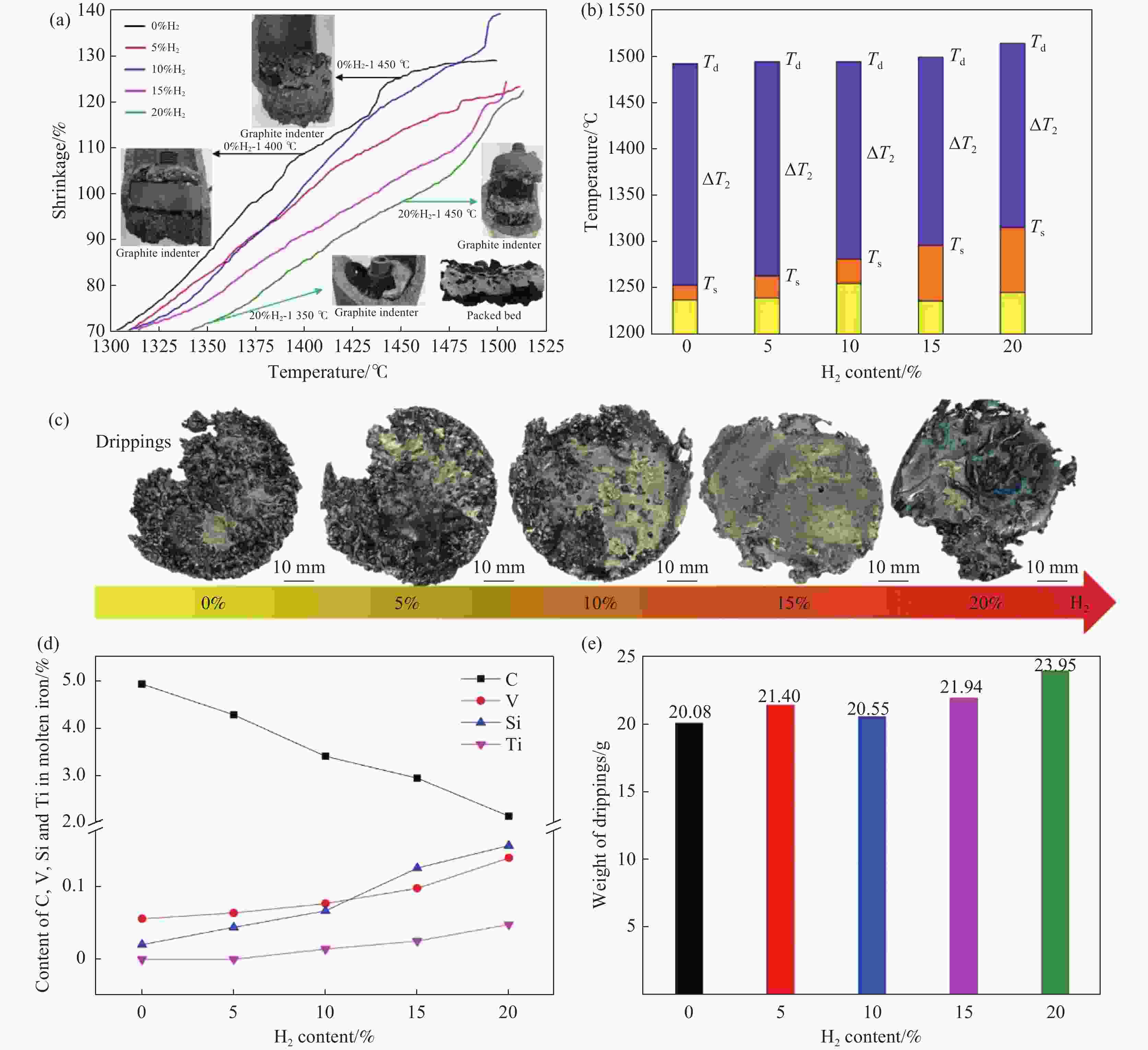
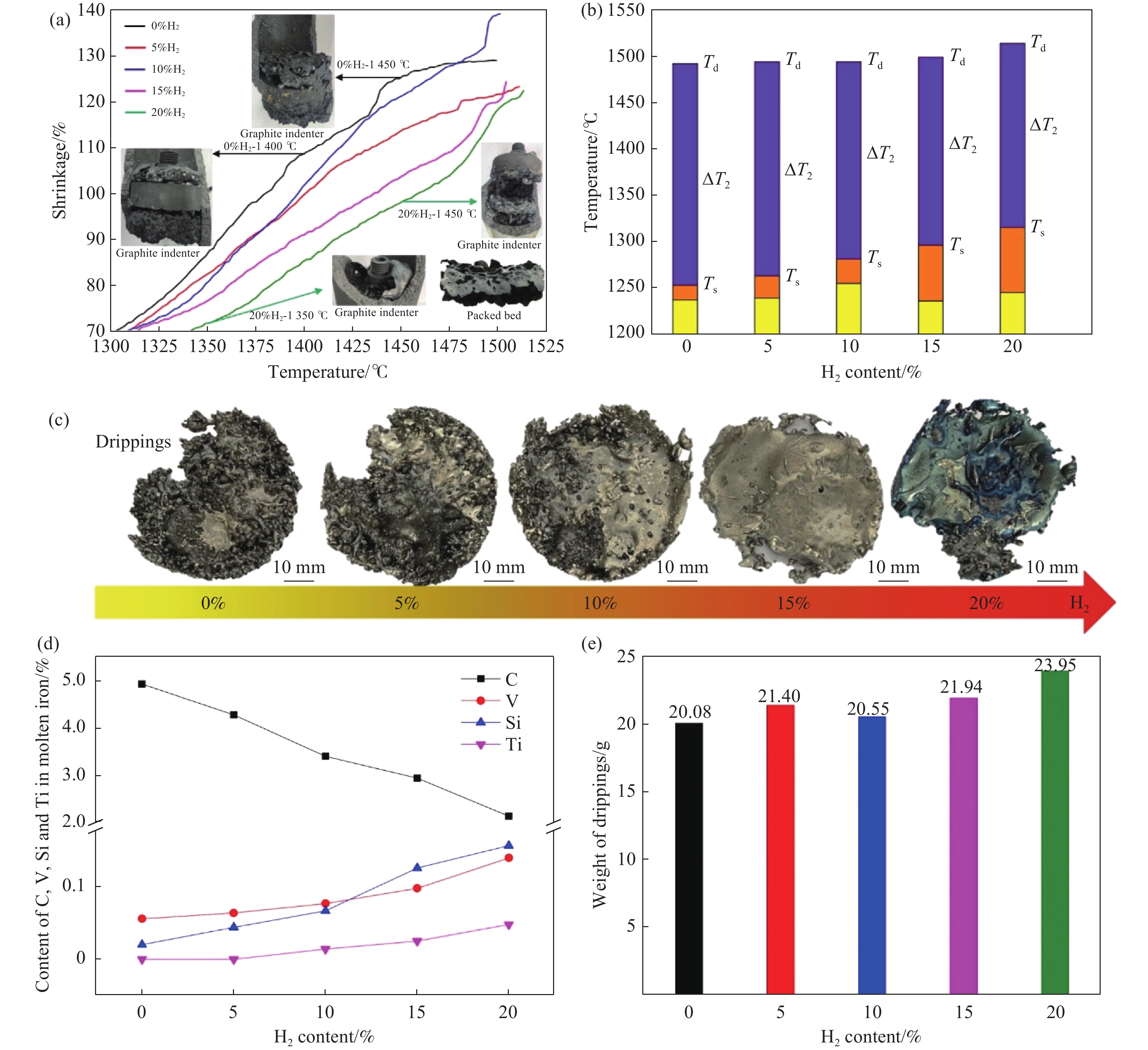
图 4 填充床高温熔融过程的收缩行为与滴落特性
(a)温度高于
1300 ℃时填充床的瞬态收缩;(b)填充床熔融过程中的特征温度;(c)滴落物的宏观形貌;(d)滴落物中的关键元素含量;(e)滴落物的质量Figure 4. Shrinkage behavior and dripping characteristics of the packed bed during high-temperature melting
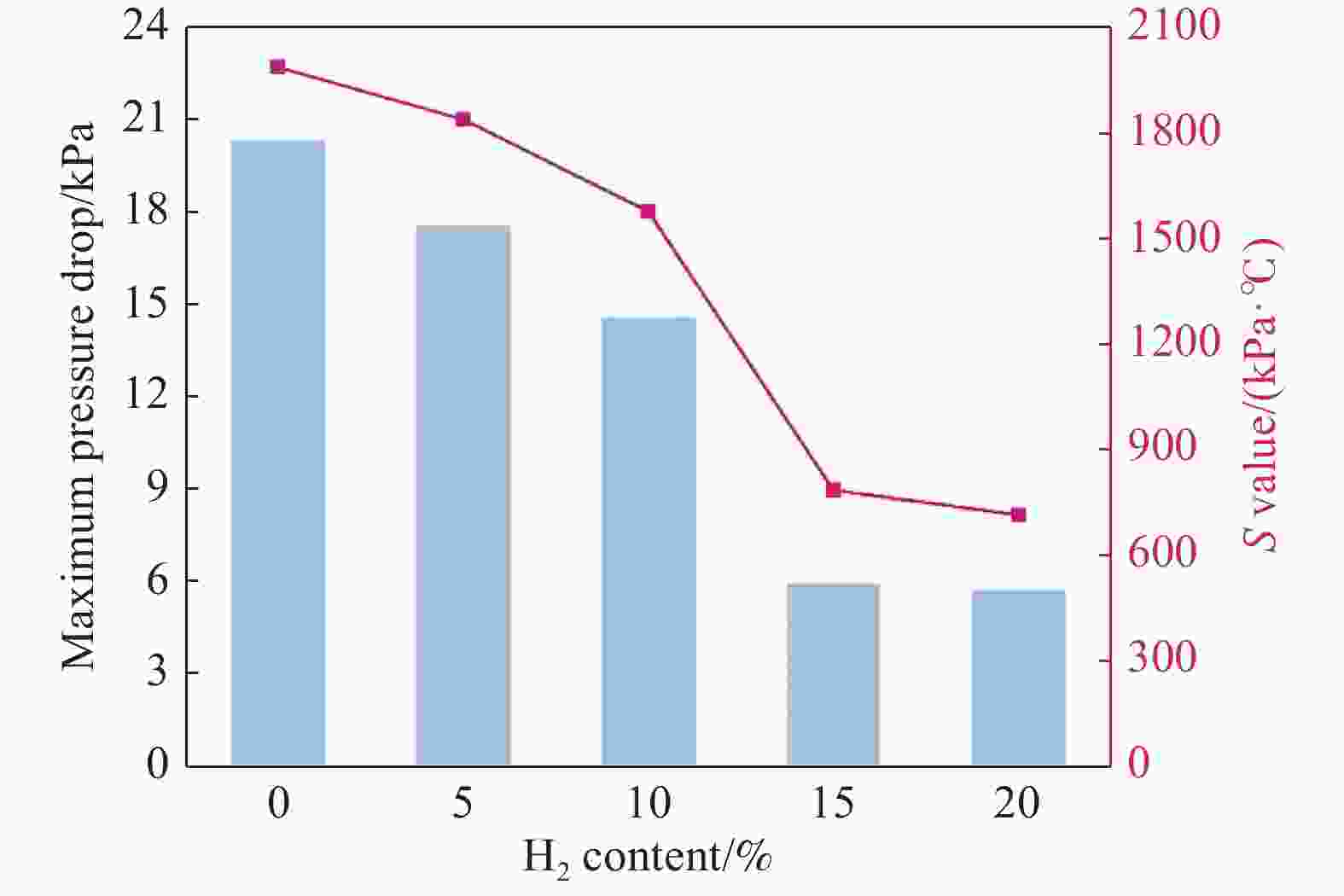
图 5 H2对填充床最大压差和S值的影响
Figure 5. Effect of H2 on the maximum pressure drop and S value of packed beds
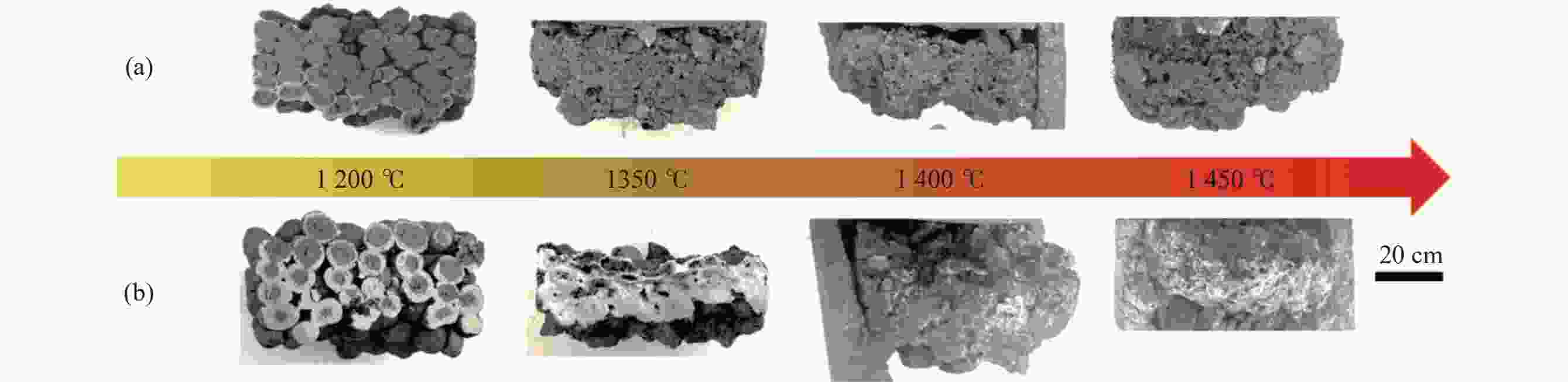
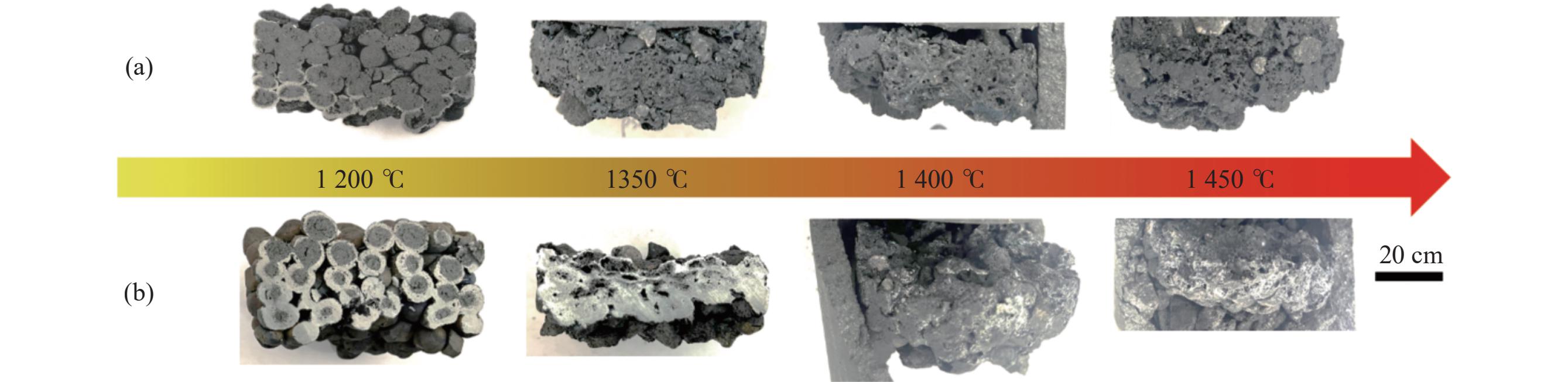
图 6 不同体积分数H2在不同温度下中断试验料层的宏观形貌演变
(a)无H2;(b)20% H2
Figure 6. Comparative macroscopic morphology of the interrupted sample packed beds under different H2 contents across different temperatures
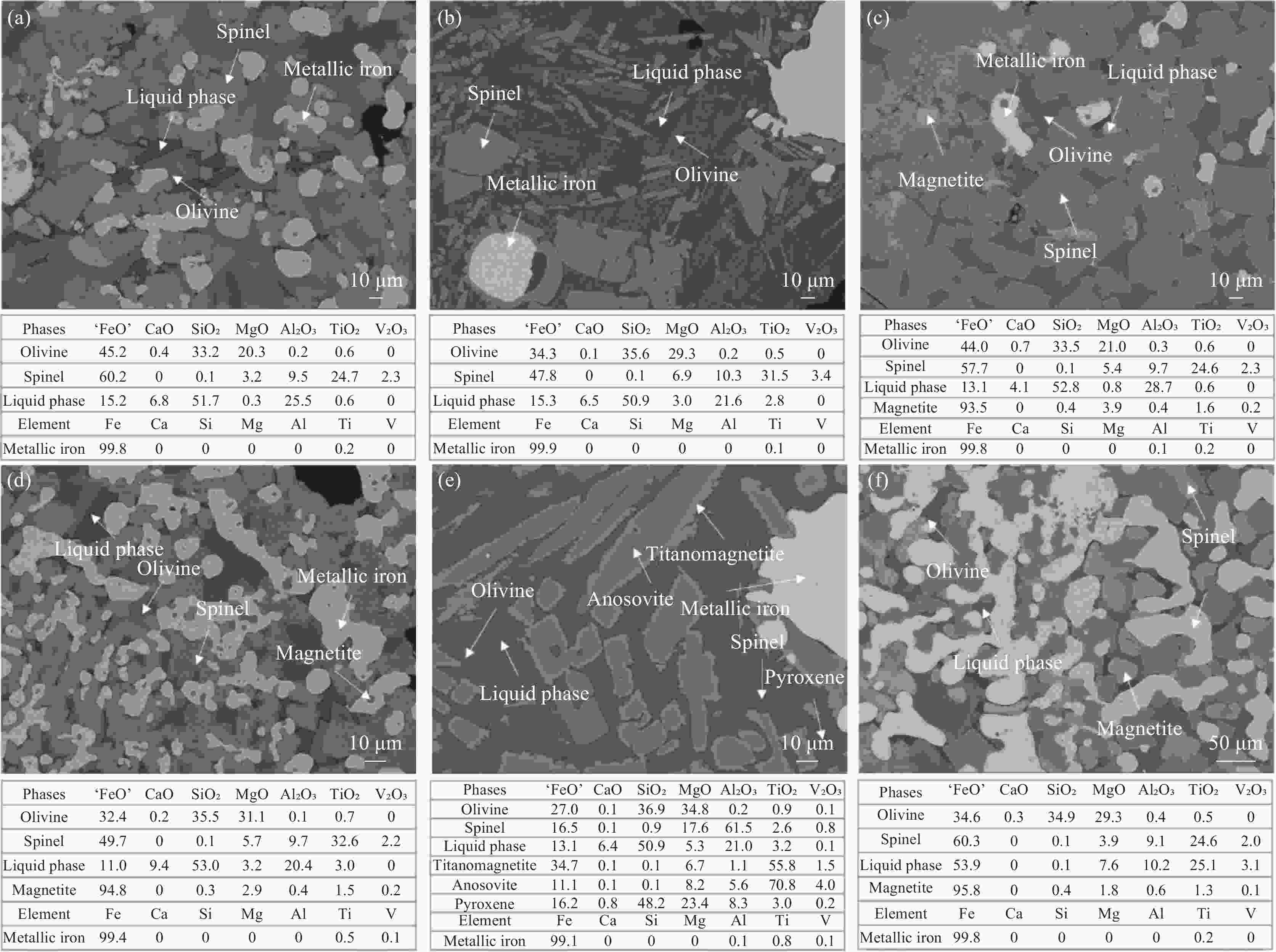
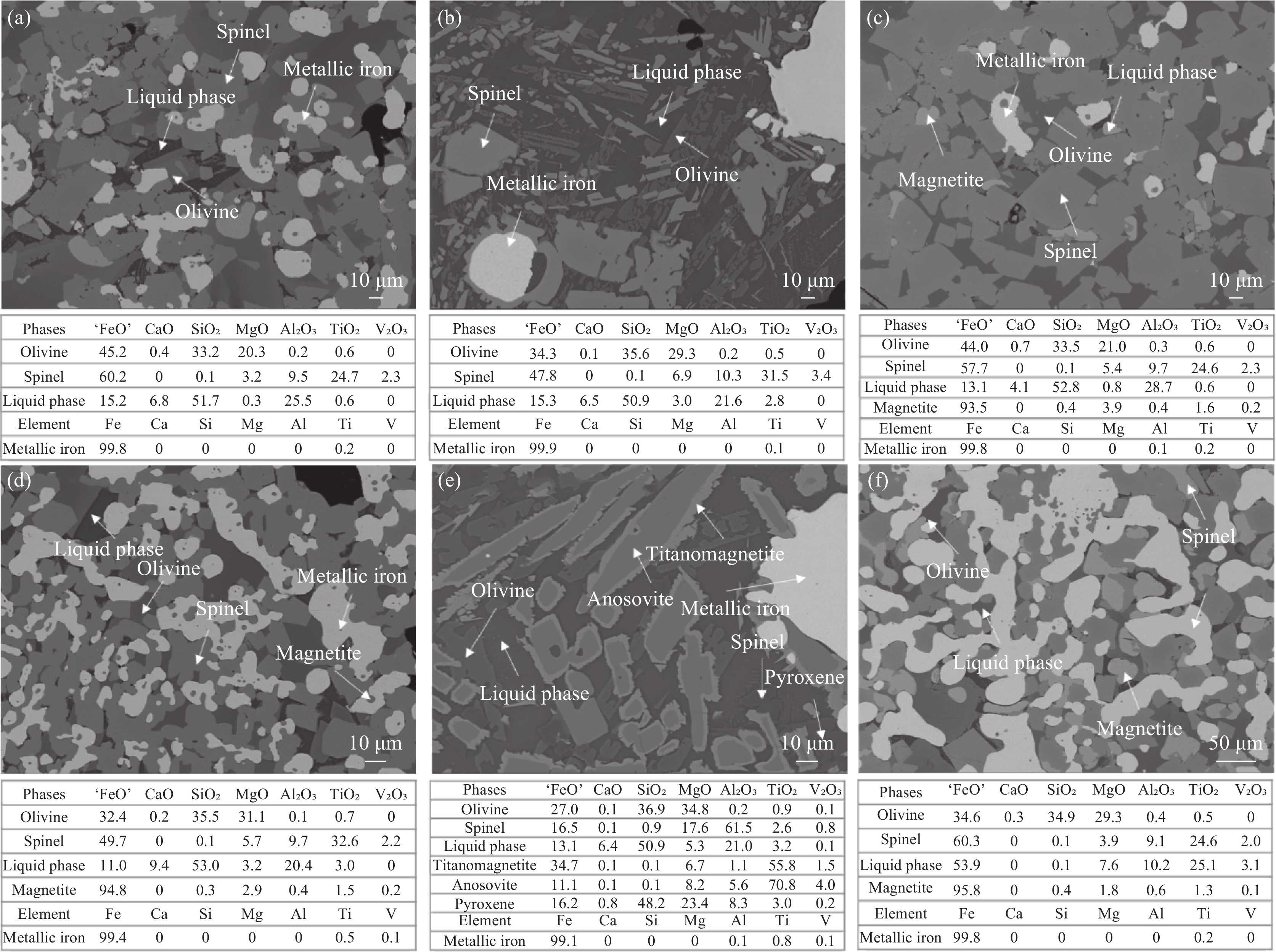
图 7 填充床软熔滴落过程炉渣的微观形貌及EDS分析
(a)无H2-压头上渣-1 200 ℃;(b)无H2-压头上渣-1 350 ℃;(c)无H2-压头下渣-1 350 ℃;(d)20%H2-压头上渣-1 200 ℃;(e)20%H2-压头上渣-1 350 ℃;(f)20%H2-压头下渣-1 350 ℃
Figure 7. Microstructure and EDS analysis (wt.%) of slag during the softening and melting process of the packed bed
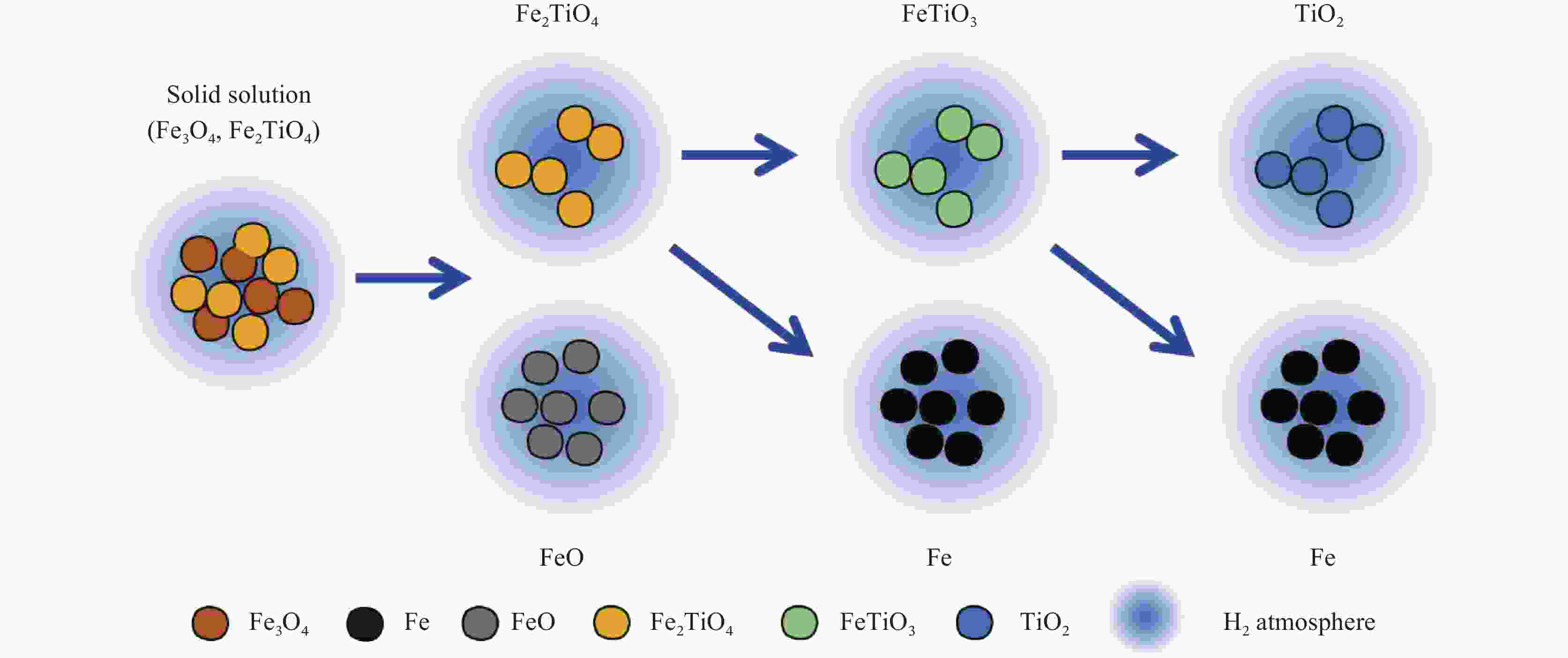
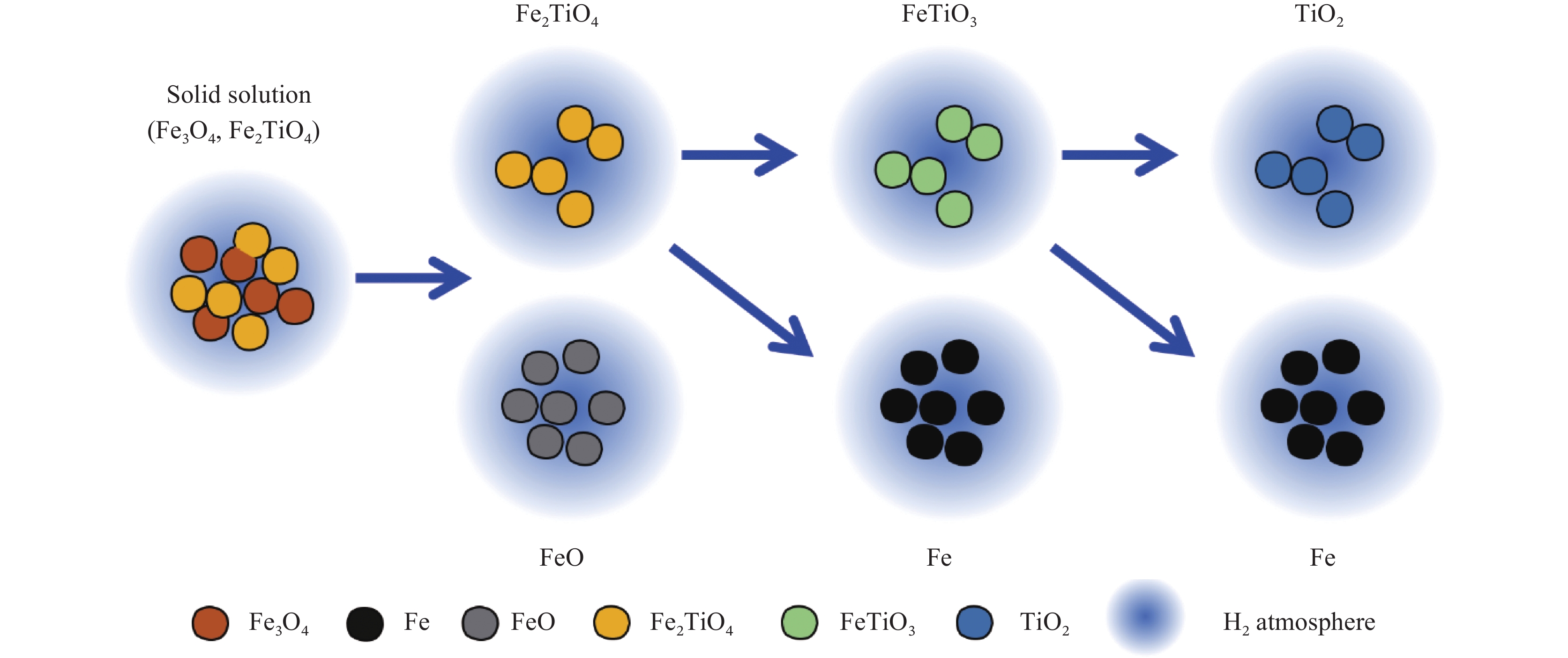
图 8 钒钛磁铁矿球团中钛磁铁矿相的演变路径
Figure 8. Evolution pathway of ilmenite phase in vanadium-titanium magnetite pellets
表 1 钒钛磁铁矿球团的主要化学成分
Table 1. The main chemical composition of the vanadium-titanium magnetite pellet
% TFe FeO CaO SiO2 MgO Al2O3 TiO2 V2O5 53.12 1.61 0.63 5.54 3.54 4.10 9.64 0.69  下载: 导出CSV
表 2 还原气体组成
Table 2. Compositions of reducing gases
% Gases Scheme 1 Scheme 2 Scheme 3 Scheme 4 Scheme 5 H2 0 5 10 15 20 CO 30 30 30 30 30 N2 70 65 60 55 50
下载: 导出CSV
表 3 H2比例对填充床软熔滴落特征参数的影响
Table 3. Effect of H2 ratio on characteristic temperatures and permeability indices of the packed bed
Reduce H2/% T10/℃ T40/℃ ΔT1/℃ Ts/℃ Td/℃ ΔT2/℃ ΔPmax/kPa S/(kPa·℃) 0 1139 1237 98 1253 1491 238 20.29 1986 5 1140 1239 99 1263 1493 230 17.51 1837 10 1139 1255 116 1281 1493 212 14.55 1576 15 1110 1236 126 1296 1498 202 5.93 785 20 1115 1245 130 1315 1513 198 5.71 715
下载: 导出CSV
表 4 石墨压头上渣化学成分
Table 4. The chemical compositions of the slag above the graphite indenter
% Reduce H2 CaO MgO SiO2 TiO2 V2O5 Al2O3 FeO Ti(C,N) 0 2.88 13.20 30.11 35.59 1.59 16.63 0.00 0.332 5 2.51 12.42 26.91 32.57 1.33 15.44 8.82 0.315 10 2.65 12.64 26.46 33.80 1.33 15.51 7.62 0.338 15 2.46 13.26 25.53 32.91 1.44 15.36 9.05 0.327 20 2.37 14.19 25.43 34.22 1.37 16.64 5.78 0.359
下载: 导出CSV
表 5 无 H2和20%H2工况在
1350 ℃时石墨压头上残留渣化学成分Table 5. Chemical compositions of the residue above the graphite indenter at
1350 ℃ for 0 and 20% H2% Reduce H2 CaO MgO SiO2 TiO2 V2O5 Al2O3 FeO Ti(C,N) 0 2.27 8.34 24.04 21.45 0.98 11.34 31.57 0.286 20 2.77 10.99 28.50 25.07 0.78 13.21 18.67 0.332
下载: 导出CSV
-
[1] World Steel Association. World steel in figures[EB/OL]. [2026-1-23]. https://www.worldsteel.org. [2] Spreitzer D, Schenk J. Reduction of iron oxides with hydrogen—a review[J]. Steel Research International, 2019, 90(10): 1900108. doi: 10.1002/srin.201900108 [3] Ariyama T, Takahashi K, Kawashiri Y, et al. Diversification of the ironmaking process toward the long-term global goal for carbon dioxide mitigation[J]. Journal of Sustainable Metallurgy, 2019, 5: 276-294. doi: 10.1007/s40831-019-00219-9 [4] Karakaya E, Nuur C, Assbring L. Potential transitions in the iron and steel industry in Sweden: Towards a hydrogen-based future[J]. Journal of Cleaner Production, 2018, 195: 651-663. doi: 10.1016/j.jclepro.2018.05.142 [5] Shao Lei, Wang Quanle, Qu Yingxia, et al. A numerical study on the operation of the H2 shaft furnace with top gas recycling[J]. Metallurgical and Materials Transactions B, 2021, 52(1): 451-459. doi: 10.1007/s11663-020-02020-6 [6] Ma Kaihui, Deng Junyi, Wang Gang, et al. Utilization and impacts of hydrogen in the ironmaking processes: A review from lab-scale basics to industrial practices[J]. International Journal of Hydrogen Energy, 2021, 46(52): 26646-26664. doi: 10.1016/j.ijhydene.2021.05.095 [7] Park T J, Lee J H, Dong G K, et al. Estimation of the H2 gas utilization ratio using a BF shaft inner reaction simulator[J]. Metallurgical and Materials Transactions B, 2020, 51(2): 417-421. doi: 10.1007/s11663-019-01768-w [8] Ma Kaihui, Xu Jian, Deng Junyi, et al. Hydrogen impact on the shrinkage behaviors of wustite packed beds above 900 ℃[J]. International Journal of Hydrogen Energy, 2019, 44(36): 19555-19562. doi: 10.1016/j.ijhydene.2019.05.181 [9] Schmöle P. The blast furnace-fit for the future[C]. //Proceedings of the 7th European Coke and Ironmaking Congress (ECIC 2016). Leoben: Austrian Society for Metallurgy and Materials (ASMET), 2016: 3-12. [10] Astier J, Krug J C, Pressigny Y D L D. Technico-economic potentialities of hydrogen utilization for steel production[J]. International Journal of Hydrogen Energy, 1982, 7(8): 671-679. doi: 10.1016/0360-3199(82)90192-6 [11] Nogami H, Kashiwaya Y, Yamada D. Simulation of blast furnace operation with intensive hydrogen injection[J]. ISIJ International, 2012, 52(8): 1523-1527. doi: 10.2355/isijinternational.52.1523 [12] Yilmaz C, Wendelstorf J, Turek T. Modeling and simulation of hydrogen injection into a blast furnace to reduce carbon dioxide emissions[J]. Journal of Cleaner Production, 2017, 154: 488-501. doi: 10.1016/j.jclepro.2017.03.162 [13] Kazemi M, Pour M S, Sichen D. Experimental and modeling study on reduction of hematite pellets by hydrogen gas[J]. Metallurgical and Materials Transactions B, 2017, 48(2): 1114-1122. doi: 10.1007/s11663-016-0895-3 [14] Heo N H, Baek C Y, Yim C H. Analysis of furnace conditions with waste plastics injection into blast furnace[J]. Journal of the Korean Institute of Resources Recycling, 2000, 5(1): 23-30. [15] Chen Yanbiao, Zuo Haibin. Review of hydrogen-rich ironmaking technology in blast furnace[J]. Ironmaking & Steelmaking, 2021, 6: 1-20. doi: 10.1080/03019233.2021.1909992 [16] Sun Guanyong, Li Bin, Yang Wensheng, et al. Analysis of energy consumption of the reduction of Fe2O3 by hydrogen and carbon monoxide mixtures[J]. Energies, 2020, 13(8): 1986. doi: 10.3390/en13081986 [17] Pistorius P C, Gibson J, Jampani M. Natural gas utilization in blast furnace ironmaking: Tuyère iInjection, shaft injection and prereduction[J]. The Minerals, Metals & Materials Series, 2017, 283-292. [18] Ryzhenkov A N, Yaroshevskii S L, Zamuruev V P, et al. Study of a blast-furnace smelting technology which involves the injection of pulverized-coal fuel, natural gas, and an oxygen-enriched blast into the hearth[J]. Metallurgist, 2006, 50: 235-240. doi: 10.1007/s11015-006-0069-7 [19] Hlling M, Gellert S. Direct reduction: transition from natural gas to hydrogen[C]//Proceedings of the 7th International Congress on the Science and Technology of Ironmaking (ICSTI 2018). Toronto: AIST, 2018: 1087-1096. [20] Guo Tonglai, Chu Mansheng, Liu Zhenggen, et al. Mathematical modeling and exergy analysis of blast furnace operation with natural gas injection[J]. Steel Research International, 2013, 84(4): 333-343. doi: 10.1002/srin.201200172 [21] Wang Chuan, Mellin P, Lövgren J, et al. Biomass as blast furnace injectant-considering availability, pretreatment and deployment in the Swedish steel industry[J]. Energy Conversion and Management, 2015, 102(1): 217-226. doi: 10.1016/j.enconman.2015.04.013 [22] Feliciano-bruzual C. Charcoal injection in blast furnaces (Bio-PCI): CO2 reduction potential and economic prospects[J]. Journal of Materials Research & Technology, 2014, 3(3): 233-243. doi: 10.1016/j.jmrt.2014.06.001 [23] Aist Staff. 2016 AIST North American blast furnace roundup[J]. Iron & Steel Technology, 2016, 13(10): 256-259. [24] Zhao Guojun, Shen Wenjin, Zhao Qibin. Discussion on development and utilization of vanadium-titanium magnetite in Panxi[J]. Natural Resource Economics of China, 2018, 031: 36-38. [25] Deng Jun, Xue Xun, Liu Gongguo. Current situation and development of comprehensive utilization of vanadium-bearing titanomagnetite at Pangang[J]. Journal of Materials and Metallurgy, 2007. [26] Zhu Zhimin, Lin Jian, Zhang Guoli, et al. Comprehensive utilizations of the strategic mineral resources from vanadium titano-magnetite tailings in the Panxi region, SW China[J]. Multipurpose Utilization of Mineral Resources, 2023, 44(4): 42-49. [27] Pang Zhengde, Jiang Yuyang, Ling Jiawei, et al. Blast furnace ironmaking process with super-high TiO2 in the slag: viscosity and melting properties of the slag[J]. Metallurgical and Materials Transactions B, 2020, 51: 722-731. doi: 10.1007/s11663-019-01756-0 [28] Cheng Gongjin, Liu Jianxing, Liu Zhenggen, et al. Non-isothermal reduction mechanism and kinetics of high chromium vanadium–titanium magnetite pellets[J]. Ironmaking & Steelmaking, 2015, 42(1): 17-26. doi: 10.1179/1743281214Y.0000000193 [29] Chen Weibin, Dong Zhaoqi, Jiao Yang, et al. Preparation, sintering behavior and consolidation mechanism of vanadium-titanium magnetite pellets[J]. Crystals, 2021, 11(2): 188. doi: 10.3390/cryst11020188 [30] Zhao Wei, Chu Mansheng, Wang Hongtao, et al. Reduction behavior of vanadium-titanium magnetite carbon composite hot briquette in blast furnace process[J]. Powder Technology, 2019, 342: 214-223. doi: 10.1016/j.powtec.2018.09.069 [31] Hino M, Nagasaka T, Katsumata A, et al. Simulation of primary-slag melting behavior in the cohesive zone of a blast furnace, considering the effect of Al2O3, FetO, and basicity in the sinter ore[J]. Metallurgical and Materials Transactions B, 1999, 30(4): 671-683. doi: 10.1007/s11663-999-0028-3 [32] Szekely J, El-tawil Y. The reduction of hematite pellets with carbon monoxide-hydrogen mixtures[J]. Metallurgical Transactions B, 1976, 7(3): 490-492. doi: 10.1007/BF02652723 [33] Ueda S, Kon T, Miki T, et al. Effects of Al2O3 and MgO on softening, melting, and permeation properties of CaO-FeO-SiO2 on a coke bed[J]. Metallurgical and Materials Transactions B, 2016, 47: 2371-2377. doi: 10.1007/s11663-016-0683-0 [34] Zhou Kai, Song Jiaqi, You Zhixiong, et al. Softening-melting properties and slag evolution behavior of high titanium sinter[J]. ISIJ International, 2020, 60(7): 1409-1415. doi: 10.2355/isijinternational.ISIJINT-2019-559 [35] Mitra S, Liu Xinliang, Honeyands T, et al. Pressure-drop modelling in the softening and melting test for ferrous burden[J]. ISIJ International, 2020, 60(7): 1416-1426. doi: 10.2355/isijinternational.ISIJINT-2019-600 [36] Yu Jianwen, Ou Yang, Sun Yongsheng, et al. Hydrogen reduction behaviors and mechanisms of vanadium titanomagnetite ore under fluidized bed conditions[J]. Powder Technology, 2022, 402: 117621. doi: 10.1016/j.powtec.2022.117340 [37] Xin Ran, Zhao Jianbo, Gao Xudong, et al. Softening–melting properties and slag evolution of vanadium titano-magnetite sinter in hydrogen-rich gases[J]. Crystals, 2023, 13(2): 210. doi: 10.3390/cryst13020210 [38] Chen Weihsin, Lin Murong, Yu Aibing, et al. Hydrogen production from steam reforming of coke oven gas and its utility for indirect reduction of iron oxides in blast furnace[J]. International Journal of Hydrogen Energy, 2012, 37(16): 11748-11758. doi: 10.1016/j.ijhydene.2012.05.021 [39] Tang Jue, Chu Mansheng, Li Feng, et al. Development and progress on hydrogen metallurgy[J]. International Journal of Minerals, Metallurgy and Materials, 2020, 27(6): 713-723. doi: 10.1007/s12613-020-2021-4 [40] Qie Yana, Lü Qing, Liu Xiaojie, et al. Effect of hydrogen addition on softening and melting reduction behaviors of ferrous burden in gas-injection blast furnace[J]. Metallurgical & Materials Transactions B, 2018, 49(5): 2622-2632. doi: 10.1007/s11663-018-1299-3 [41] Lan Chenchen, Zhang Shuhui, Liu Xiaojie, et al. Change and mechanism analysis of the softening-melting behavior of the iron-bearing burden in a hydrogen-rich blast furnace[J]. International Journal of Hydrogen Energy, 2020, 45(28): 14255-14265. doi: 10.1016/j.ijhydene.2020.03.143 [42] Wang Hongtao, Chu Mansheng, Zhao Wei, et al. Effect of iron coke hot briquette on softening-melting and dripping properties of blast furnace mixed burden[J]. Journal of Northeastern University, 2016, 37(8): 1108-1112. [43] Du Chengbo, Liu Zhengjian, Zhang Jianliang, et al. Effect of hydrogen content on reduction and softening-melting properties of iron bearing charges[J]. China Metallurgy, 2018, 28(12): 19-23. [44] Yang Guangqing, Zhang Jianliang, Chen Yongxing, et al. Influence of hydrogen content of bosh gas on softening-melting property of iron-bearing burden material[J]. Iron & Steel, 2012, 47(9): 14-18. -


计量
- 文章访问数: 0
- HTML全文浏览量: 0
- PDF下载量: 2
- 被引次数: 0