High-throughput CALPHAD-guided multi-objective design of TC4 titanium alloy
-
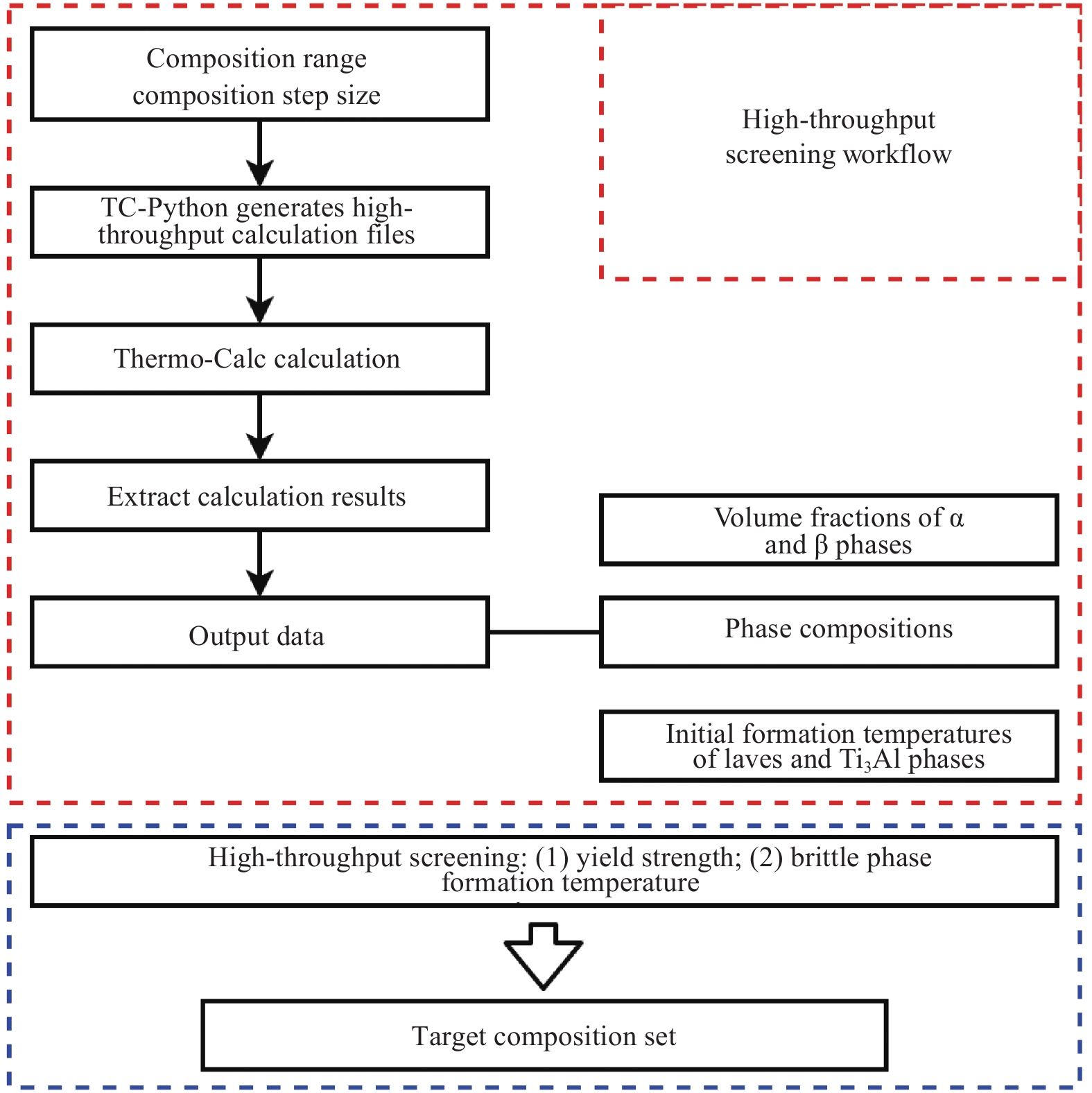
摘要: 为满足航空、深海及生物医用领域对 TC4 (Ti-6Al-4V)钛合金高强-高韧协同性能的迫切需求,基于 Thermo-Calc/TC-Python 搭建高通量 CALPHAD 计算工作流,对
6241 组候选成分进行相平衡、固溶度及力学性能的快速筛选,并以“屈服强度 > 950 MPa、Laves 相起始温度 < 850 K、Ti3Al 相起始温度 < 800 K”为约束条件。结果显示:Al 含量是提高 α 相体积分数及固溶强化的主导因素;V和Fe作为β稳定元素可显著调控α/β相比例;O虽可显著贡献固溶强化,但因增强V在β相中的固溶度而间接降低α体积分数;综合多目标约束后,由w(Al)=5.8%~6.3%、w(V)=3.6%~4.2%、w(Fe)≤ 0.18%、w(O)= 0.09%~0.15%构成的成分窗口在保障强度的同时有效抑制了脆性相析出。与传统经验设计相比,该数值策略将候选成分空间压缩至不足 2%,显著降低试验试错成本,并为后续强度-韧性-可加工性多目标优化奠定数据基础。-
关键词:
- TC4钛合金 /
- 高通量CALPHAD /
- Thermo-Calc /
- Laves相 /
- Ti3Al相
Abstract: To address the pressing need for TC4 (Ti-6Al-4V) titanium alloys that combine high strength and toughness for aerospace, deep-sea, and biomedical applications, we established a high-throughput CALPHAD workflow based on Thermo-Calc/TC-Python. A total of 6,241 candidate compositions were rapidly screened for phase equilibria, solid solubility, and mechanical properties under the constraints of yield strength > 950 MPa, Laves-phase onset temperature <850 K, and Ti3Al-phase onset temperature < 800 K. The results show that Al content is the primary factor in increasing the α-phase volume fraction and solid-solution strengthening; V and Fe, as β stabilizers, markedly modulate the α/β phase fraction ratio. Although O strongly contributes to solid-solution strengthening, it indirectly reduces α-phase fraction by enhancing the solubility of V in the β phase. A multi-objective analysis identifies an optimal compositional window of Al 5.8–6.3 wt. %, V 3.6–4.2 wt. %, Fe ≤ 0.18 wt. %, and O 0.09–0.15 wt. %, which simultaneously meets the strength requirement and suppresses the formation of brittle phases. Compared with traditional empirical design, this numerical strategy narrows the candidate compositional space to <2 %, significantly lowering experimental trial-and-error costs and providing a solid data foundation for subsequent multi-objective optimization of targeting strength, toughness, and workability.-
Key words:
- TC4 titanium alloy /
- high-throughput CALPHAD /
- Thermo-Calc /
- Laves phase /
- Ti3Al phase
-
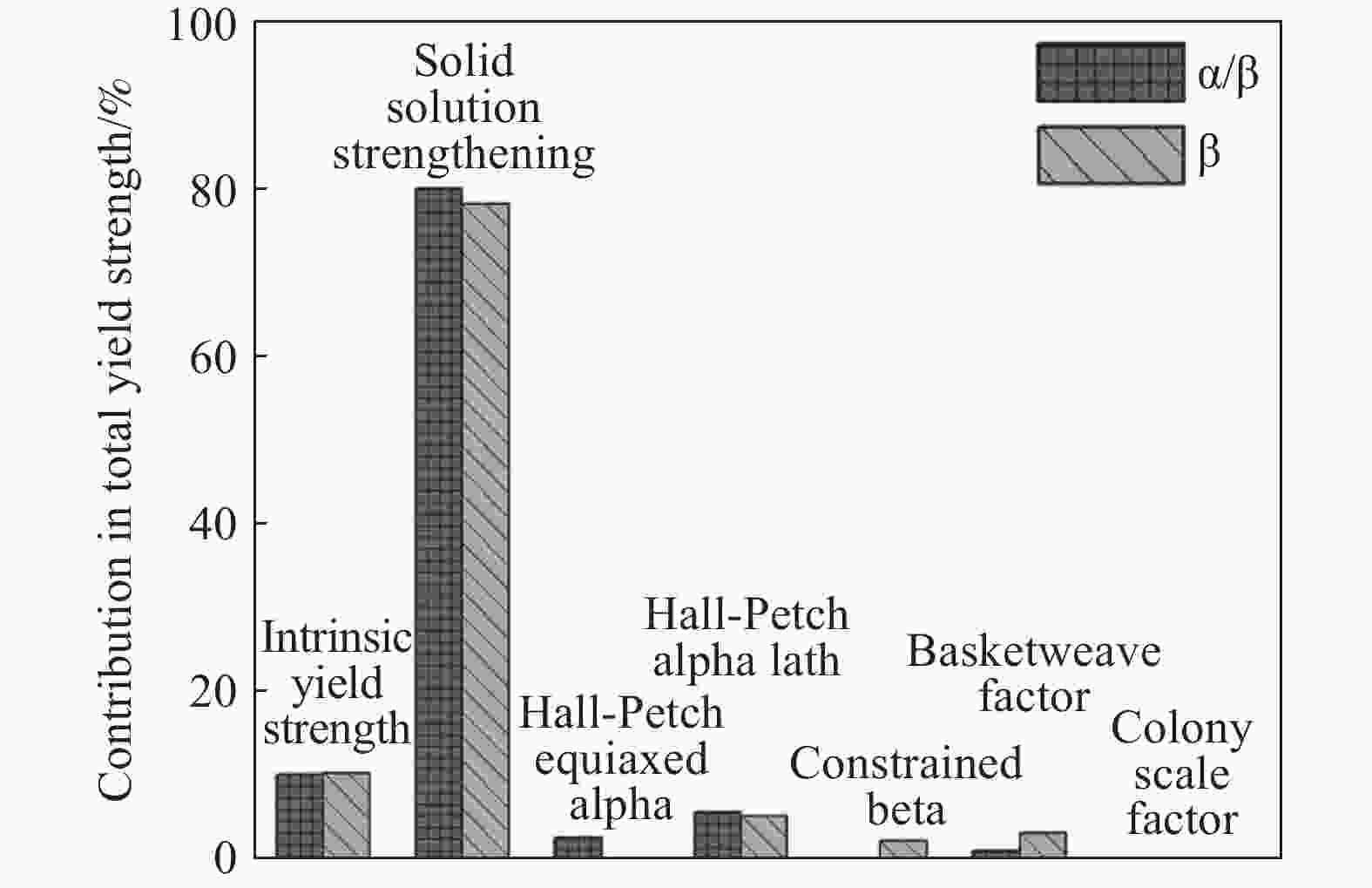
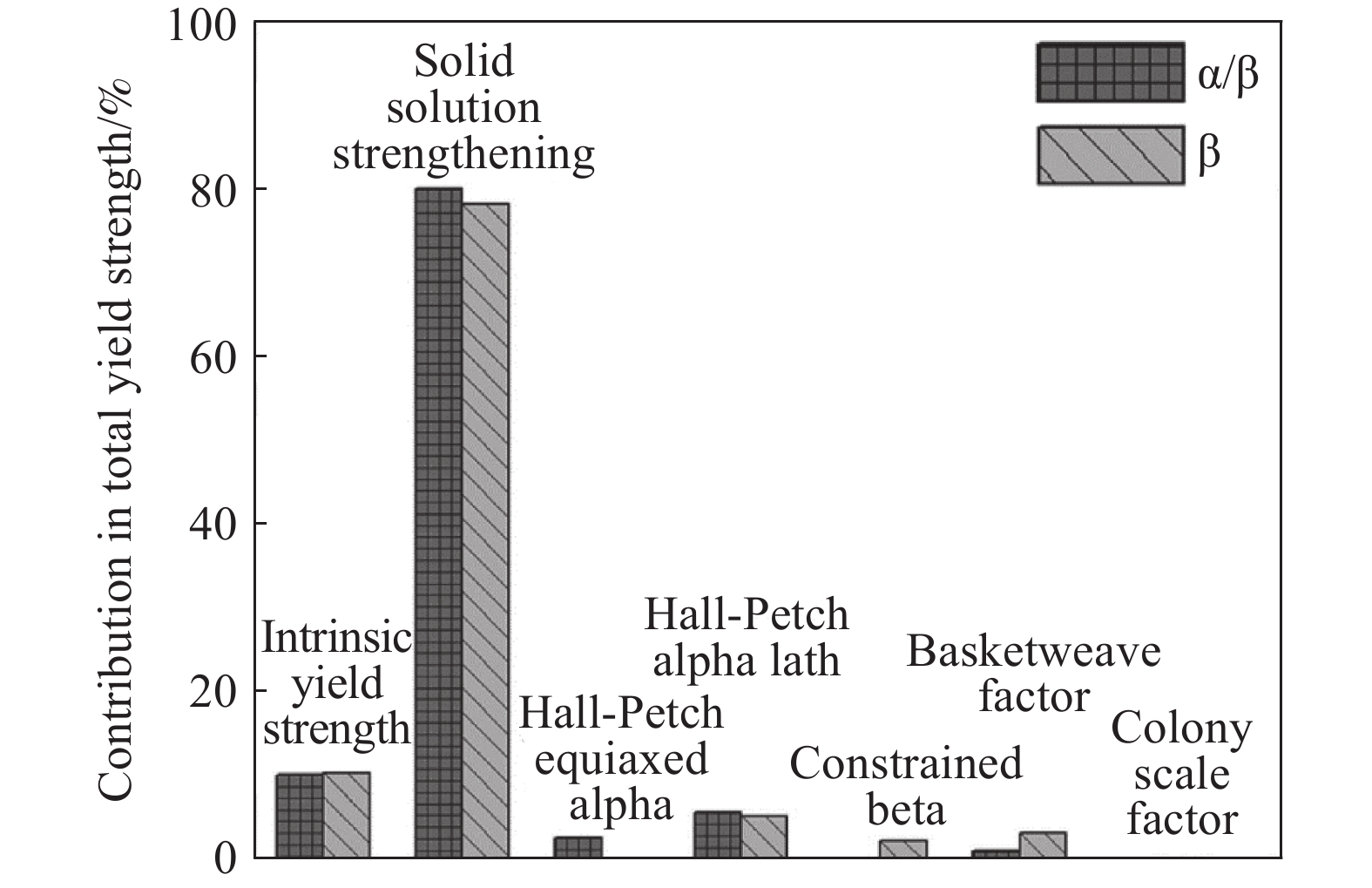
图 1 钛合金中各种强化机制贡献度的比较
Figure 1. Comparison of the contribution degrees of various strengthening mechanisms in titanium alloys
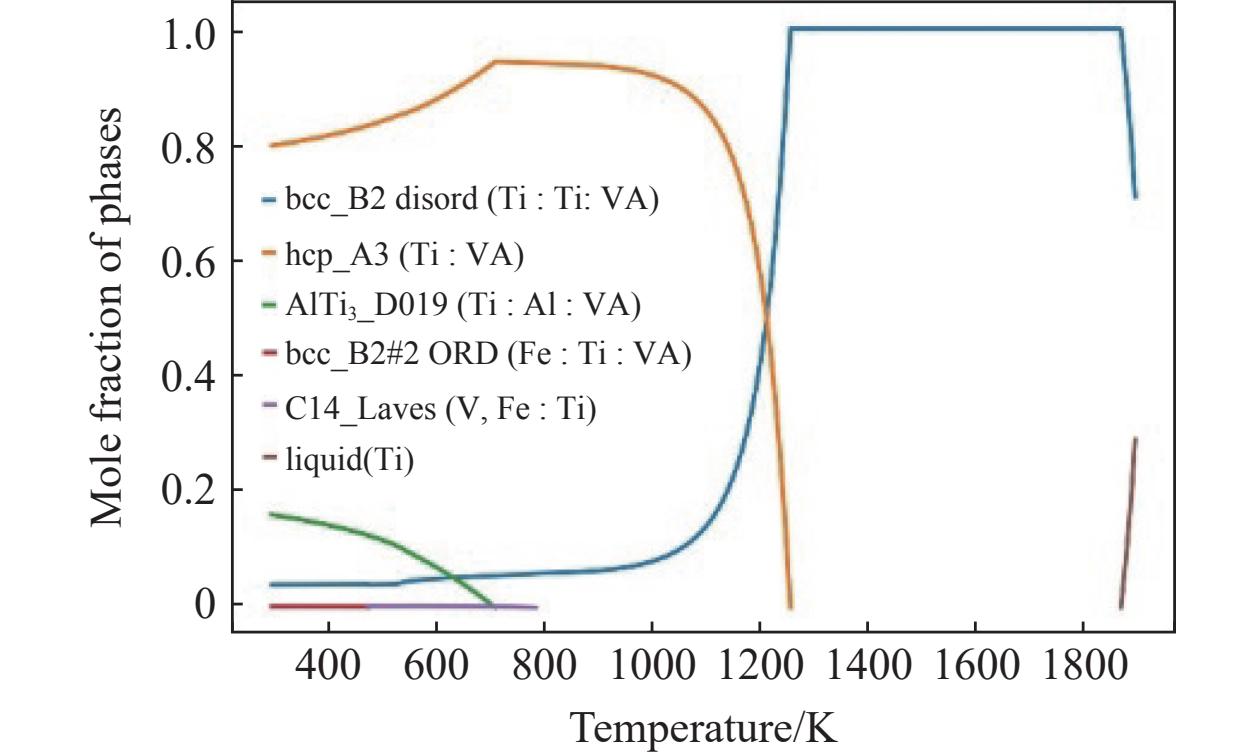
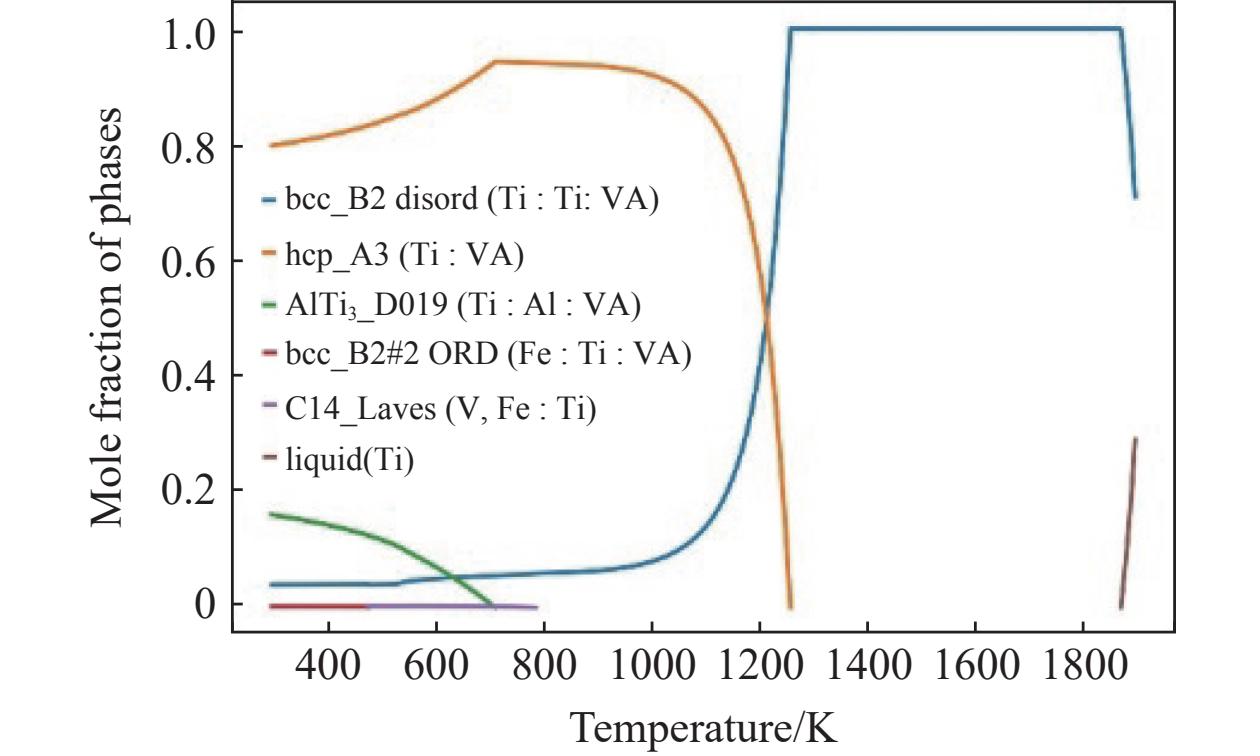
图 2 TC4钛合金中各相摩尔分数随温度的变化
Figure 2. Variation of molar phase fractions with temperature in TC4 titanium alloy
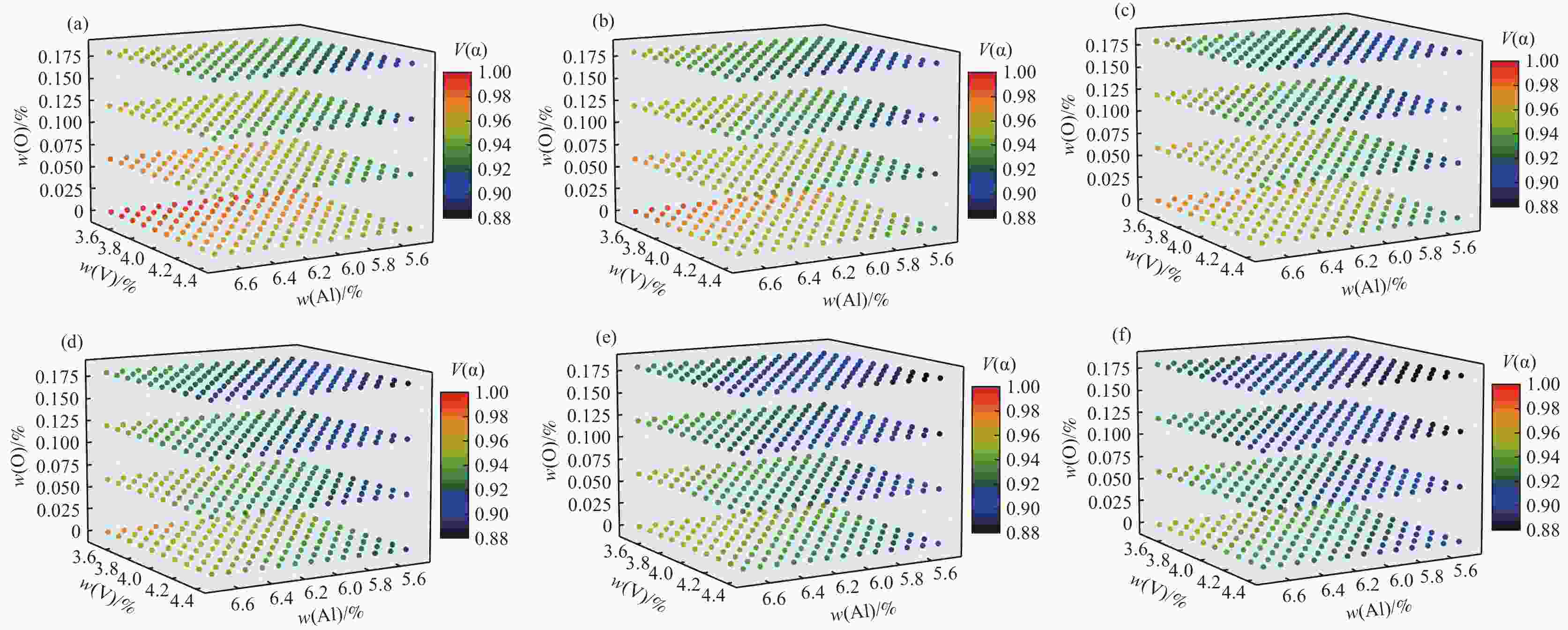
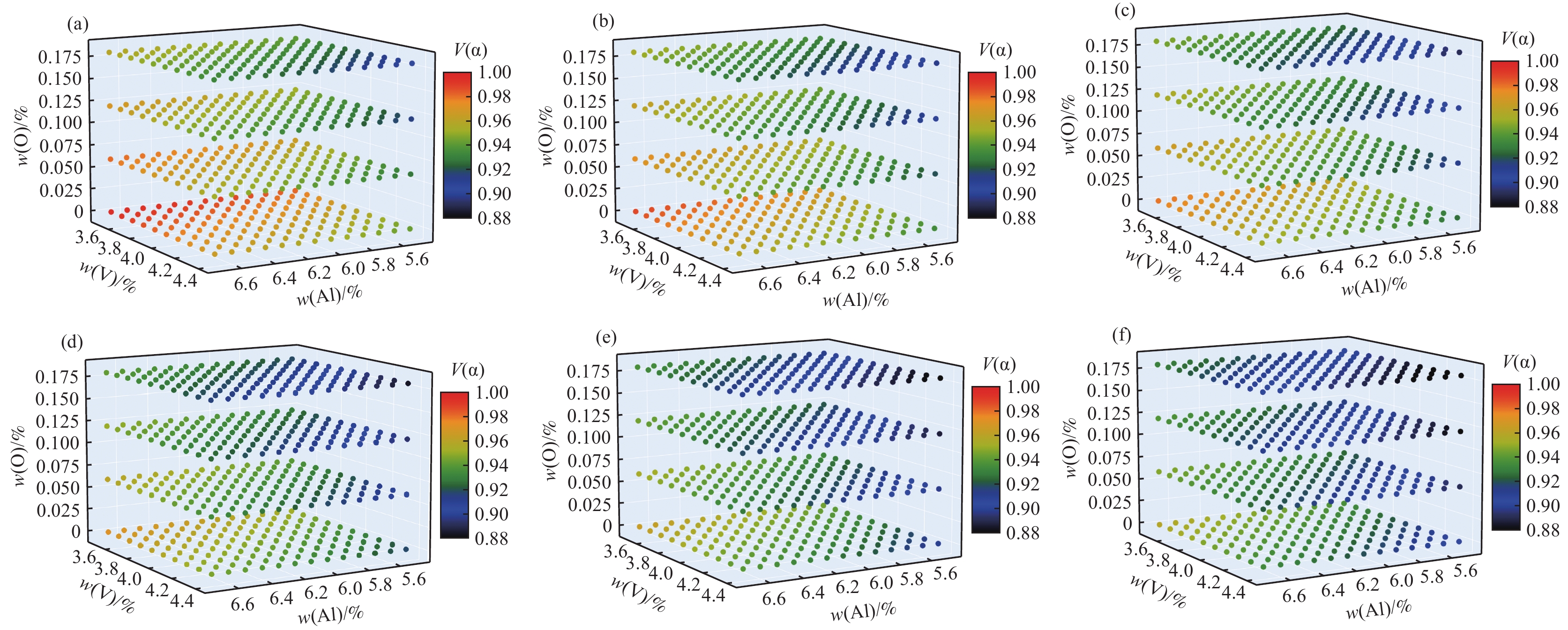
图 4 不同Fe元素含量下合金元素含量对 TC4 钛合金α相体积分数的影响
Figure 4. Effects of alloying element contents on volume fraction of α phase in TC4 titanium alloy with different Fe contents
(a) w(Fe)=0; (b) w(Fe)=0.05%;(c) w(Fe)=0.1%;(d) w(Fe)=0.15%;(e) w(Fe)=0.2%;(f) w(Fe)=0.25%
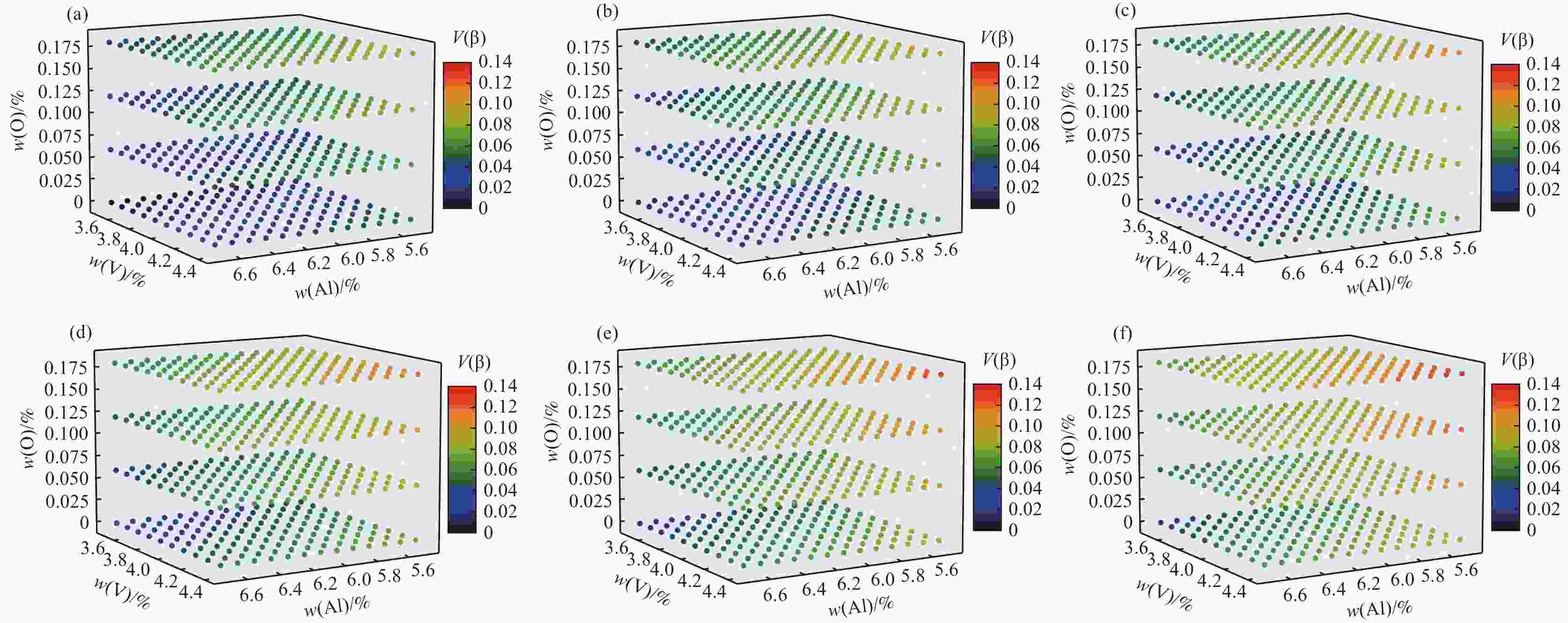
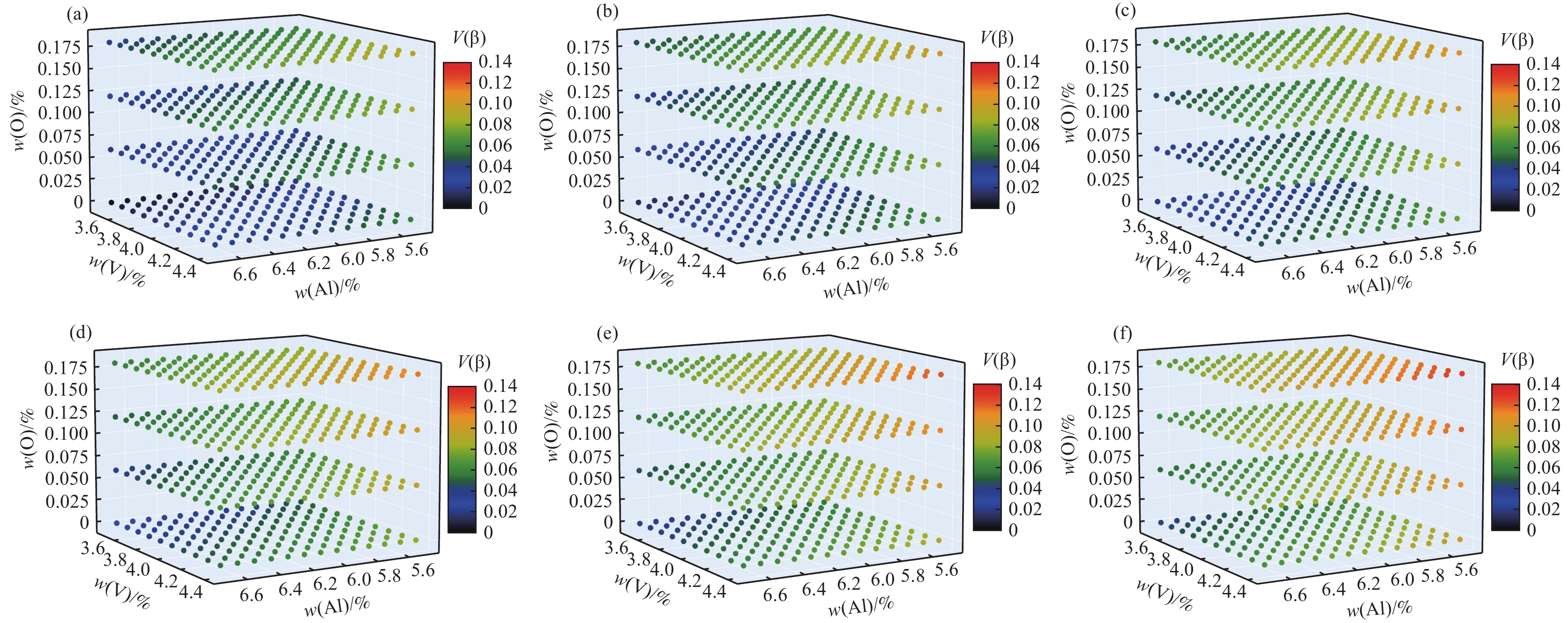
图 5 不同Fe元素含量下合金元素含量对 TC4 钛合金β相体积分数的影响
Figure 5. Effects of alloying element contents on volume fraction of β phase in TC4 titanium alloy with different Fe contents
(a) w(Fe)=0;(b) w(Fe)=0.05%; (c) w(Fe)=0.1%; (d) w(Fe)=0.15%; (e) w(Fe)=0.2%; (f) w(Fe)=0.25%
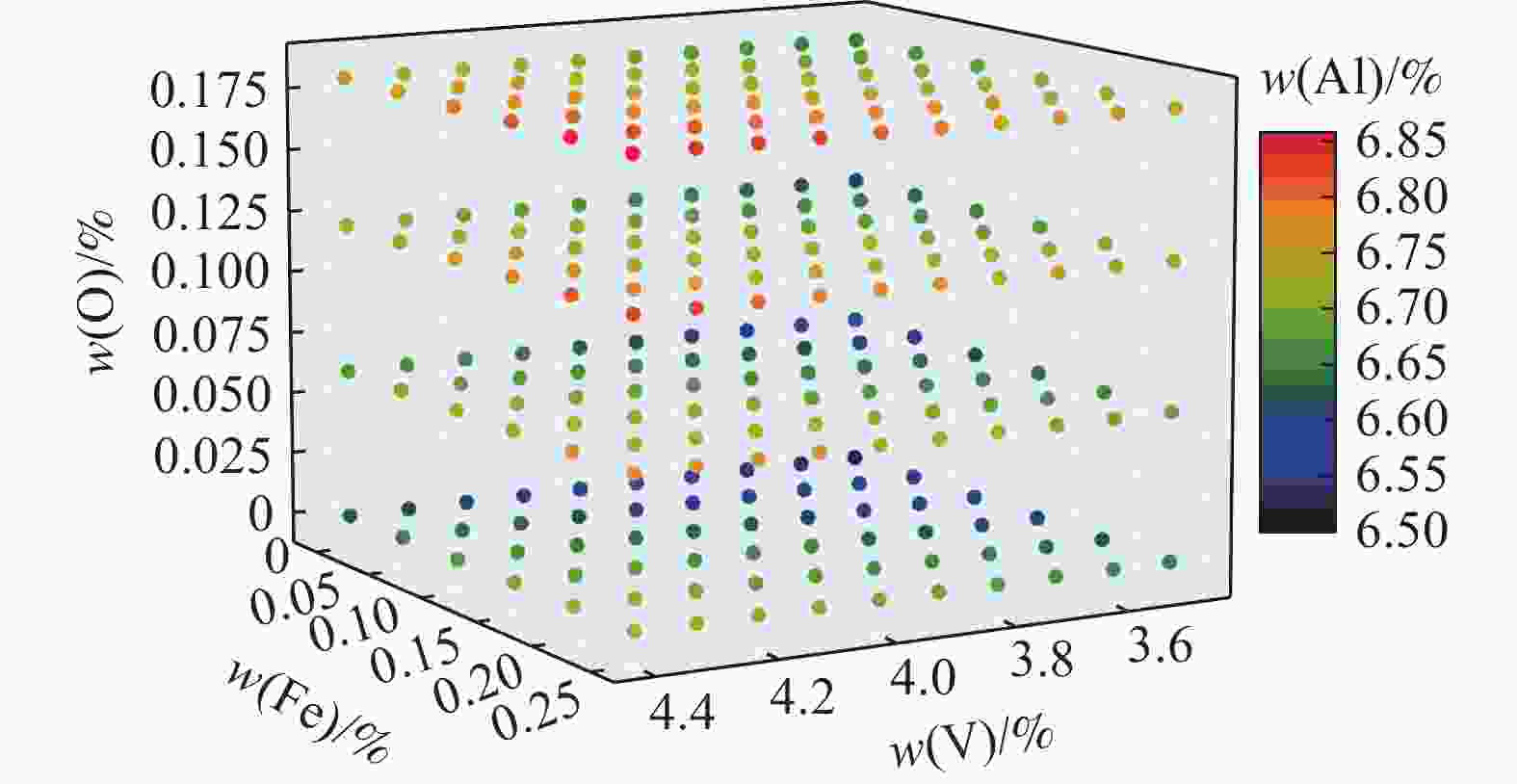
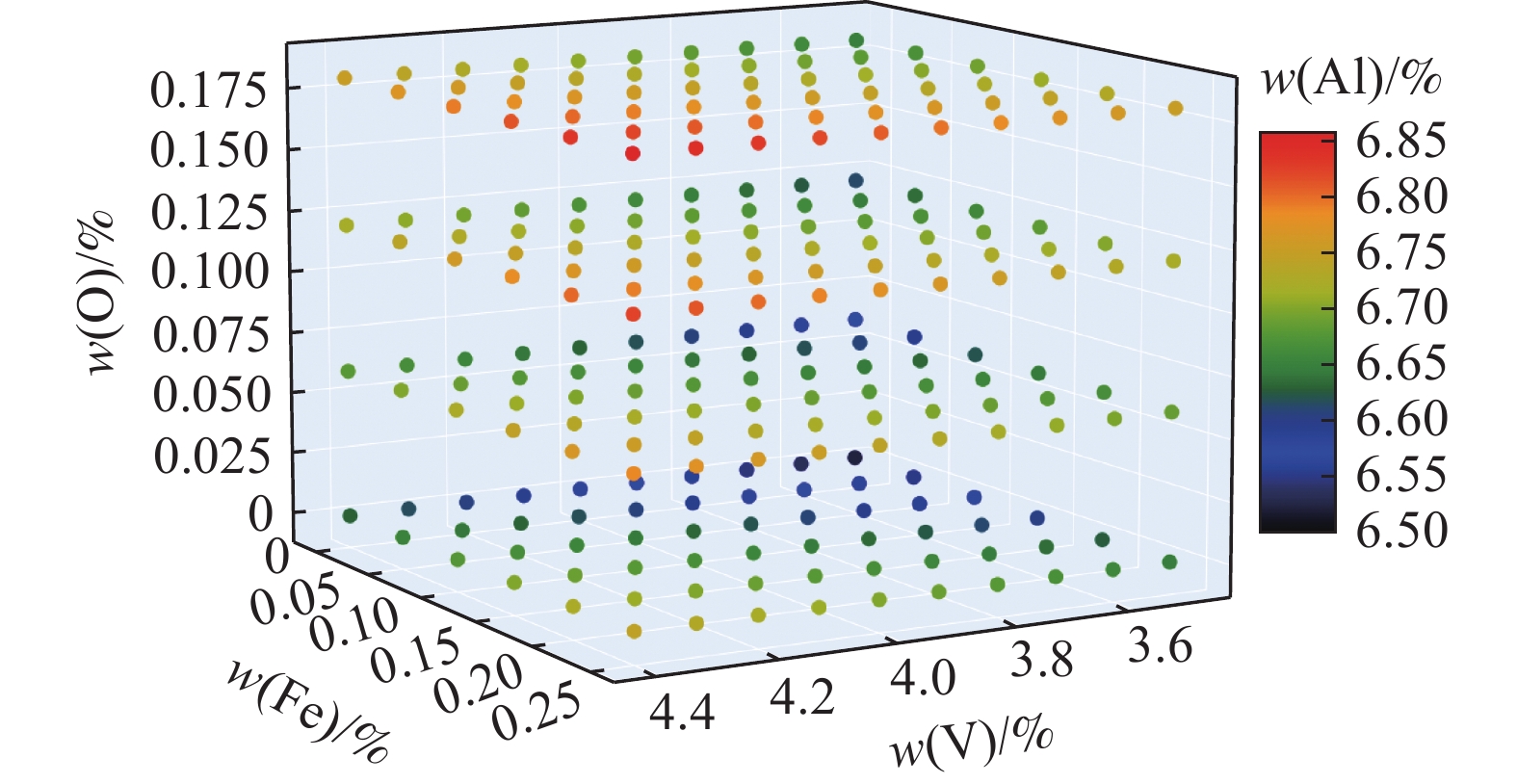
图 6 固定Al质量分数(6.5%)时V、Fe、O含量对Al在α相中含量的影响
Figure 6. Effect of V, Fe, and O contents on Al content in α-phase at a fixed Al mass fraction of 6.5%
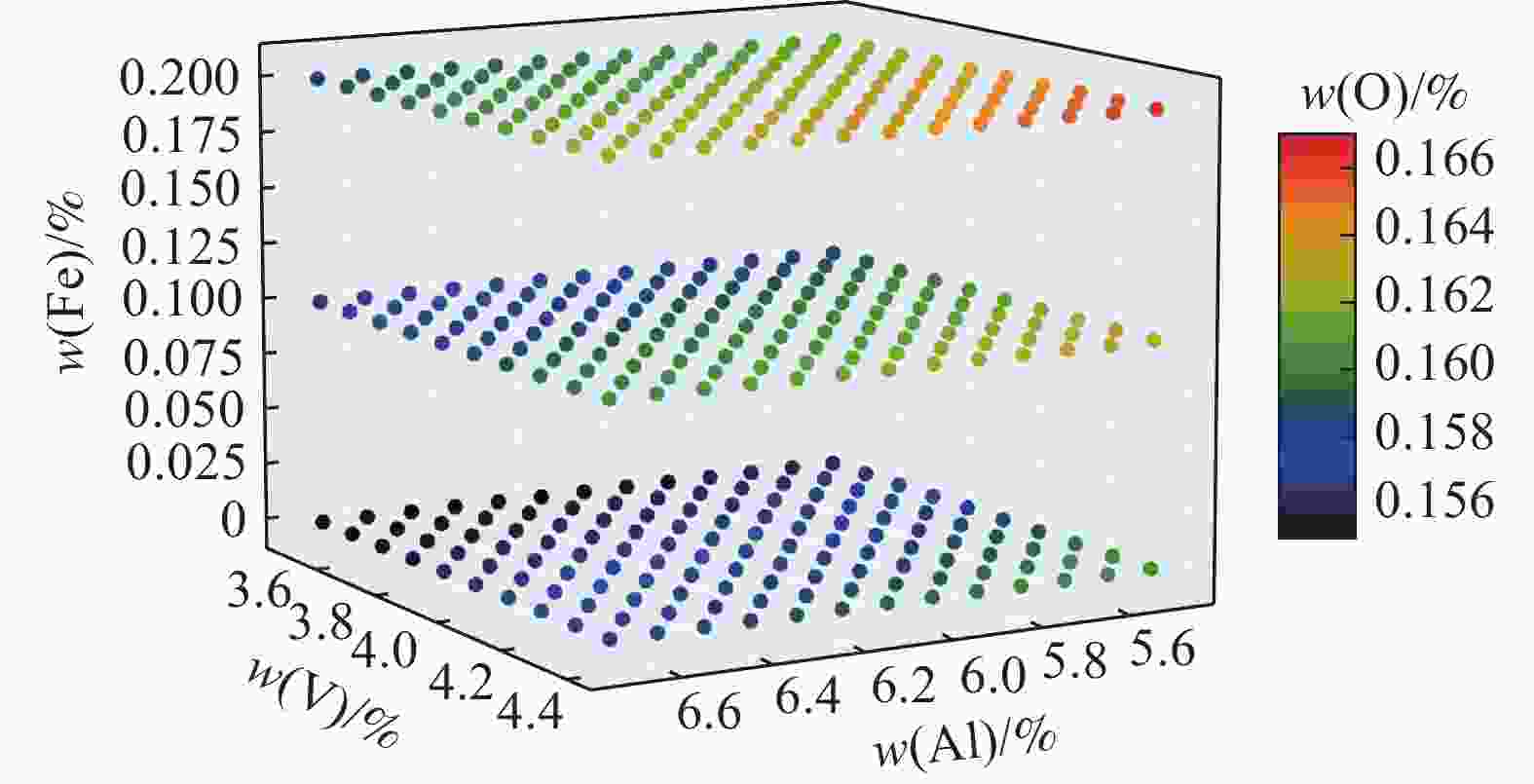
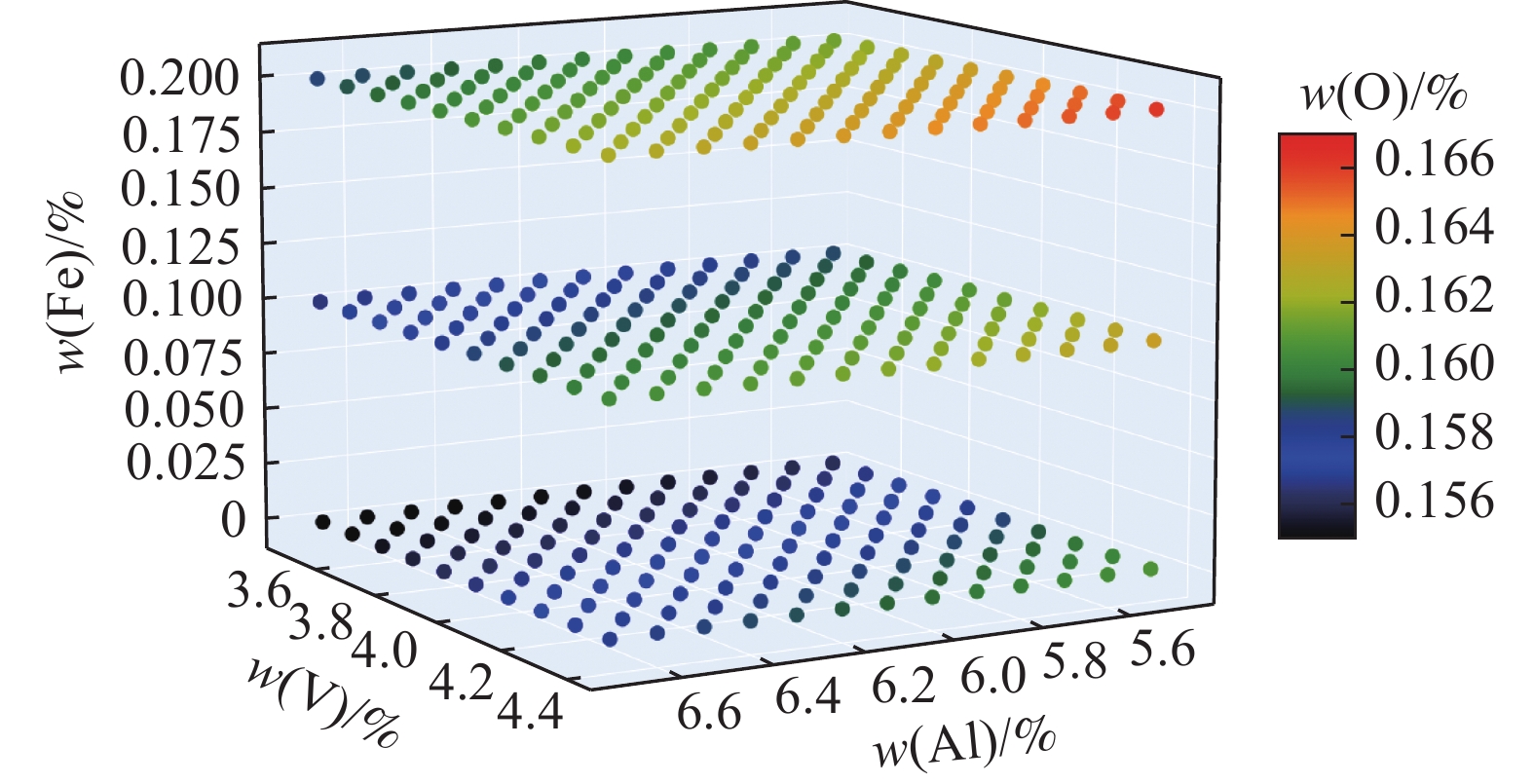
图 7 固定O质量分数(0.15%)时Al、V、Fe含量对O在α相中含量的影响
Figure 7. Effect of Al, V, and Fe contents on the O content in the α-phase at a fixed O mass fraction of 0.15%
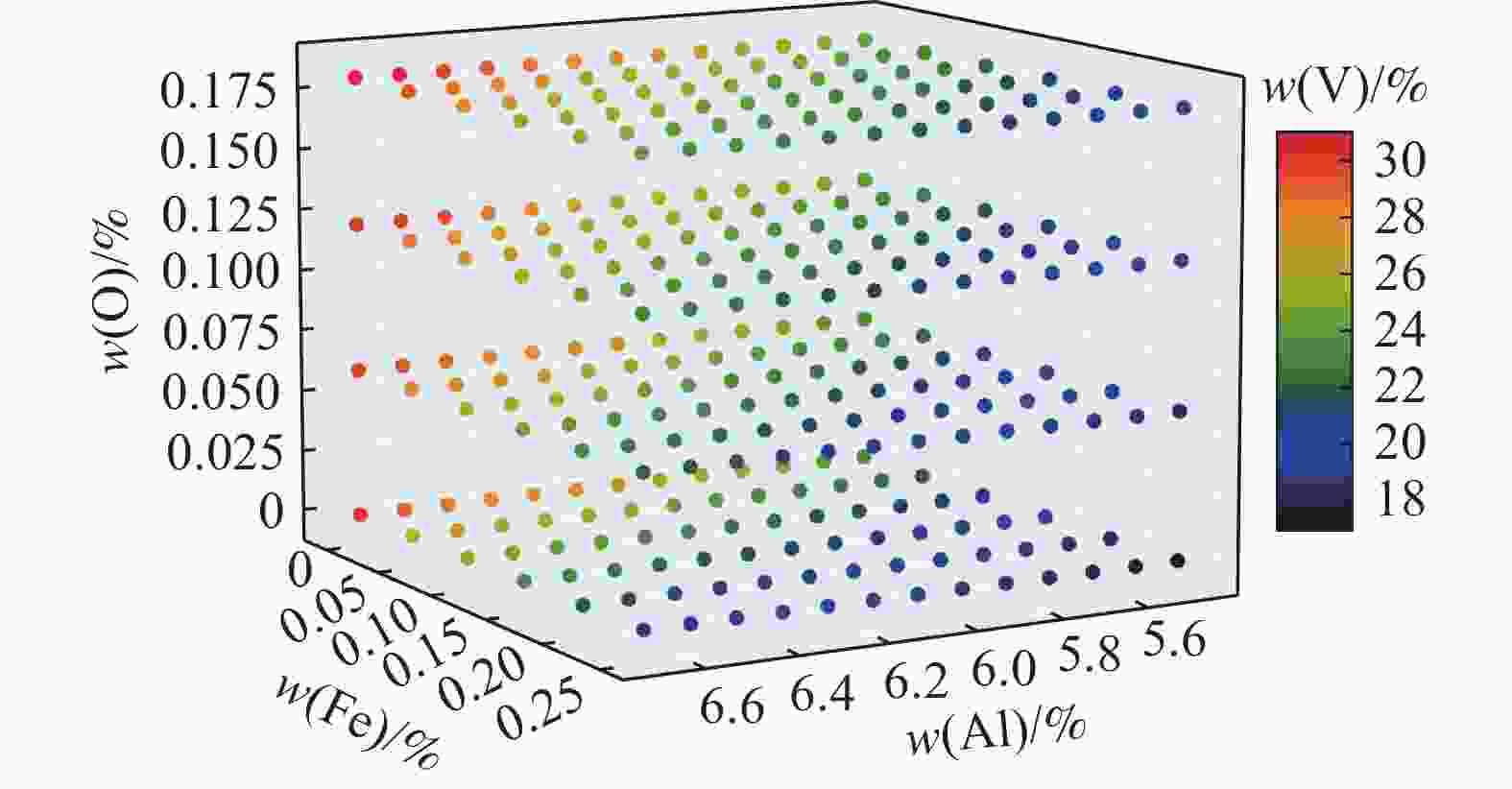
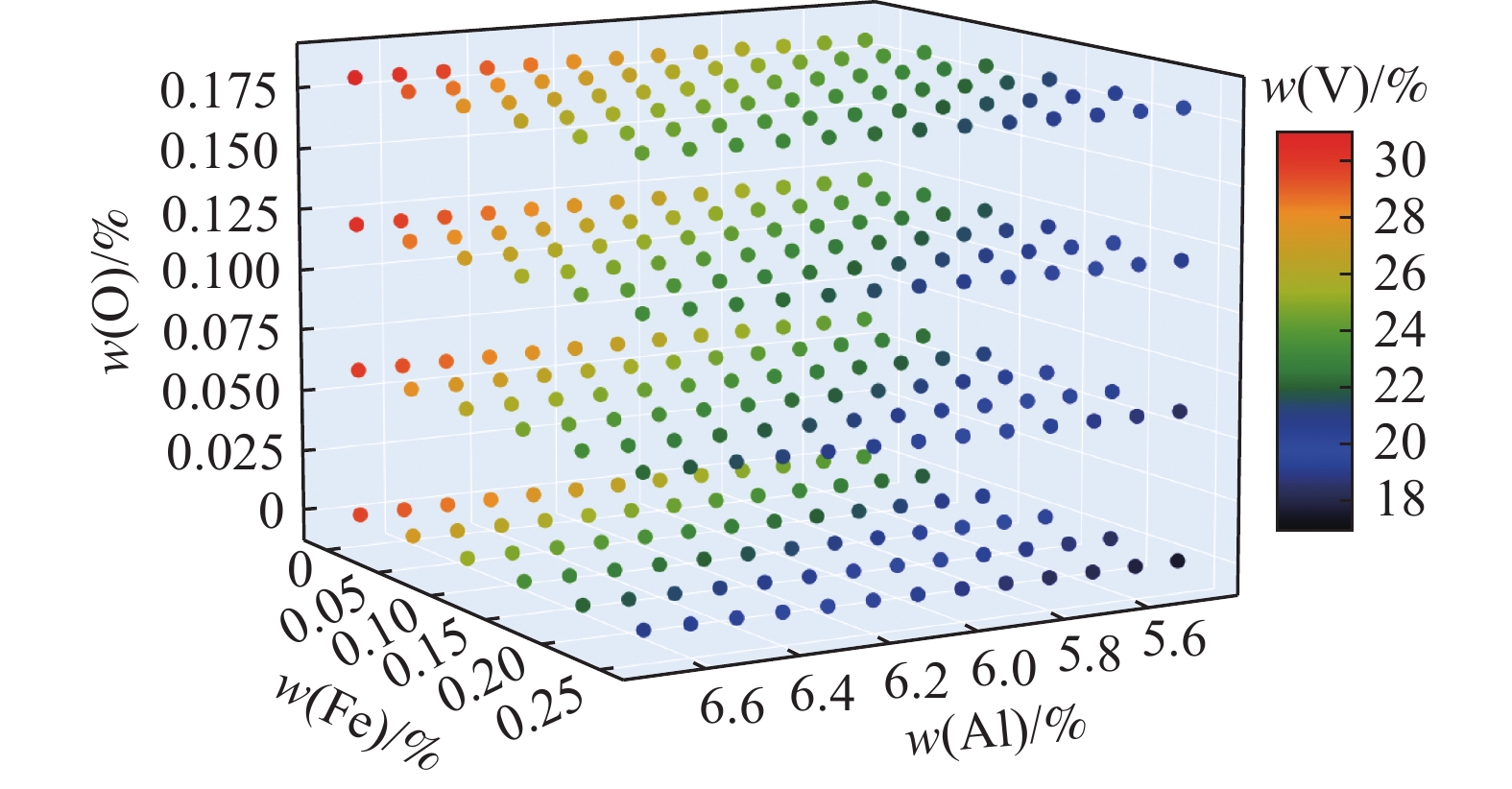
图 8 固定V质量分数(4.4%)时Al、Fe、O含量对V元素在β相中含量的影响
Figure 8. Effect of Al, Fe, and O contents on V content in β-phase at a fixed V mass fraction of 4.4%
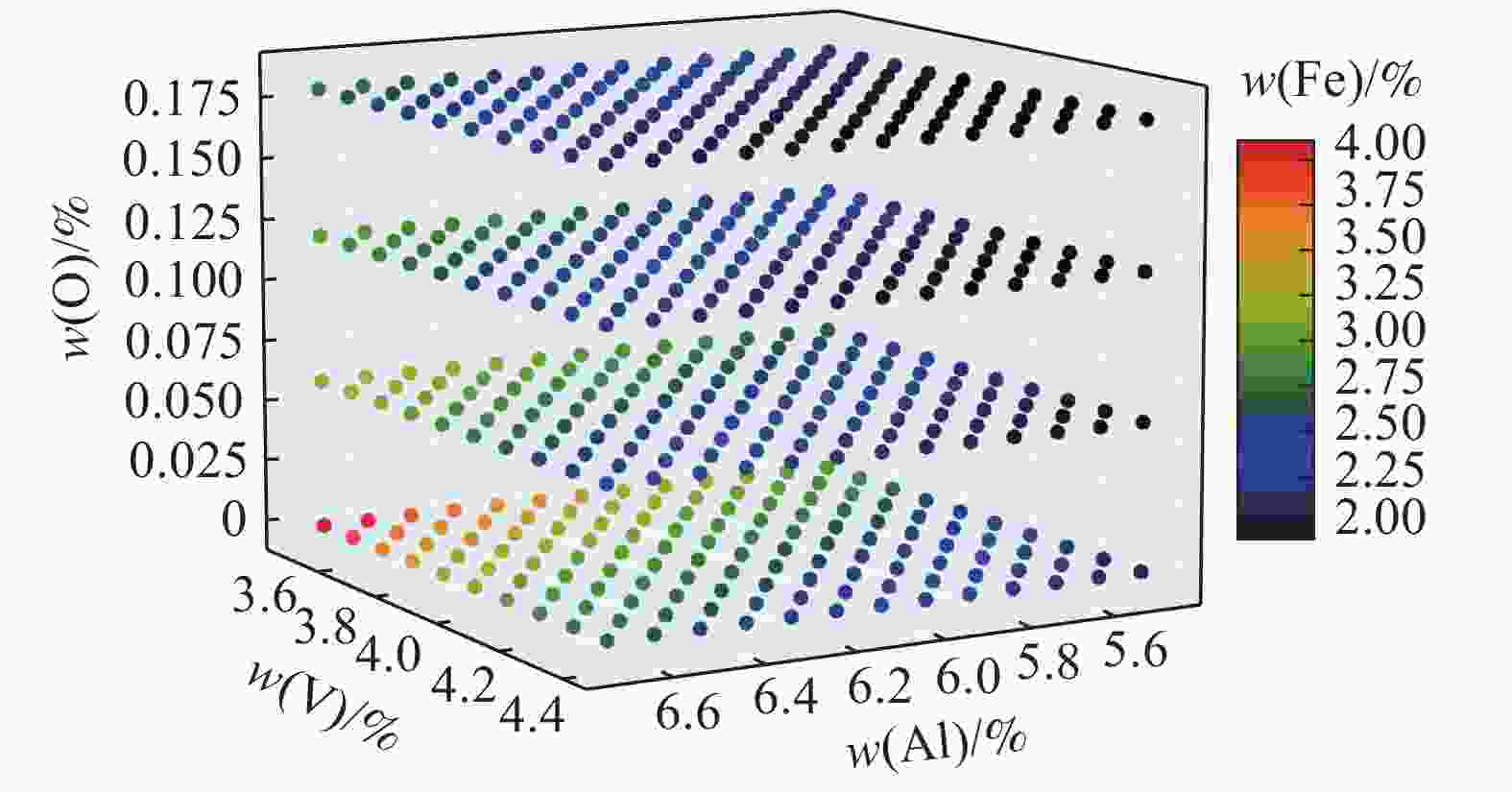
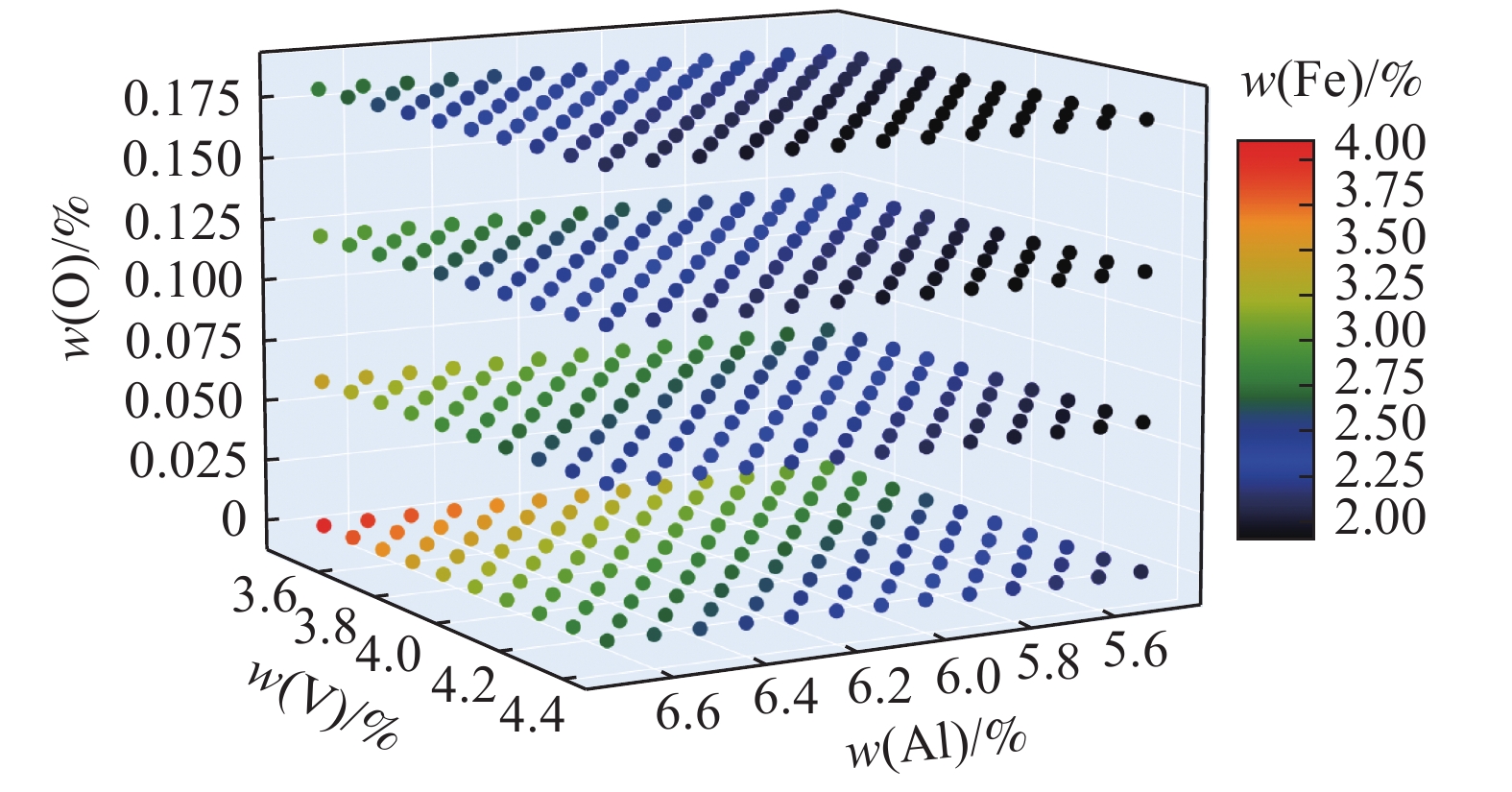
图 9 固定Fe质量分数(0.25%)时Al、V、O含量对Fe在β相中含量的影响
Figure 9. Effect of Al, V, and O contents on Fe content in β-phase at a fixed Fe mass fraction of 0.25%
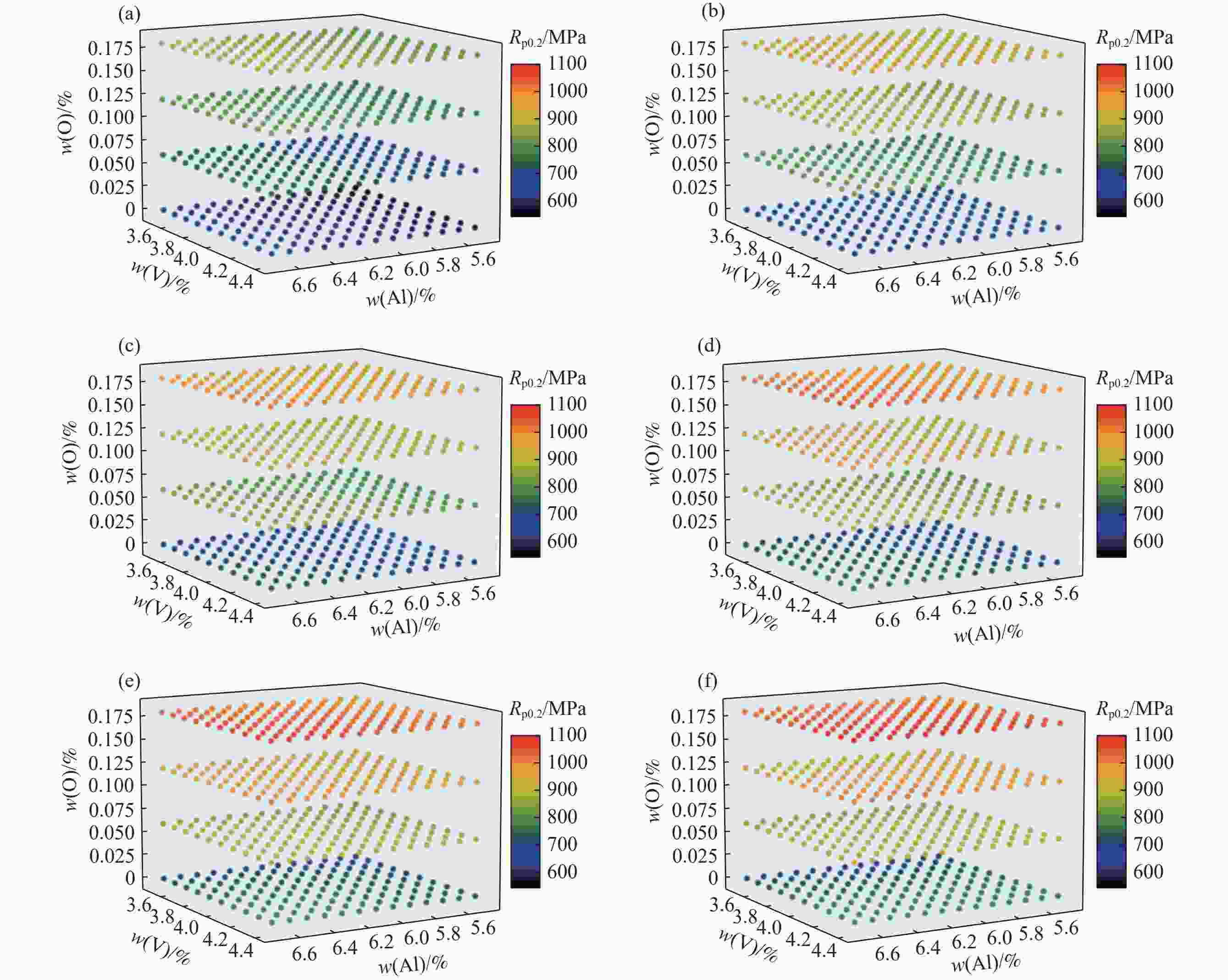
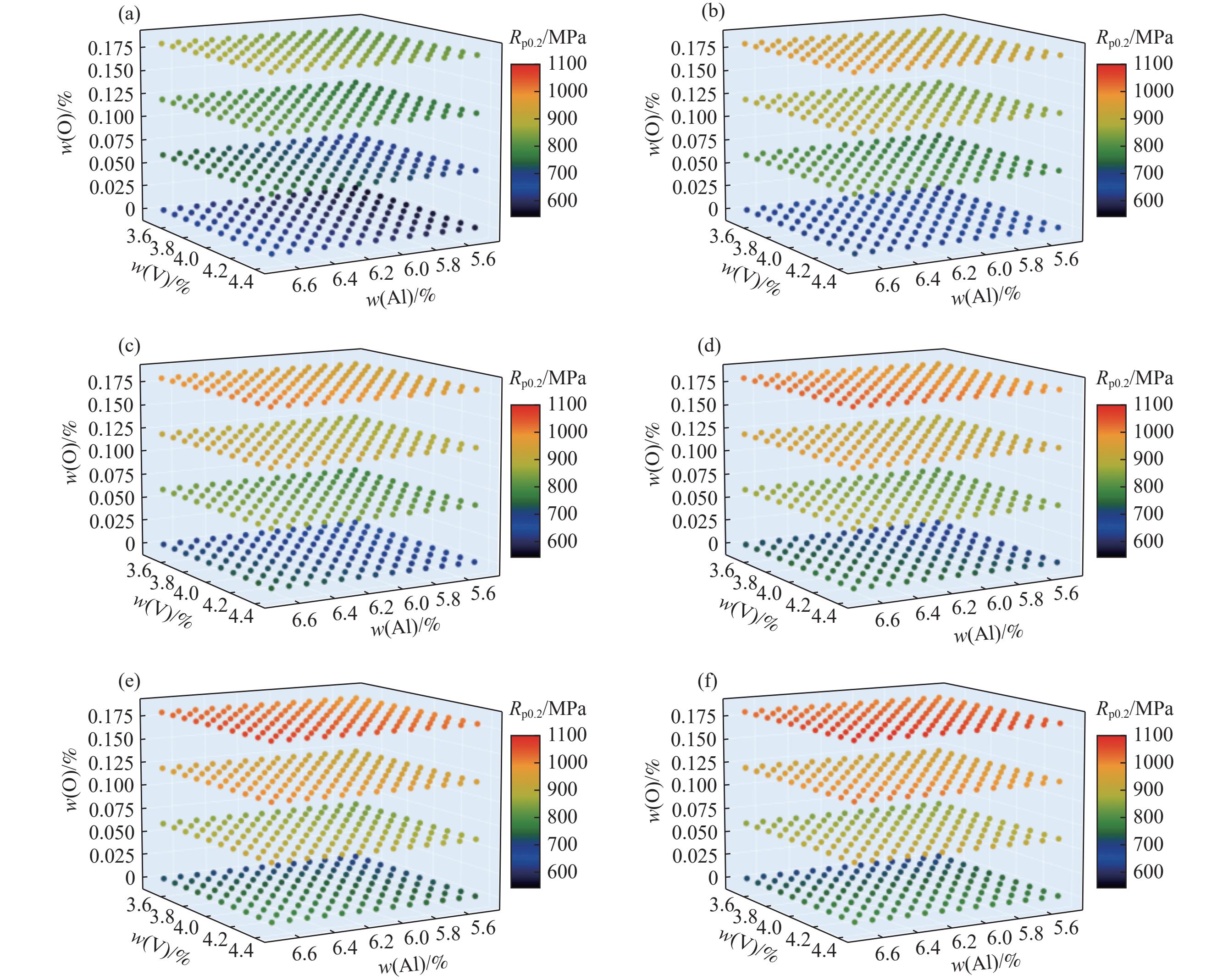
图 10 不同Fe元素含量下成分对屈服强度的影响
Figure 10. Effects of alloy composition on yield strength with different Fe contents
(a) w(Fe)=0; (b) w(Fe)=0.05%;(c) w(Fe)=0.1%; (d) w(Fe)=0.15%; (e) w(Fe)=0.2%;(f) w(Fe)=0.25%
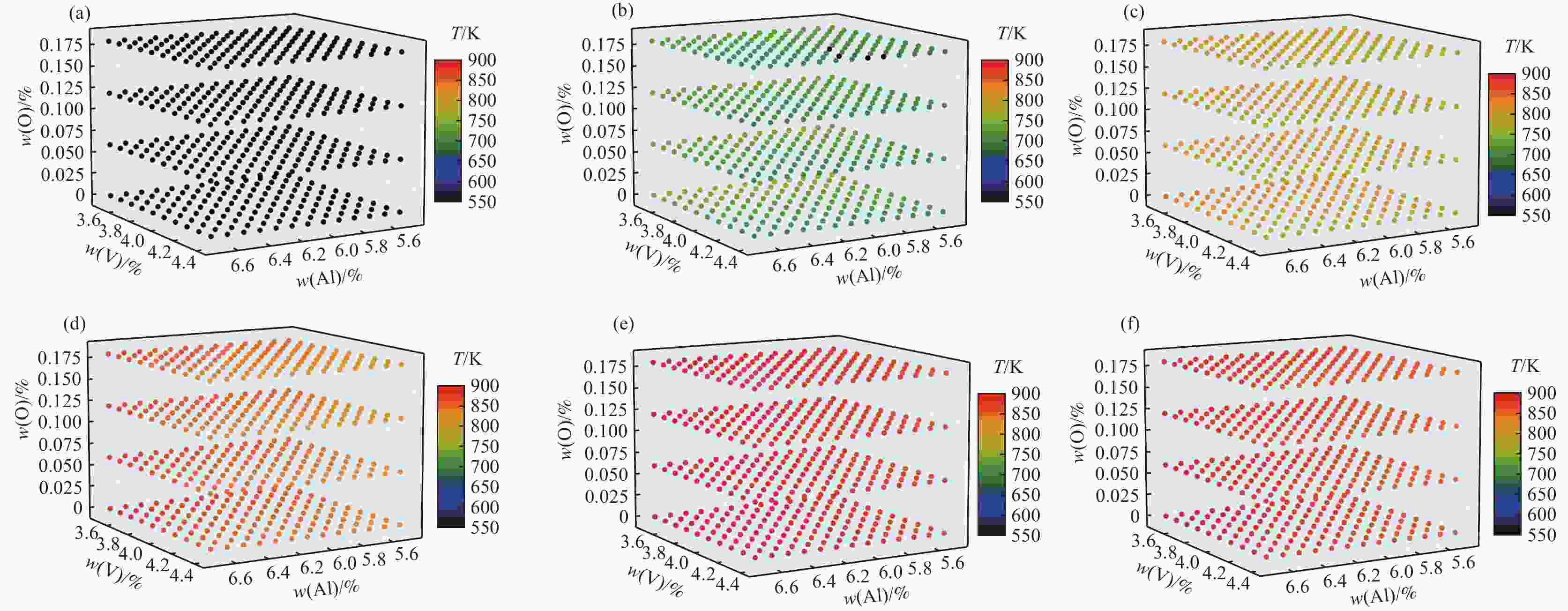
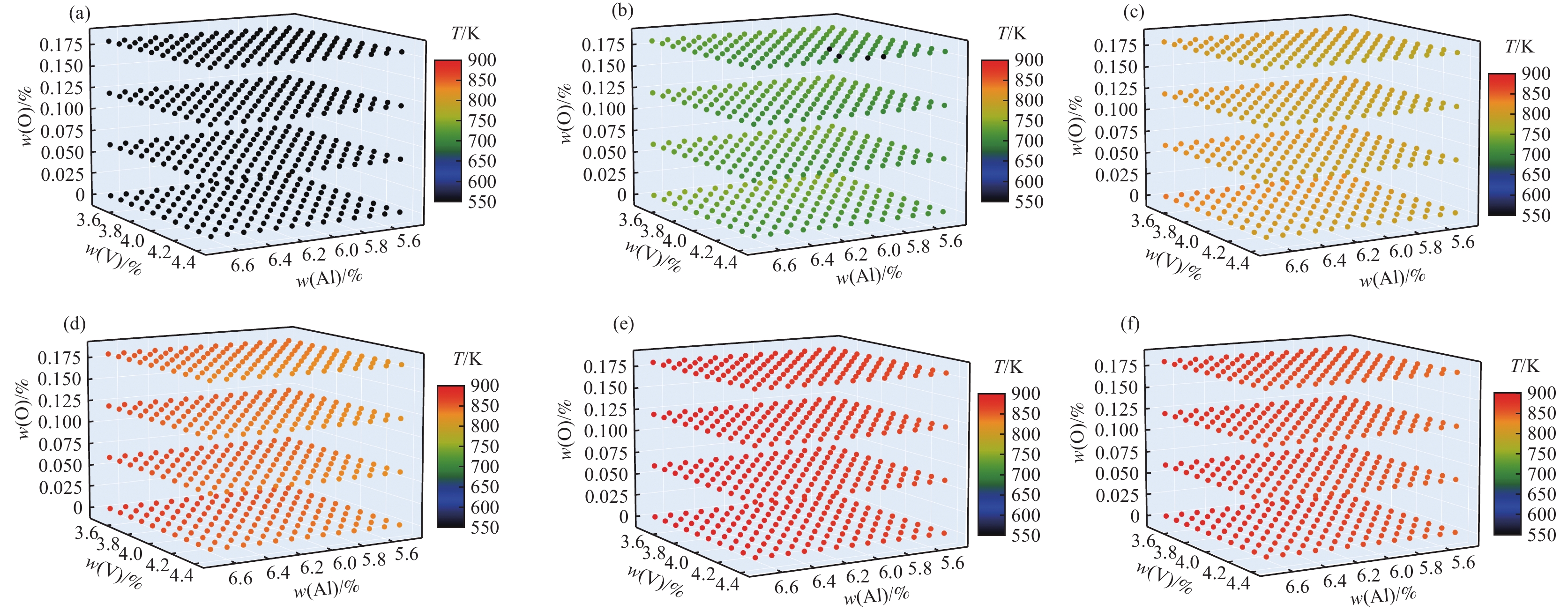
图 11 不同Fe元素含量下成分对Laves相开始析出温度的影响
Figure 11. Effects of alloy composition on initial precipitation temperature of Laves phase with different Fe contents
(a) w(Fe)=0; (b) w(Fe)=0.05%; (c) w(Fe)=0.1%;(d) w(Fe)=0.15%;(e) w(Fe)=0.2%; (f) w(Fe)=0.25%
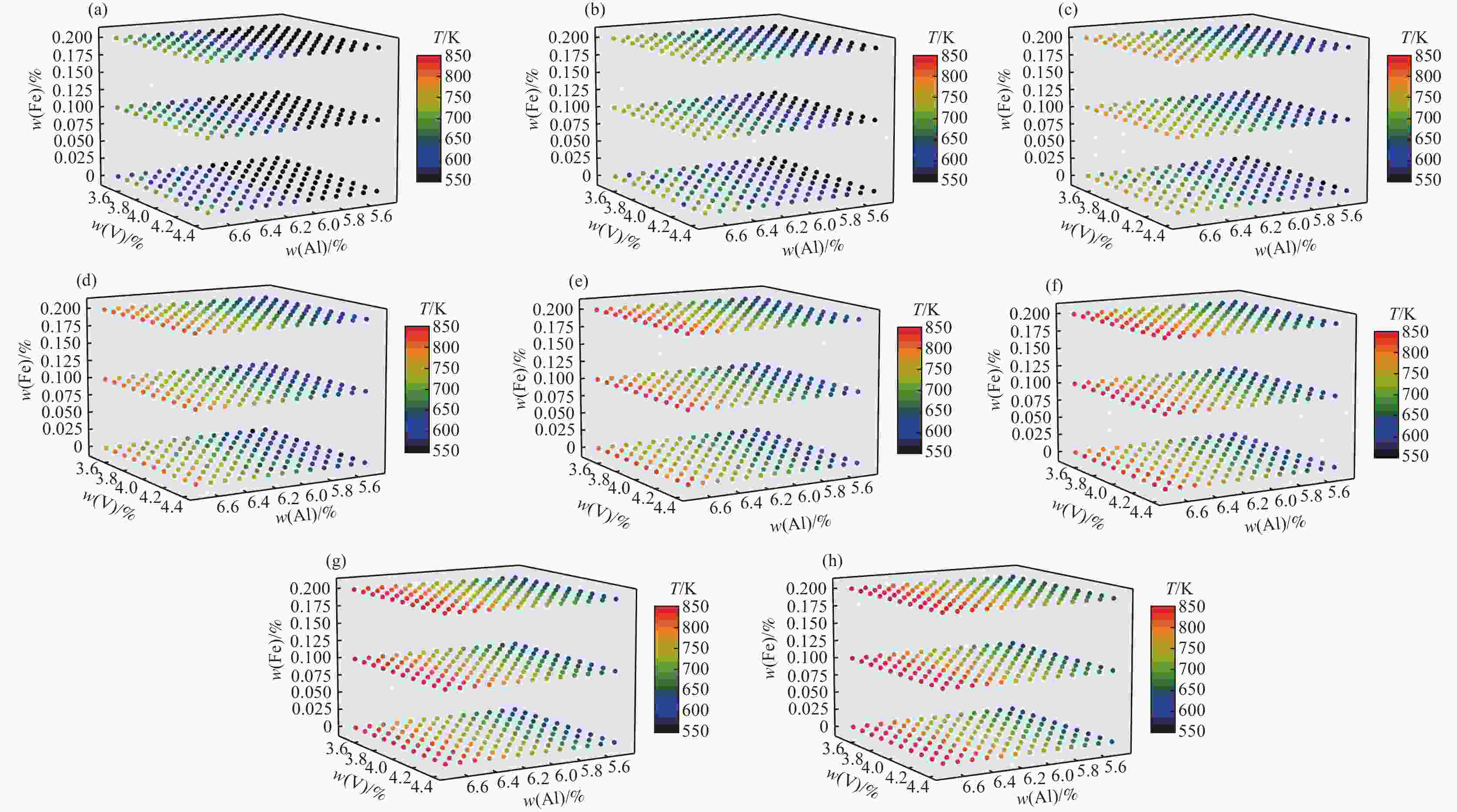
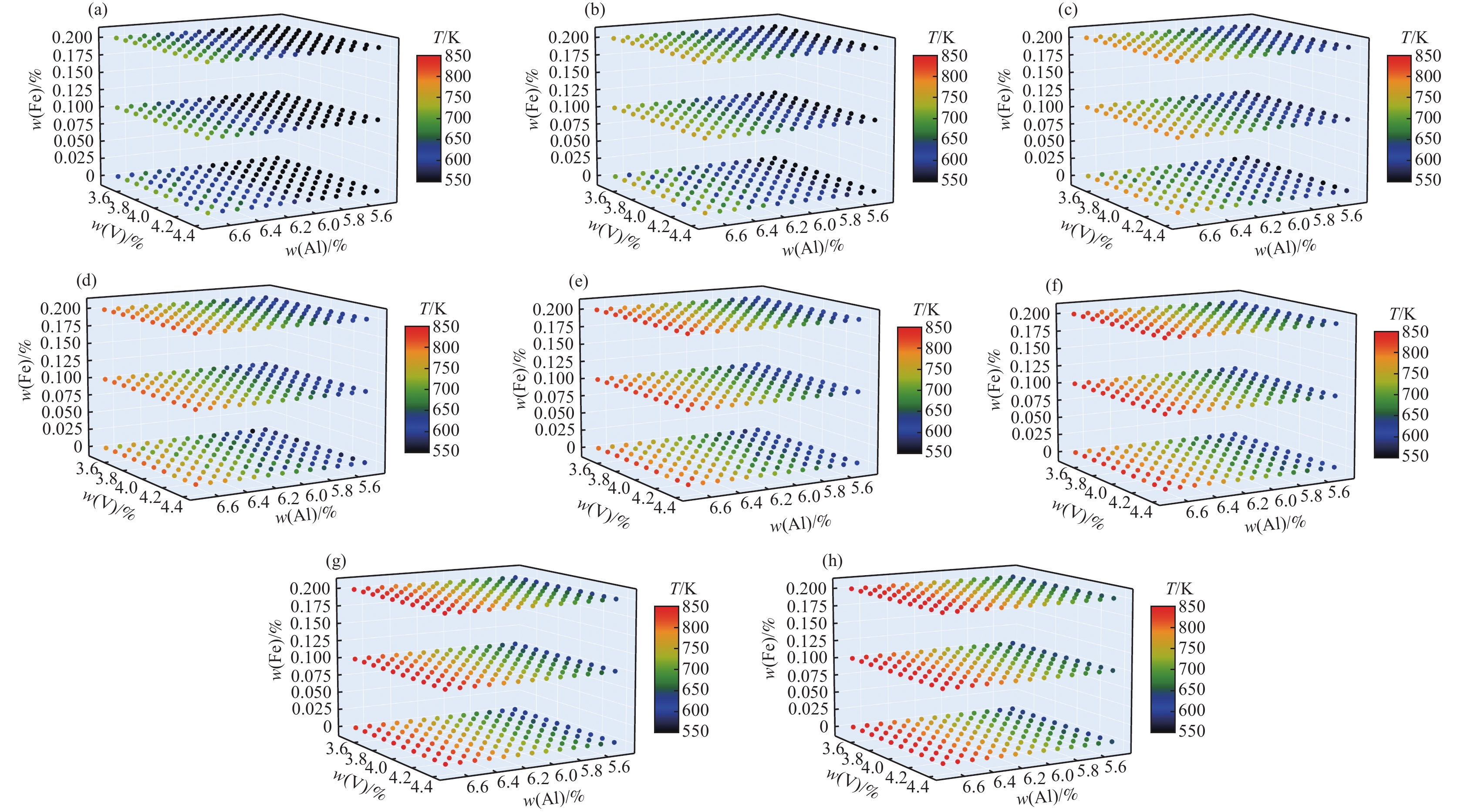
图 12 不同氧元素含量下成分对Ti3Al相开始析出温度的影响
Figure 12. Effects of alloy composition on initial precipitation temperature of Ti3Al phase with different O contents
(a) w(O)=0;(b) w(O)=0.03%; (c) w(O)=0.06%; (d) w(O)=0.09%;(e) w(O)=0.12%; (f)w(O)=0.15%;(g) w(O)=0.18%;(h) w(O)=0.21%
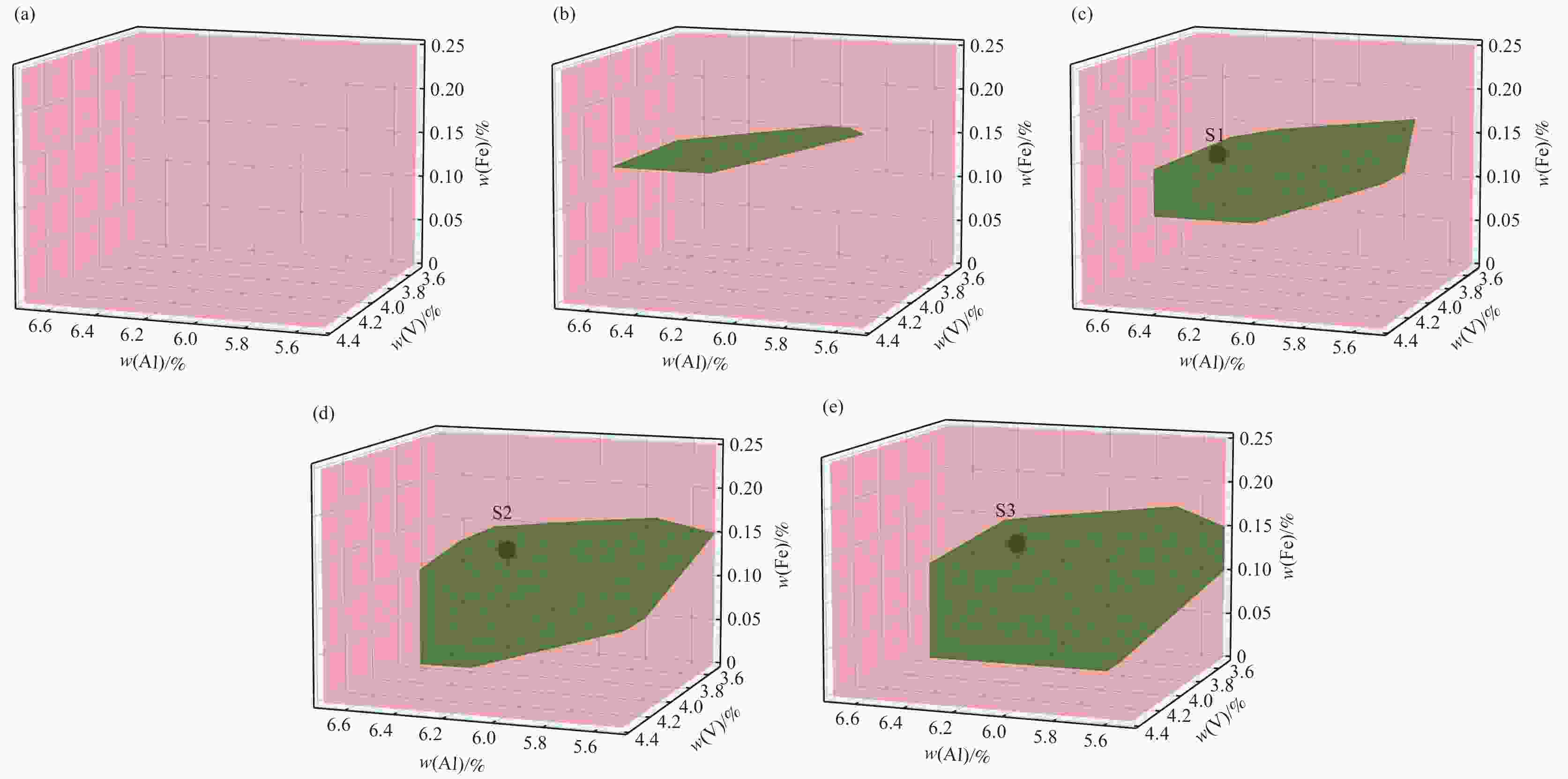
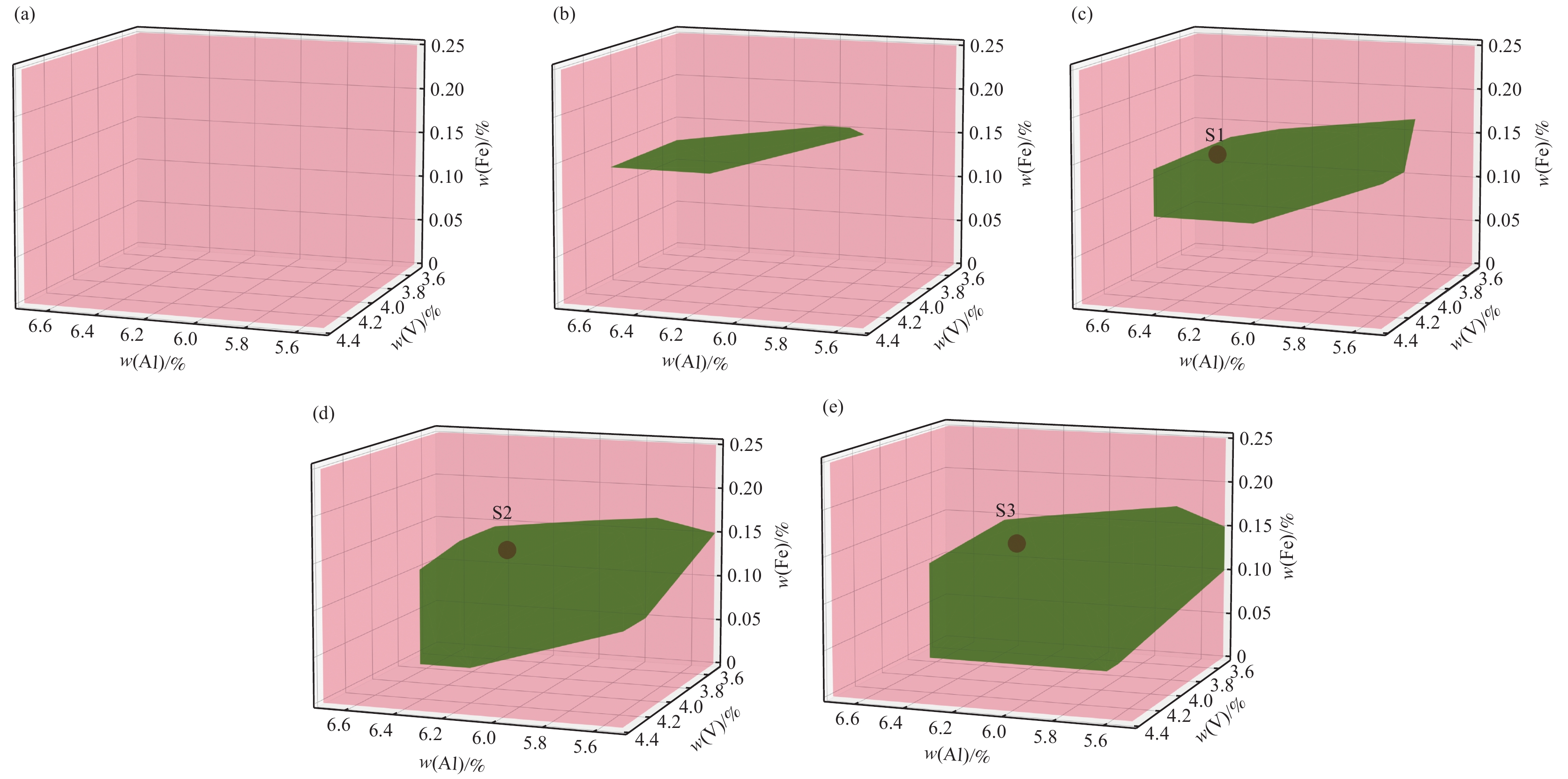
图 13 不同O含量下TC4钛合金成分多目标筛选可行区及试验验证样品位置
(绿色区域为满足筛选条件的可行区;黑点为试验验证样品S1~S3。)
Figure 13. Feasible composition regions for multi-objective screening of TC4 titanium alloy with different O contents and locations of experimentally verified samples
(a) w(O)=0.09%;(b) w(O)=0.12%; (c) w(O)=0.15%;(d) w(O)=0.18%;(e) w(O)=0.21%
表 1 双相钛合金主要强化机制和计算公式
Table 1. Primary strengthening mechanisms and calculation formulas for dual-phase titanium alloys
Strengthening mechanism Formula Intrinsic strengthening of α and β phases $ \left(89\times F_{V}^{\alpha }\right)+\left(45\times F_{V}^{\beta }\right) $ Solid-solution strengthening of α phase $ F_{V}^{\alpha }\times \left(149.5\times {C}_{\text{Al}}{}^{0.667}+{745}^{}\times C_{\text{O}}^{}{}^{0.667}\right) $ Solid-solution strengthening of β phase $ F_{V}^{\beta }\times {\left({\left(34\times {C}_{\text{V}}{}^{0.765}\right)}^{0.5}+{\left({245}^{}\times {C}_{\text{Fe}}{}^{0.765}\right)}^{0.5}\right)}^{2.15} $ Hall-Petch strengthening of equiaxed α phase $ 110\times {F}_{V}{}^{\text{equiaxed}\_ \alpha }\times {\text{Equiaxed}}_{\text{size}}{}^{-0.5} $ Hall-Petch strengthening of lamellar α phase $ \left(1-F_V^{\text{equiaxed}\_\alpha}\right)\times\dfrac{\mathrm{Colony}}{100}\times180\times LW^{-0.13}\times\text{R}T^{0.13} $ Strengthening from basket-weave microstructure $ \left(1-F_V^{\text{equiaxed}\_{\alpha}}\right)\times\dfrac{100-\mathrm{Colony}}{100}\times0.2\times SSS $  下载: 导出CSV
表 2 TC4钛合金的标准成分和计算选择的成分
Table 2. Standard composition and selected computational compositions of TC4 titanium alloy
% Element Ti Al V Fe O Standard composition Bal. 5.5~6.75 3.5~4.5 0.0~0.3 0.0~0.21 Computational step Bal. Δ=0.1 Δ=0.1 Δ=0.05 Δ=0.03
下载: 导出CSV
-
[1] PETERS M, KUMPFERT J, WARD C H. Titanium alloys for aerospace applications[J]. Advanced Engineering Materials, 2003, 5(6): 419-427. doi: 10.1002/adem.200310095 [2] FROES F H. Titanium: Physical Metallurgy, Processing, and Applications[M]. Materials Park: ASM International, 2015. [3] BOYER R R. An overview on the use of titanium in the aerospace industry[J]. Materials Science and Engineering: A, 1996, 213(1/2): 103-114. doi: 10.1016/0921-5093(96)10233-1 [4] LÜTJERING G, WILLIAMS J C, LÜTJERING G, et al. Titanium matrix composites[M]. Berlin: Springer, 2003. [5] LEYENS C, PETERS M. Titanium and Titanium Alloys: Fundamentals and Applications[M]. Weinheim: Wiley-VCH, 2003. [6] FROST H J, ASHBY M F. Deformation-Mechanism Maps: The Plasticity and Creep of Metals and Ceramics[M]. Oxford: Pergamon Press, 1982. [7] SAUNDERS N, MIODOWNIK A P. CALPHAD (Calculation of Phase Diagrams): A Comprehensive Guide[M]. Oxford: Pergamon, 1998. [8] GHASSEMALI E, CONWAY P L J. High-throughput CALPHAD: a powerful tool towards accelerated metallurgy[J]. Frontiers in Materials, 2022, 9: 889771. doi: 10.3389/fmats.2022.889771 [9] DONG F Y, LIU F, SHEN X Y, et al. Development status of high-entropy alloy powder preparation techniques and applications[J]. China Powder Science and Technology, 2025, 31(6): 92-106. (董福宇, 刘峰, 申向阳, 等. 高熵合金粉体制备及应用的发展现状[J]. 中国粉体技术, 2025, 31(6): 92-106. doi: 10.13732/j.issn.1008-5548.2025.06.007DONG F Y, LIU F, SHEN X Y, et al. Development status of high-entropy alloy powder preparation techniques and applications[J]. China Powder Science and Technology, 2025, 31(6): 92-106. doi: 10.13732/j.issn.1008-5548.2025.06.007 [10] LIU Z K. CALPHAD and integrated computational materials engineering (ICME)[J]. Calphad, 2008, 32(3): 361-370. [11] JI S, WANG Q, XIA B, et al. Mechanical properties of multiphase materials and rocks: a phenomenological approach using generalized means[J]. Journal of Structural Geology, 2004, 26(8): 1377-1390. doi: 10.1016/j.jsg.2003.12.004 [12] GHAMARIAN I, HAYES B, SAMIMI P, et al. Developing a phenomenological equation to predict yield strength from composition and microstructure in β processed Ti-6Al-4V[J]. Materials Science and Engineering: A, 2016, 660: 172-180. doi: 10.1016/j.msea.2016.02.052 [13] GHAMARIAN I, SAMIMI P, DIXIT V, et al. A constitutive equation relating composition and microstructure to properties in Ti-6Al-4V: as derived using a novel integrated computational approach[J]. Metallurgical and Materials Transactions A, 2015, 46: 5021-5037. doi: 10.1007/s11661-015-3072-4 [14] ZHANG H Y, DING P, LIU F L, et al. High-throughput exploration of composition-dependent mechanical and diffusion properties of Ti-Al-V-Cr alloys[J]. Journal of Alloys and Compounds, 2025, 1021: 179651. doi: 10.1016/j.jallcom.2025.179651 [15] TONG J B, WANG X D, NIE J J, et al. Diffusion coefficients of bcc phase and atomic mobility in Ti-Al-Fe system[J]. Foundry Technology, 2024, 45(7): 672-680. (佟健博, 王向东, 聂晶晶, 等. Ti-Al-Fe体系bcc相扩散系数及原子移动性[J]. 铸造技术, 2024, 45(7): 672-680. doi: 10.16410/j.issn1000-8365.2024.4037TONG J B, WANG X D, NIE J J, et al. Diffusion coefficients of bcc phase and atomic mobility in Ti-Al-Fe system[J]. Foundry Technology, 2024, 45(7): 672-680. doi: 10.16410/j.issn1000-8365.2024.4037 [16] AHMED T, RACK H J. Phase transformations during cooling in α+β titanium alloys[J]. Materials Science and Engineering: A, 1998, 243(1/2): 206-211. doi: 10.1016/s0921-5093(97)00802-2 [17] OH J M, LEE B G, CHO S W, et al. Oxygen effects on the mechanical properties and lattice strain of Ti and Ti-6Al-4V[J]. Metals and Materials International, 2011, 17: 733-736. doi: 10.1007/s12540-011-1006-2 [18] RABADIA C D, LIU Y J, CHEN L Y, et al. Deformation and strength characteristics of Laves phases in titanium alloys[J]. Materials & Design, 2019, 179: 107891. doi: 10.1016/j.matdes.2019.107891 -

计量
- 文章访问数: 0
- HTML全文浏览量: 0
- PDF下载量: 0
- 被引次数: 0