Study on notch sensitivity of Ti-46Al-5Nb-0.1C alloy: high-temperature tensile and fatigue testing
-
摘要: 研究评估TiAl合金的缺口力学行为是保障TiAl合金低压叶片安全低风险运行的基本手段。通过制备不同应力集中系数的缺口试样,在两个不同温度下进行拉伸和疲劳测试,开展Ti-46Al-5Nb-0.1C合金的高温拉伸和疲劳的缺口敏感性研究。高温拉伸性能缺口敏感性研究结果表明,随应力集中系数Kt的增加,Ti-46Al-5Nb-0.1C合金在相同温度条件下平均抗拉强度先增加后减小;在相同应力集中系数Kt条件下,随温度的增加,平均抗拉强度略有下降,变化不大。高温疲劳性能缺口敏感性研究结果表明,Ti-46Al-5Nb-0.1C合金的疲劳强度随应力集中系数Kt的增加而下降;Ti-46Al-5Nb-0.1C合金在700 ℃下的疲劳强度高于在550 ℃下的疲劳强度,表明该合金具有较好的高温疲劳性能。使用扫描电镜观察了Ti-46Al-5Nb-0.1C合金的拉伸、疲劳断口形貌和裂纹扩展路径,发现高应力集中增加了断口表面的粗糙程度,不改变裂纹扩展路径。使用透射电镜观察了Ti-46Al-5Nb-0.1C合金的拉伸和疲劳变形组织中的位错分布,结果表明位错滑移是主要的变形机制,在变形组织中出现了少量的变形孪晶。Abstract: Investigating notch mechanics behavior of TiAl alloys is a fundamental approach for ensuring safe and low-risk operation of TiAl alloy low-pressure blades. In this study, notch specimens with different stress concentration factors were prepared and subjected to tensile and fatigue tests at two different temperatures to investigate the notch sensitivity of Ti-46Al-5Nb-0.1C alloy under high-temperature tensile and fatigue conditions. The results from investigation of high-temperature tensile performance notch sensitivity indicate that, under the same temperature conditions, average tensile strength of Ti-46Al-5Nb-0.1C alloy firstly increases and then decreases with the increase of the stress concentration factor Kt. Under the same stress concentration factor Kt, average tensile strength slightly decreases with the increase of temperature, but the change is not significant. The results from investigation of high-temperature fatigue performance notch sensitivity indicate that fatigue strength of Ti-46Al-5Nb-0.1C alloy decreases with increasing stress concentration factor Kt. The fatigue strength of Ti-46Al-5Nb-0.1C alloy at 700 ℃ is higher than that at 550 ℃, indicating that the alloy exhibits good high-temperature fatigue performance. Scanning electron microscopy (SEM) was used to observe the fracture surface morphology and crack propagation and widening of the Ti-46Al-5Nb-0.1C alloy under tensile and fatigue loading. It was found that high stress concentration increased the surface roughness of the fracture surface but did not alter the crack propagation path. Transmission electron microscopy was used to observe the dislocation distribution in the tensile and fatigue deformation microstructures of the Ti-46Al-5Nb-0.1C alloy. The results indicated that dislocations glide were the primary deformation mechanism, with a small amount of deformation twinning observed in the deformation microstructure.
-
Key words:
- TiAl alloys /
- tensile notch sensitivity /
- fatigue notch sensitivity /
- fracture /
- cracks
-

图 2 Ti-46Al-5Nb-0.1C合金拉伸应力集中试样尺寸形貌
(a)光滑拉伸试样;(b)缺口拉伸试样
Figure 2. Dimensions and morphology of tensile stress concentration specimens for the Ti-46Al-5Nb-0.1C alloy

图 3 Ti-46Al-5Nb-0.1C合金高周疲劳试样尺寸形貌
(a)光滑疲劳试样,Kt=1;(b)缺口疲劳试样,Kt=2;(c)缺口疲劳试样,Kt=3
Figure 3. Dimensions and morphology of high-cycle fatigue specimens for the Ti-46Al-5Nb-0.1C alloy
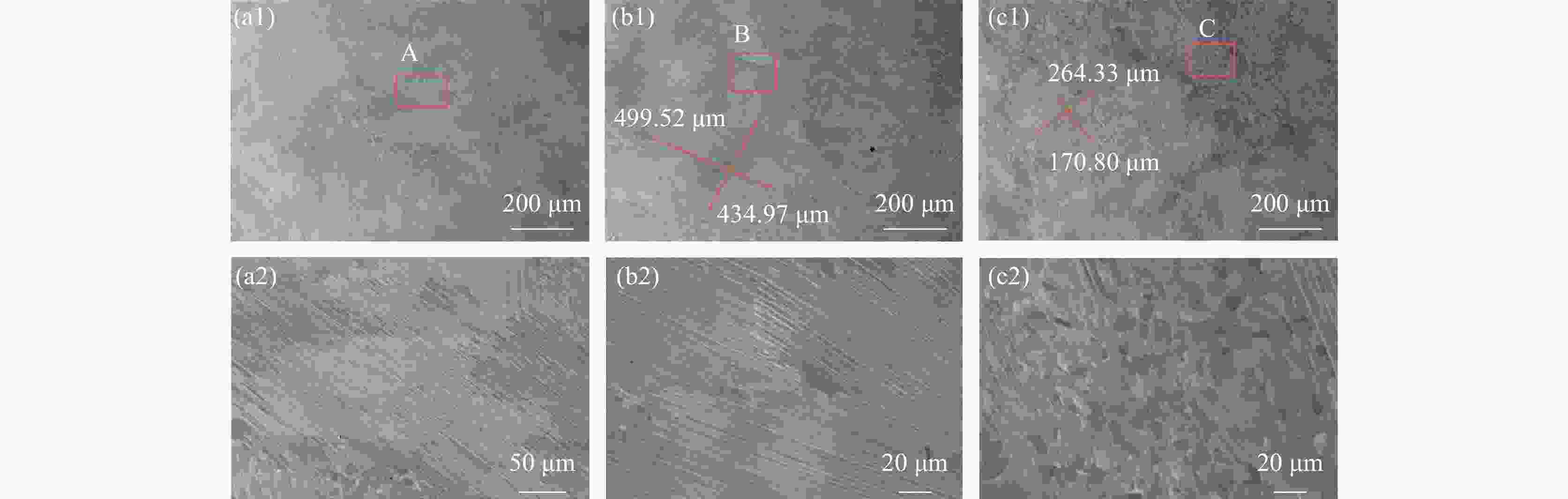
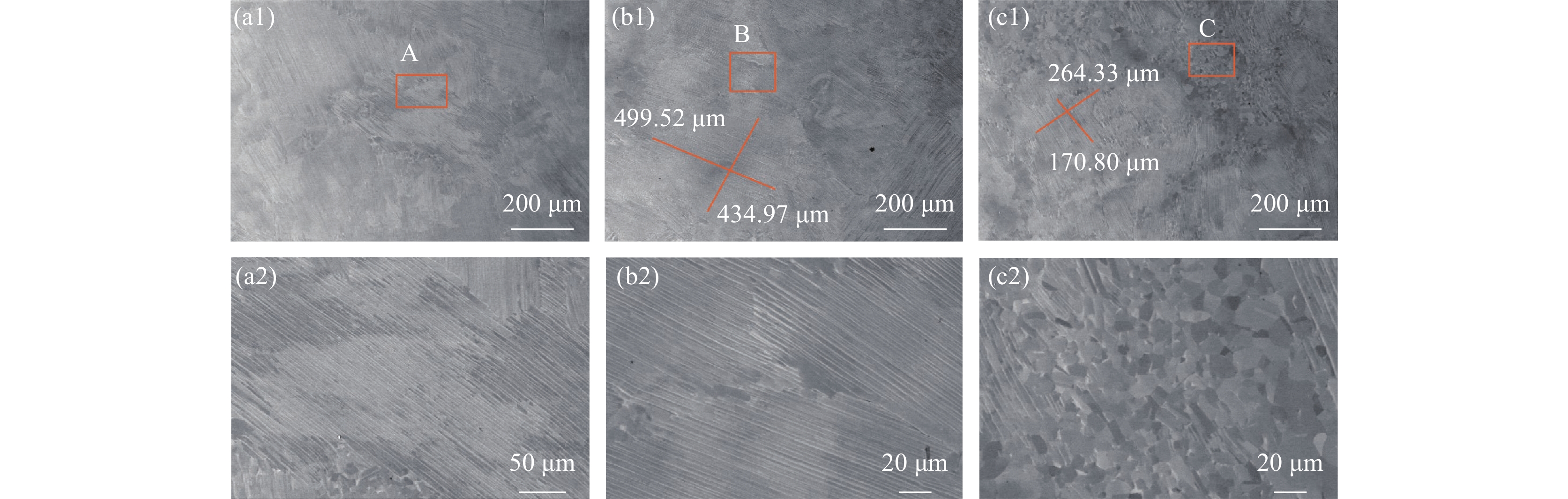
图 4 Ti-46Al-5Nb-0.1C合金的初始组织
(a1)区域1;(a2)为图(a1)中区域A的放大图;(b1)区域2;(b2)为图(b1)中区域B的放大图;(c1)区域3;(c2)为图(c1)中区域C的放大图
Figure 4. Initial microstructure of the Ti-46Al-5Nb-0.1C alloy
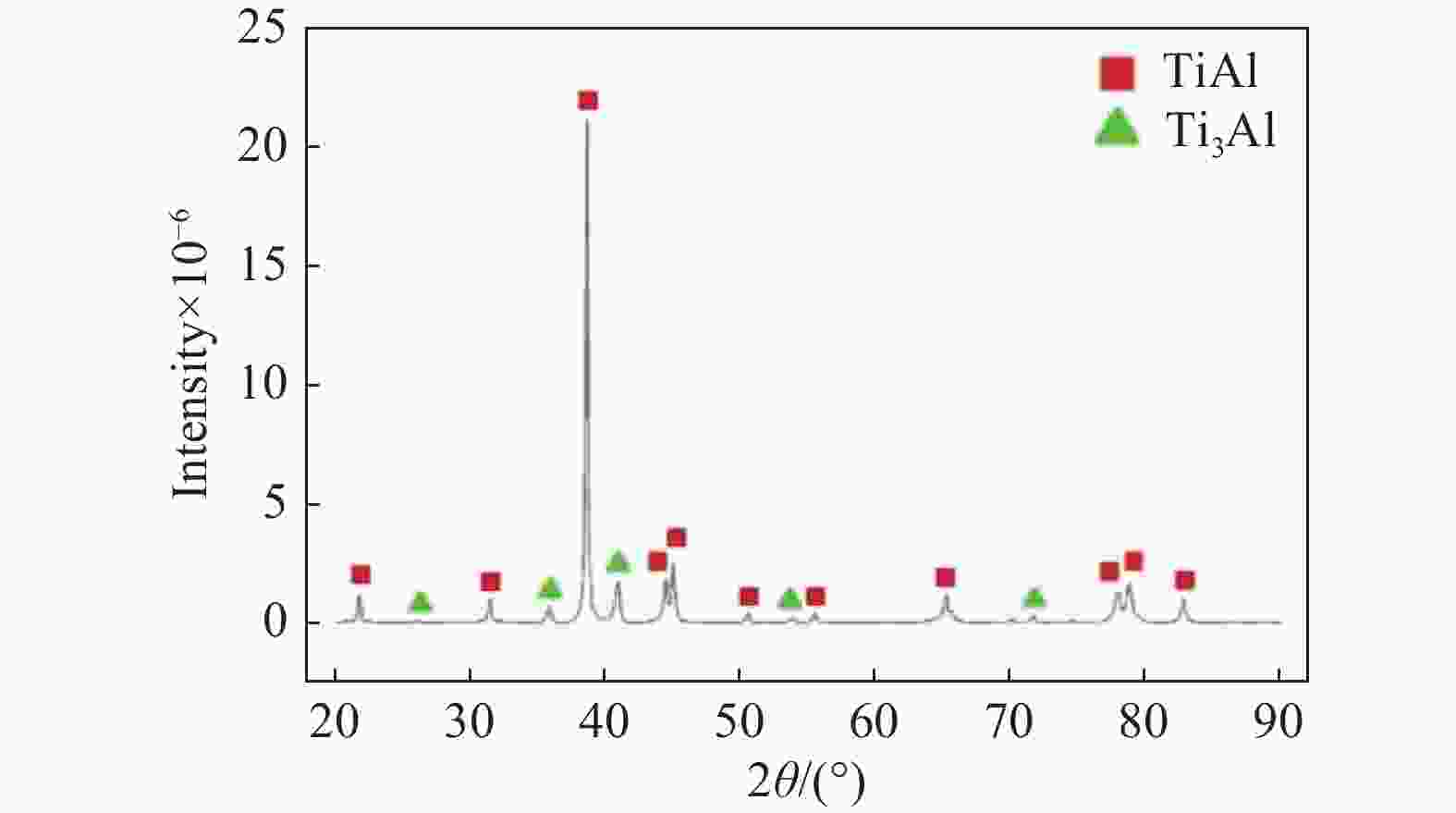
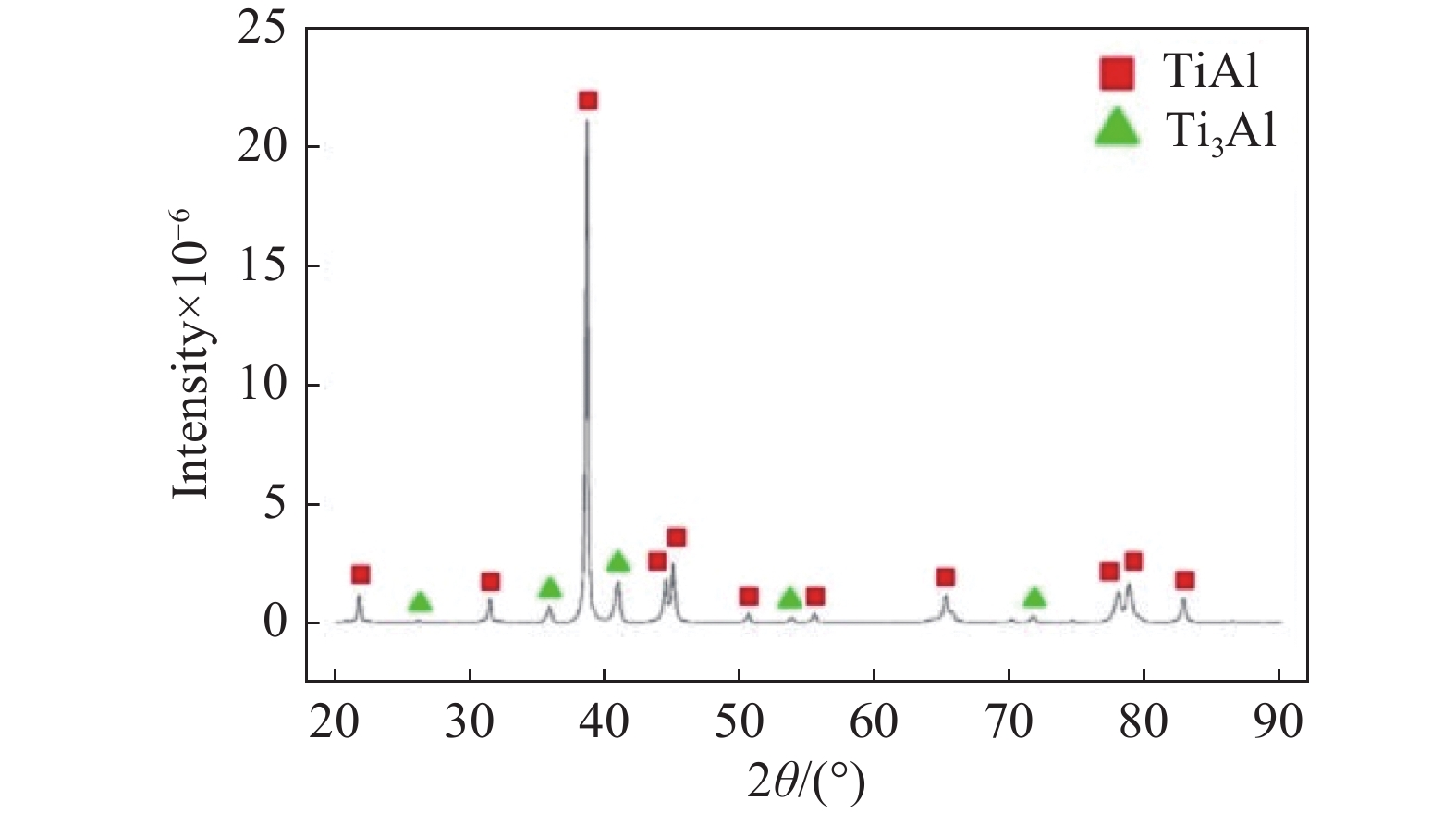
图 5 Ti-46Al-5Nb-0.1C合金的XRD测试结果
Figure 5. XRD (X-ray diffraction) results of the Ti-46Al-5Nb-0.1C alloy
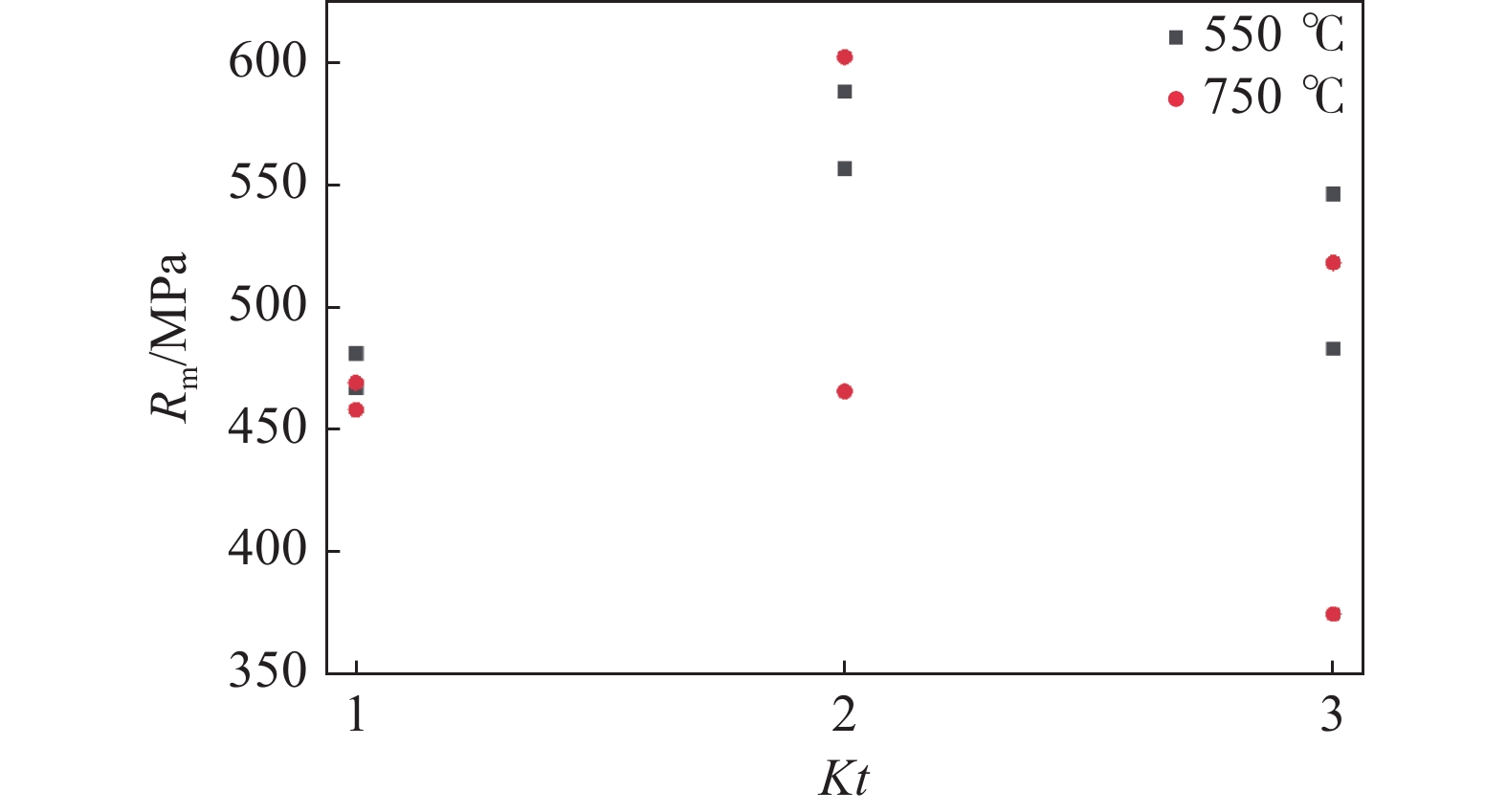
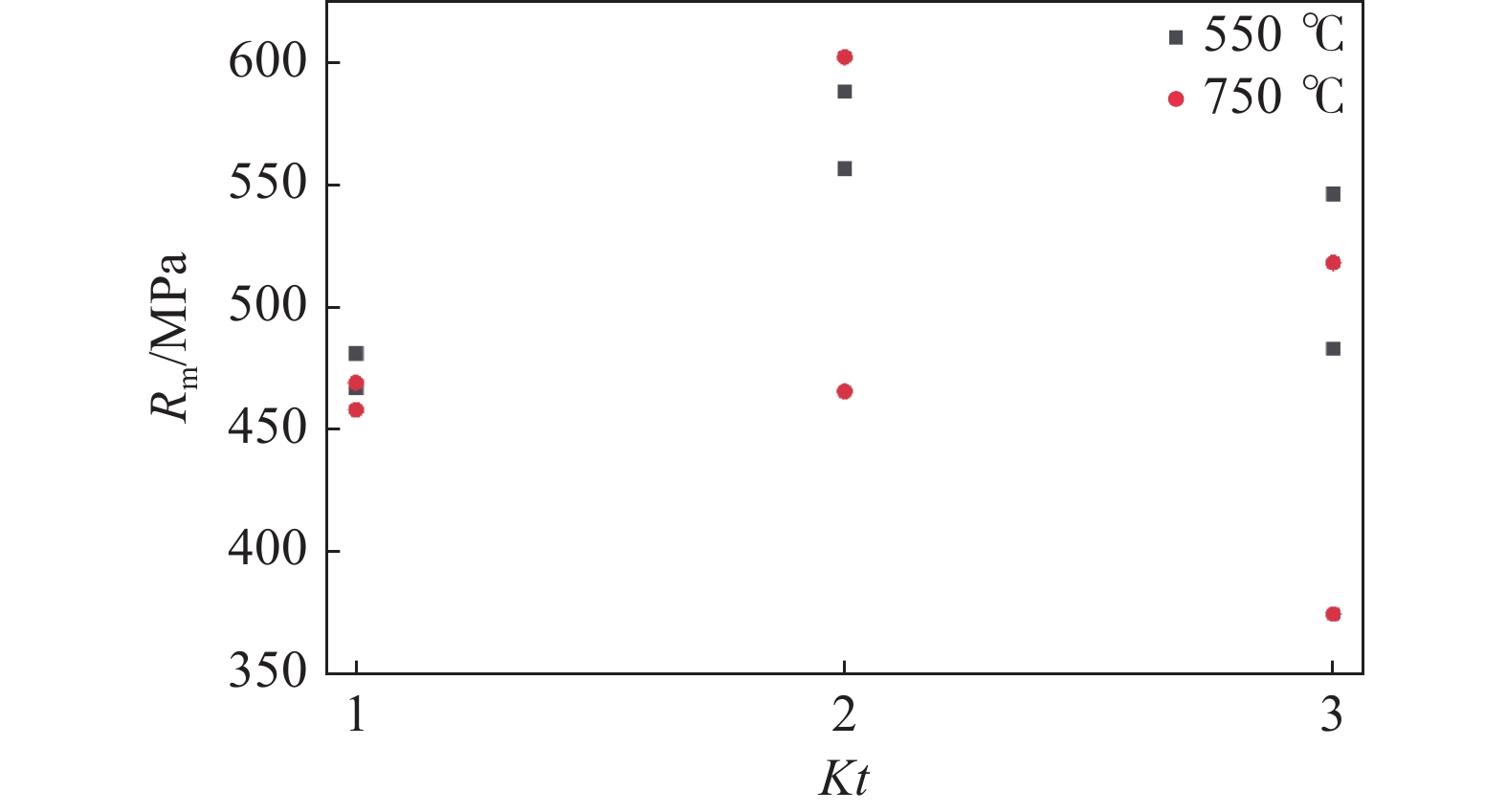
图 6 Ti-46Al-5Nb-0.1C合金高温抗拉强度随温度和理论应力集中系数的变化
Figure 6. Variation of high-temperature tensile strength of the Ti-46Al-5Nb-0.1C alloy with temperature and theoretical stress concentration factor
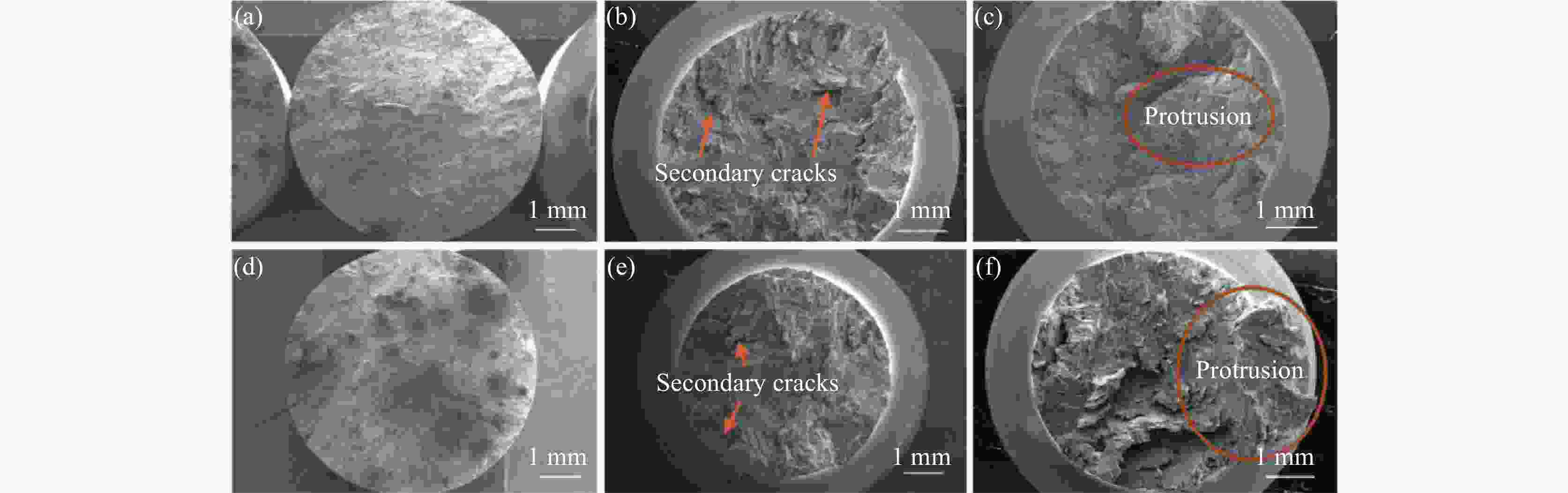
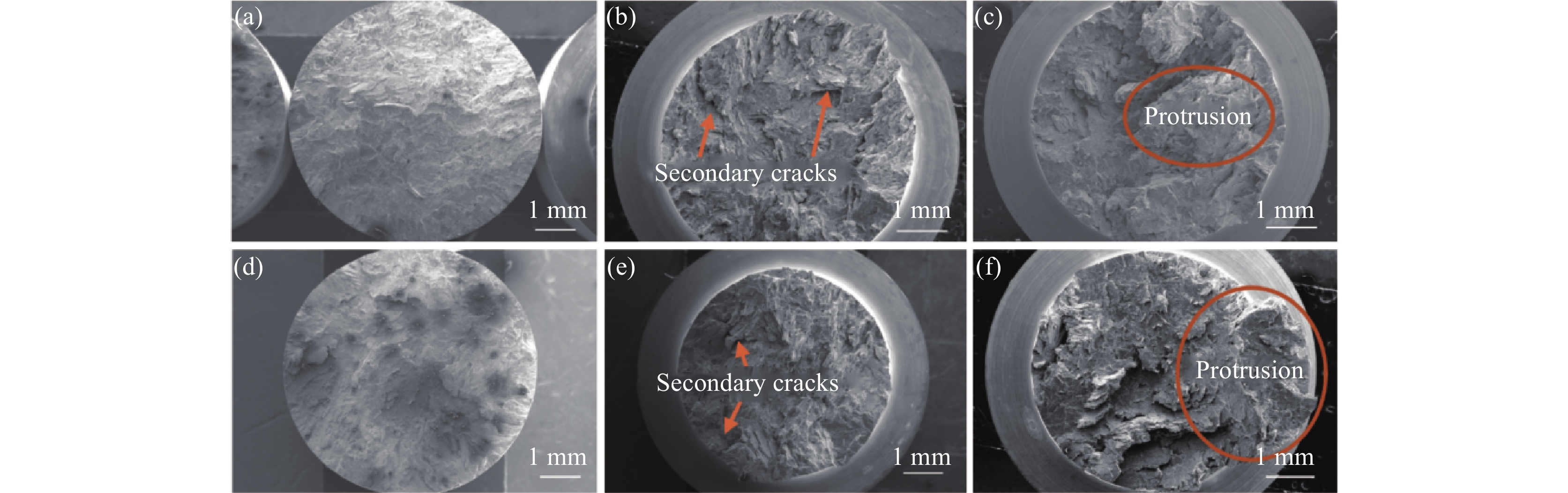
图 7 Ti-46Al-5Nb-0.1C合金不同温度和应力集中系数下的高温拉伸断口
Figure 7. High-temperature tensile fracture surfaces of Ti-46Al-5Nb-0.1C alloy at different temperatures and stress concentration coefficients
(a) 550 ℃,Kt=1;(b) 550 ℃,Kt=2;(c) 550 ℃,Kt=3;(d) 750 ℃,Kt=1;(e) 750 ℃,Kt=2;(f) 750 ℃,Kt=3

图 8 Ti-46Al-5Nb-0.1C合金拉伸断口的组成
(a)典型的沿片层裂纹源;(b)沿片层断裂;(c)穿片层断裂
Figure 8. Composition of tensile fracture surface of the Ti-46Al-5Nb-0.1C alloy

图 9 Ti-46Al-5Nb-0.1C合金550 ℃高温拉伸缺口处的断裂特性
Figure 9. Fracture characteristics of notch of the Ti-46Al-5Nb-0.1C alloy after tensile test at 550 ℃
(a)Kt=1;(b)Kt=2;(c)Kt=3

图 10 Ti-46Al-5Nb-0.1C合金裂纹的扩展方式
(a)桥接韧性带;(b)裂纹在3个片层团交界处的偏转;(c)沿片层团界面扩展的裂纹
Figure 10. Modes of crack propagation in the Ti-46Al-5Nb-0.1C alloy
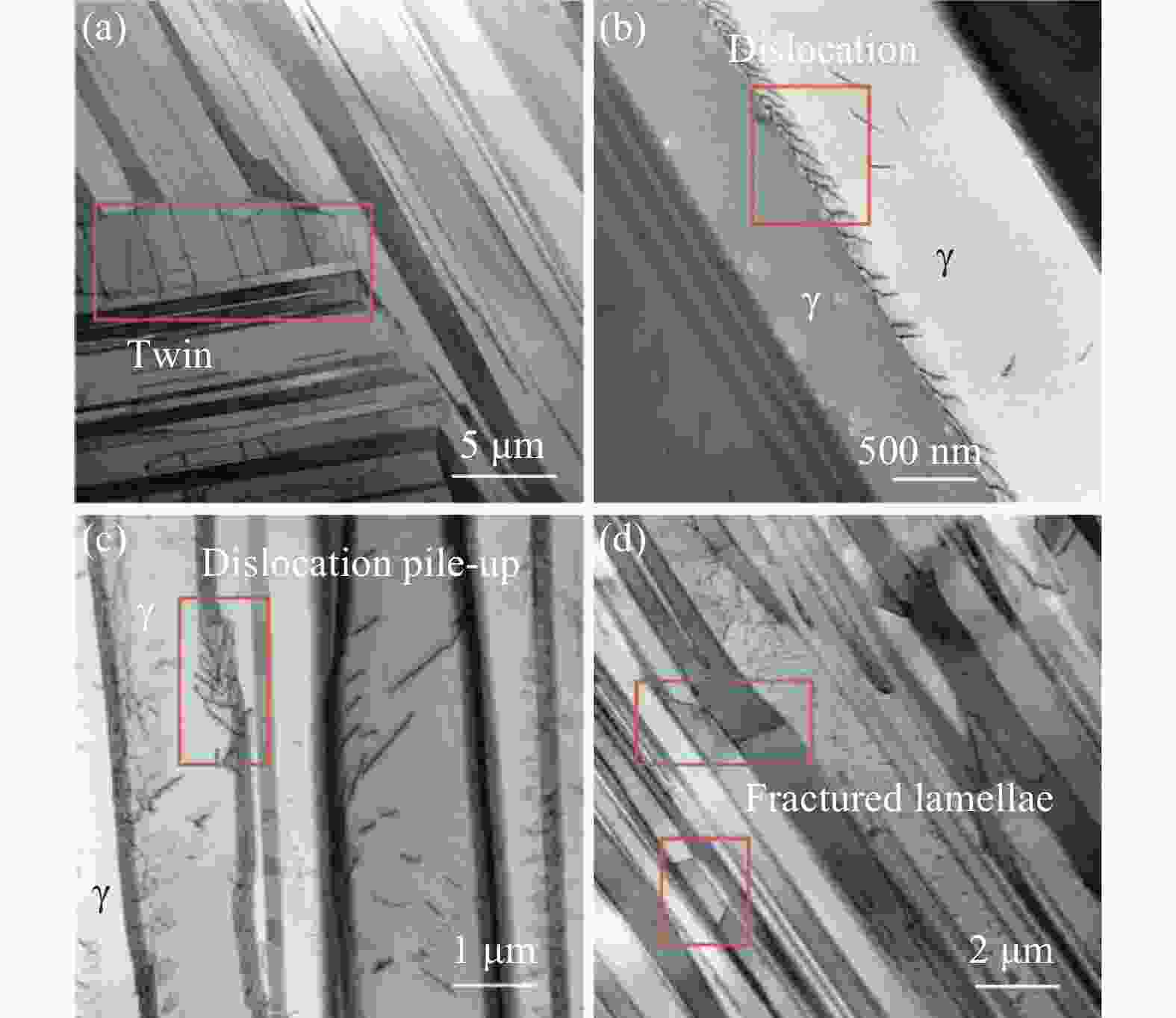
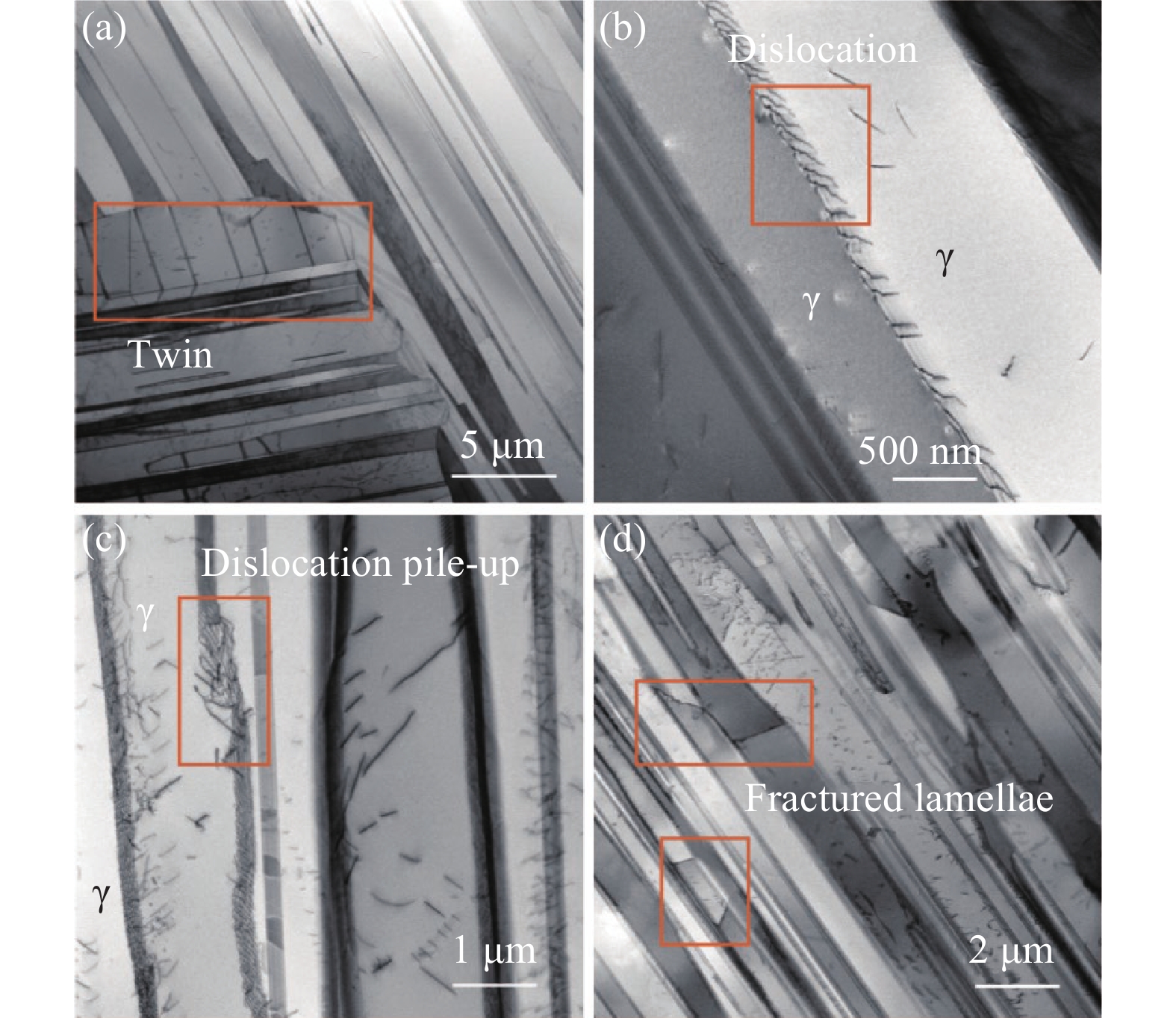
图 11 Ti-46Al-5Nb-0.1C合金拉伸断口高应力集中区的TEM表征结果
(a)γ晶粒内的变形孪晶;(b)γ/γ界面激活的位错;(c)γ片层内散布的短位错;(d)断裂的γ片层
Figure 11. TEM characterization results of tensile fracture in high-stress-concentration region of the Ti-46Al-5Nb-0.1C alloy
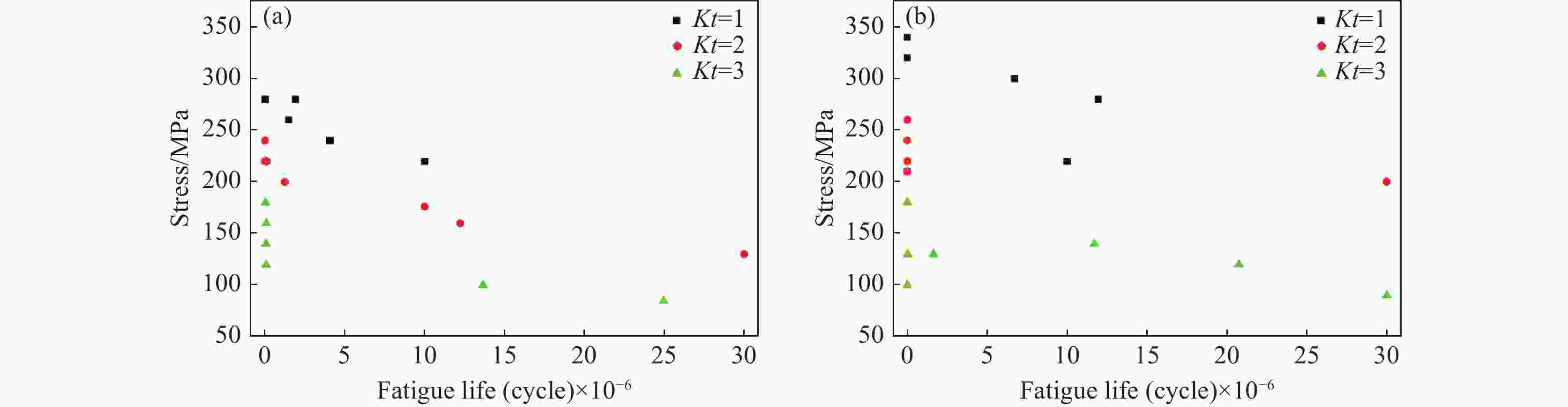
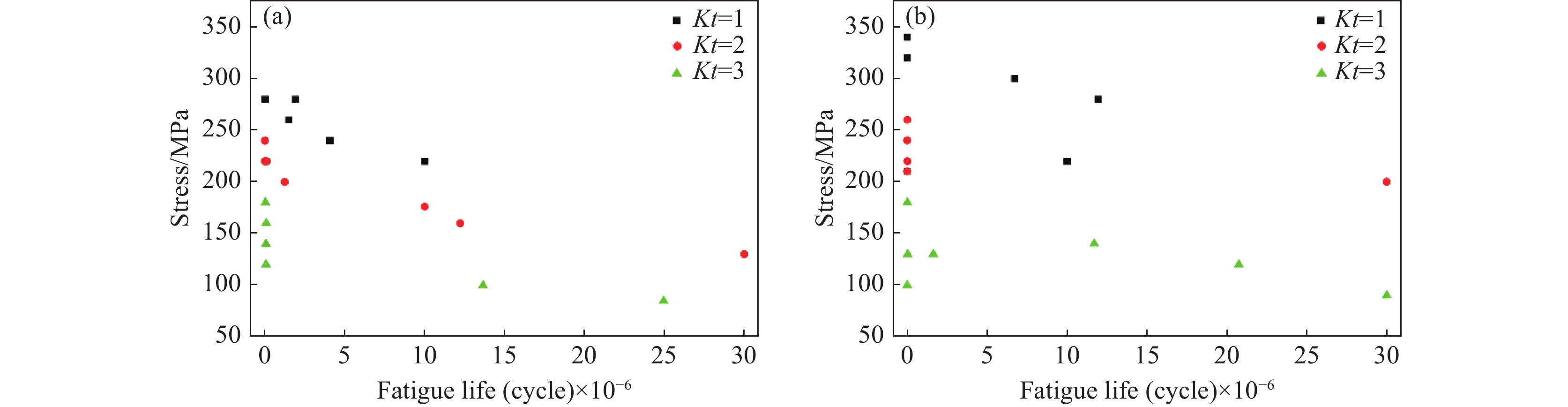
图 12 Ti-46Al-5Nb-0.1C合金疲劳S-N曲线随温度和理论应力集中系数的变化
(a)550 ℃;(b)770 ℃
Figure 12. Fatigue S-N curves of the Ti-46Al-5Nb-0.1C alloy varying with temperature and theoretical stress concentration factor
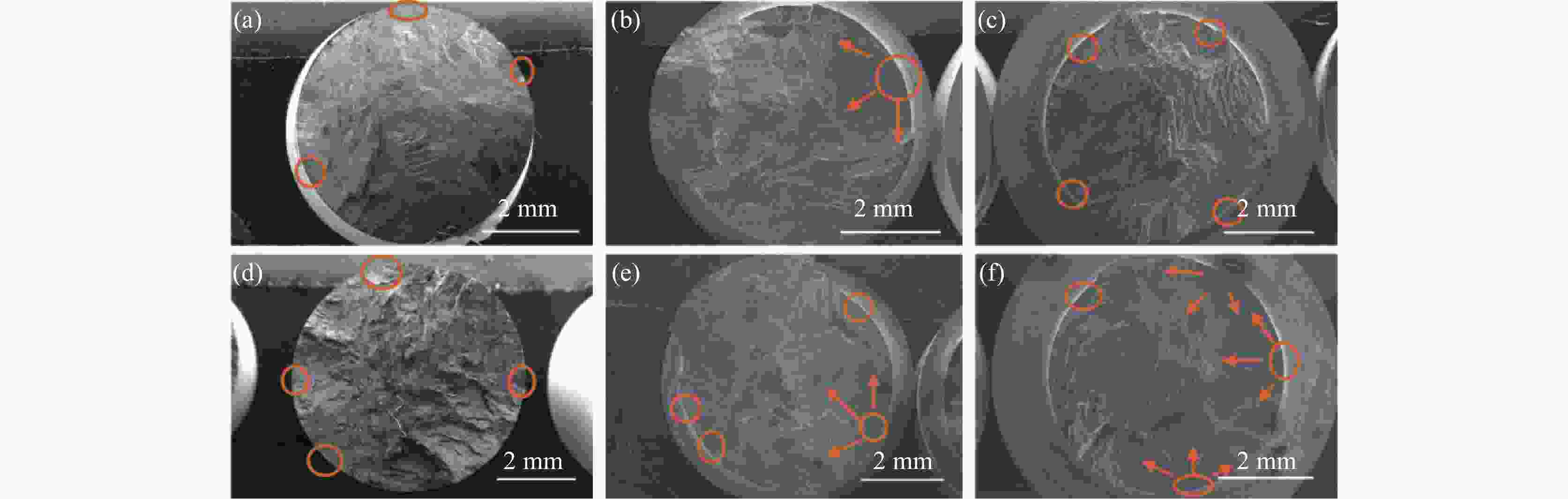
图 13 Ti-46Al-5Nb-0.1C合金不同温度和应力集中系数下的高温疲劳断口
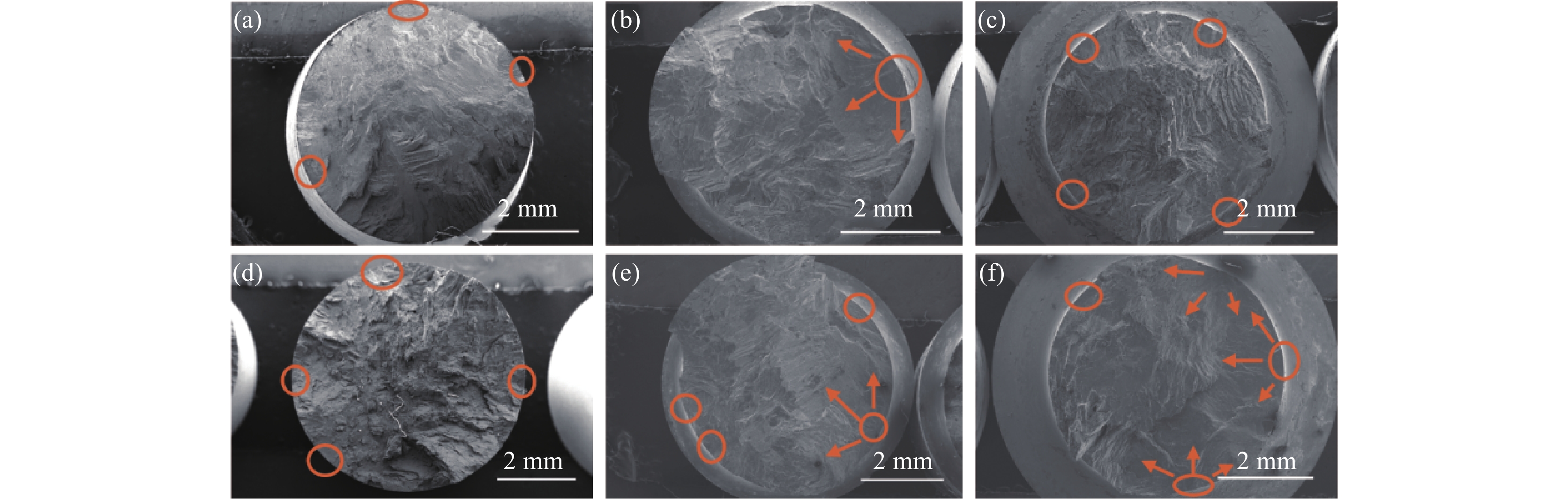
Figure 13. High-temperature fatigue fracture surfaces of Ti-46Al-5Nb-0.1C alloy at different temperatures and stress concentration factors
(a) 550 ℃, Kt=1; (b) 550 ℃, Kt=2; (c) 550 ℃, Kt=3; (d) 700 ℃, Kt=1; (e) 700 ℃, Kt=2; (f) 700 ℃, Kt=3
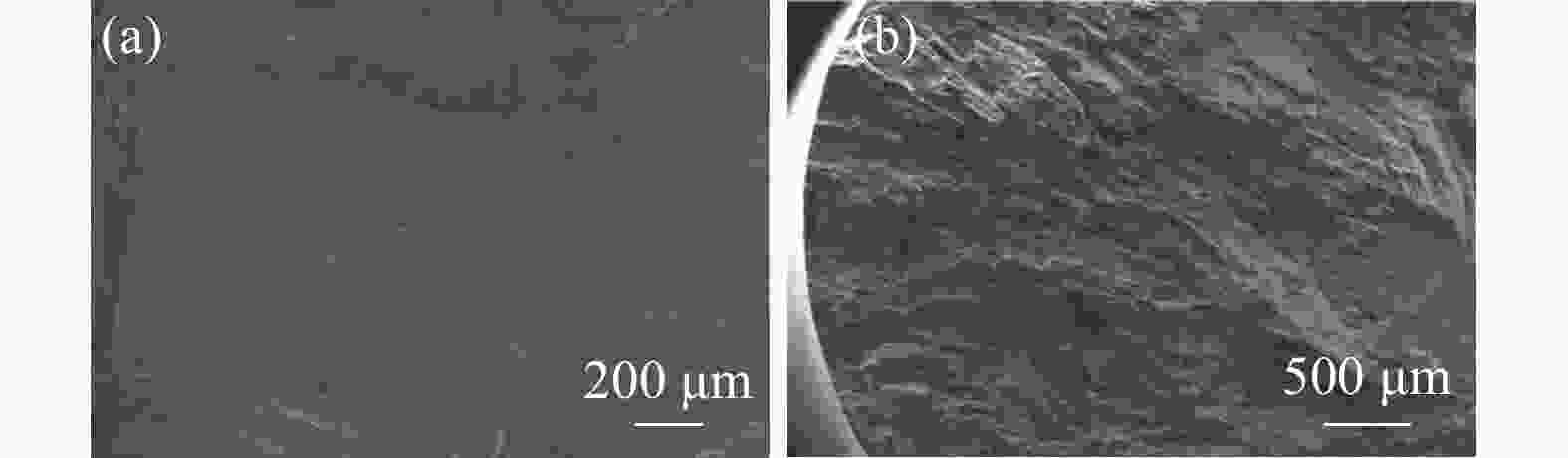
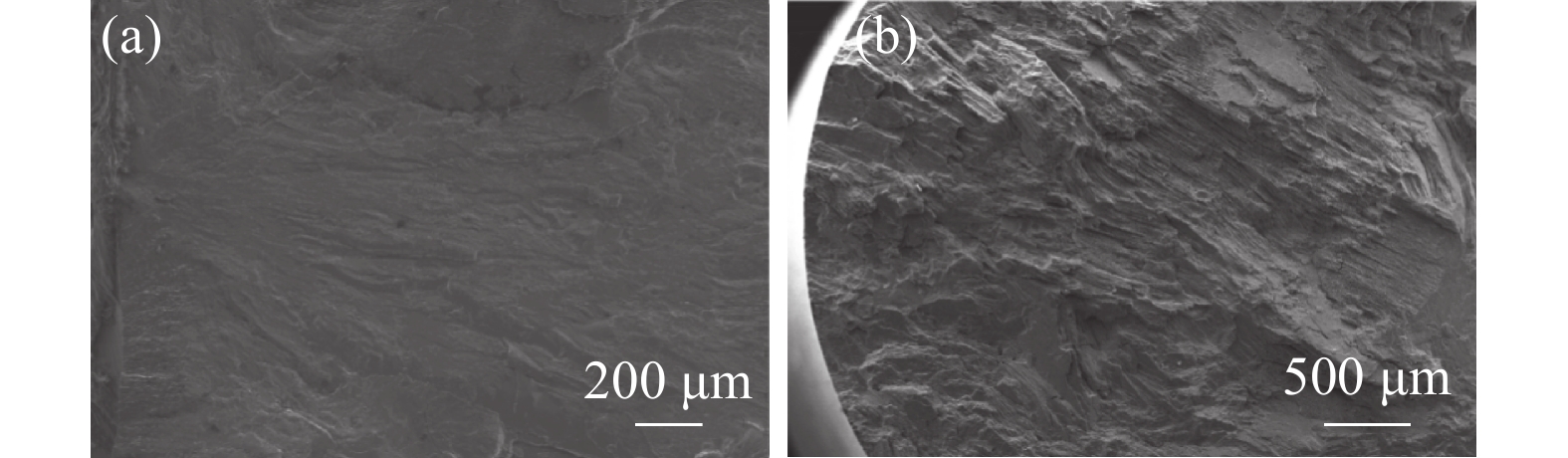
图 14 Ti-46Al-5Nb-0.1C合金高温疲劳断口特性
(a)较长的裂纹扩展区;(b)单向断裂
Figure 14. High-temperature fatigue fracture characteristics of the Ti-46Al-5Nb-0.1C alloy

图 15 Ti-46Al-5Nb-0.1C合金550 ℃高温疲劳断口处的断裂特性
Figure 15. Fracture characteristics at fatigue notch of the Ti-46Al-5Nb-0.1C alloy after tensile test at 550 ℃
(a)Kt=1;(b)Kt=2;(c)Kt=3
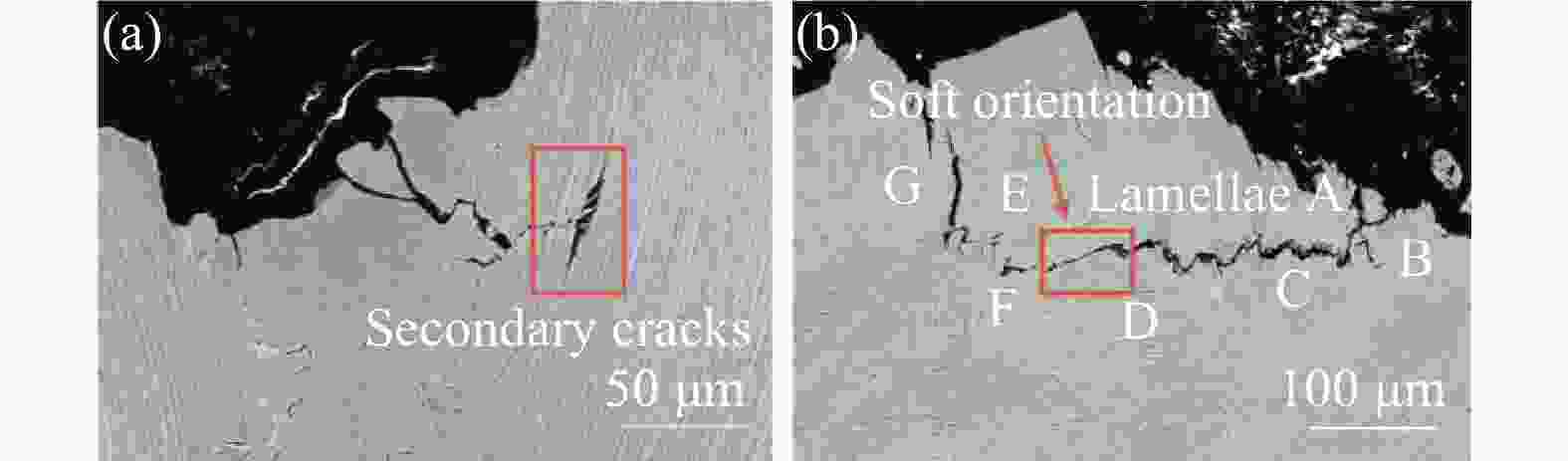
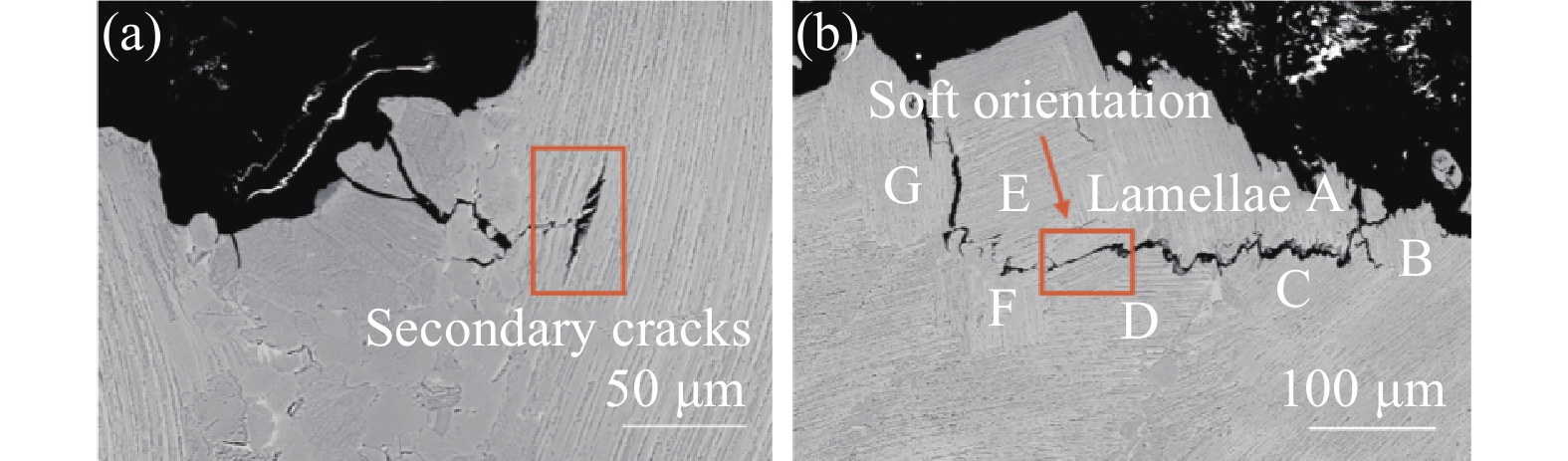
图 16 Ti-46Al-5Nb-0.1C合金中疲劳裂纹的扩展形式
(a)γ片层对裂纹的阻碍;(b)疲劳裂纹的扩展
Figure 16. Modes of fatigue crack propagation in the Ti-46Al-5Nb-0.1C alloy
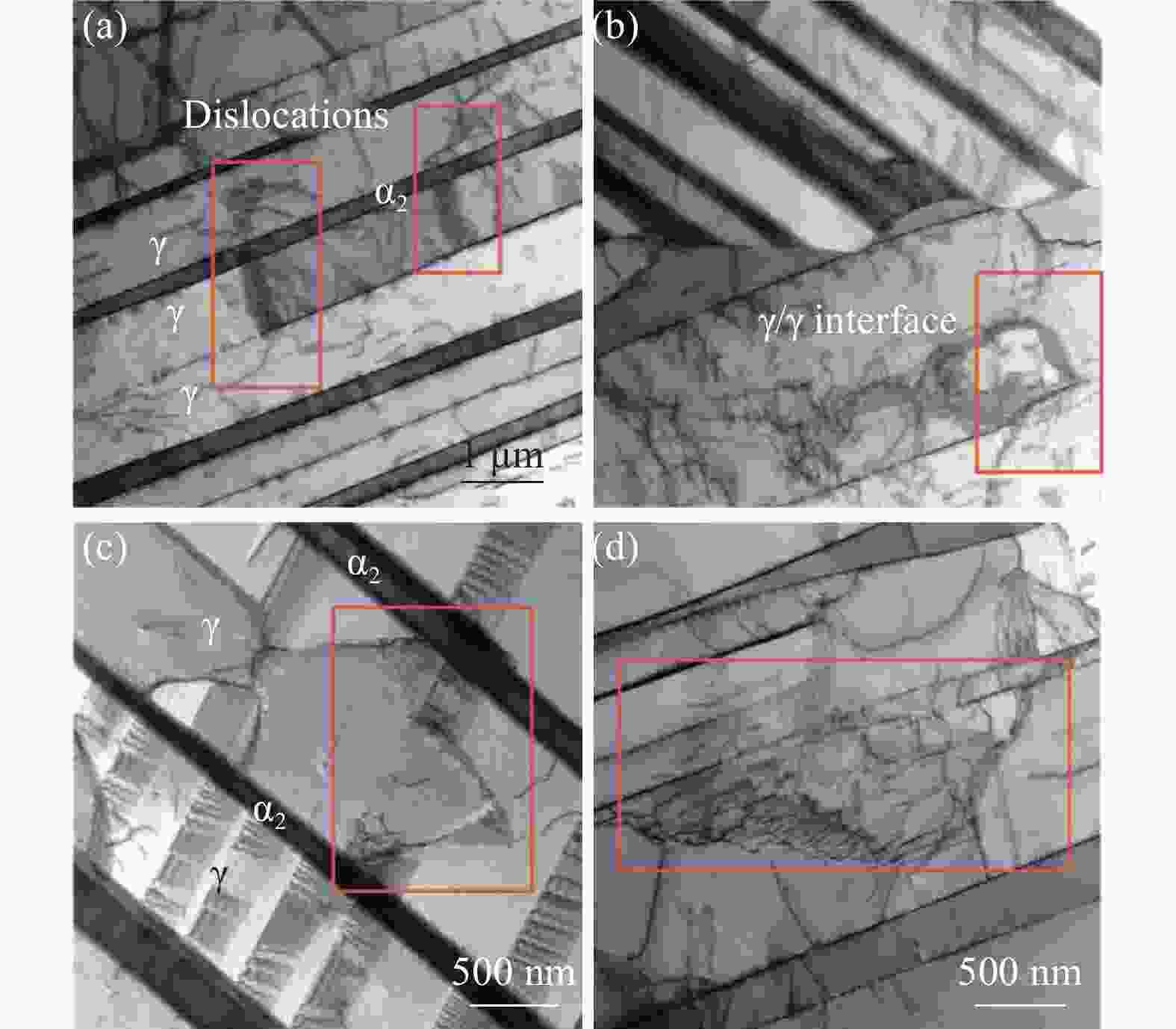
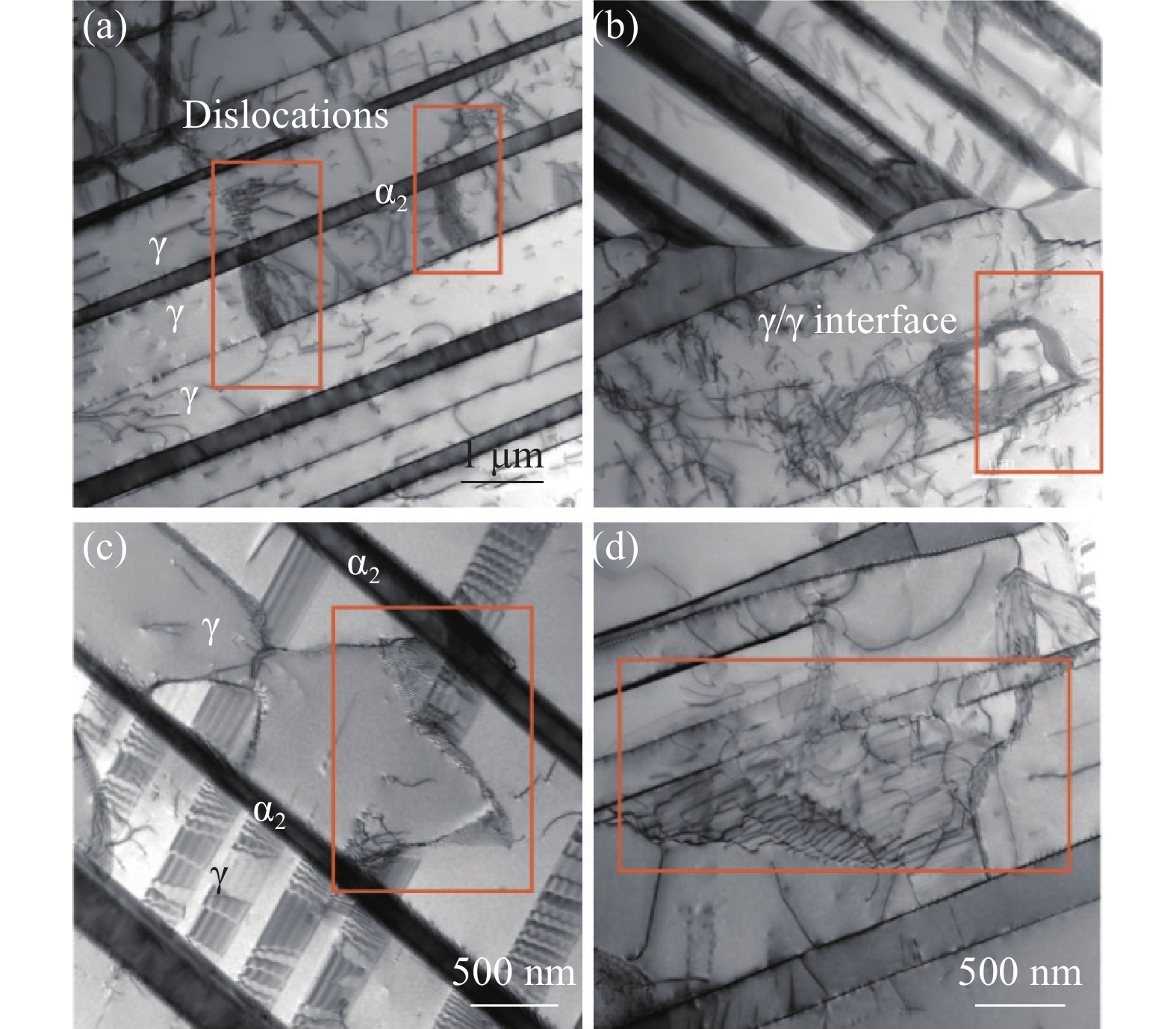
图 17 Ti-46Al-5Nb-0.1C合金形变组织的TEM表征结果
(a)片层团内塞积的位错;(b)片层团界面处塞积的位错;(c)(d)γ片层的形变
Figure 17. TEM characterization results of deformed microstructure for the Ti-46Al-5Nb-0.1C alloy
表 1 Ti-46Al-5Nb-0.1C合金成分测试结果
Table 1. Chemical composition of the Ti-46Al-5Nb-0.1C alloy used in this study
% Ti Al Nb C N O H 57.6483 26.95 12.33 0.022 0.004 0.044 0.0017  下载: 导出CSV
表 2 Ti-46Al-5Nb-0.1C合金高温拉伸测试结果
Table 2. High-temperature tensile test results for the Ti-46Al-5Nb-0.1C alloy
T/℃ Kt Rm/MPa Average/MPa NSR 550 1 467 474 1 1 481 2 588 572.25 1.21 2 556.5 3 546 514.5 1.09 3 483 750 1 469 463.5 1 1 458 2 465.5 533.75 1.15 2 602 3 518 446.25 0.96 3 374.5
下载: 导出CSV
表 3 Ti-46Al-5Nb-0.1C合金550 ℃疲劳应力集中测试结果
Table 3. Fatigue stress concentration test results for the Ti-46Al-5Nb-0.1C alloy at 550 ℃
Kt=1 Kt=2 Kt=3 Fatigue life/
CyclePeak
stress/
MPaFatigue life/
CyclePeak
stress/
MPaFatigue life/
CyclePeak
stress/
MPa20180 280 6580 220 43059 180 1.50987 $ \times $106260 7638 240 71551 120 1.92212 $ \times $106280 127984 220 73089 140 4.06789 $ \times $106240 1.24143 $ \times $106200 82829 160 1$ \times $107 220 1.22294 $ \times $107160 1.36482 $ \times $107100 1$ \times $107 176 2.49418 $ \times $10785 3$ \times $107 130
下载: 导出CSV
表 4 Ti-46Al-5Nb-0.1C合金700 ℃疲劳应力集中测试结果
Table 4. Fatigue stress concentration test results for the Ti-46Al-5Nb-0.1C alloy at 700 ℃
Kt=1 Kt=2 Kt=3 Fatigue life/
CyclePeak
stress/
MPaFatigue life/
CyclePeak
stress/
MPaFatigue life/
CyclePeak
stress/
MPa3105 320 4772 210 5442 100 3818 340 5992 240 8729 180 4772 210 14639 220 28593 130 6.72186 $ \times $106300 15586 260 1.63893 $ \times $106130 1.19557 $ \times $107280 3$ \times $107 200 1.17079 $ \times $107140 1$ \times $107 220 2.07497 $ \times $107120 3$ \times $107 90
下载: 导出CSV
-
[1] KIM Y W. Effects of microstructure on the deformation and fracture of γ-TiAl alloys[J]. Materials Science and Engineering: A, 1995, 192-193: 519-533. [2] APPEL F, OEHRING M, WAGNER R. Novel design concepts for gamma-base titanium aluminide alloys[J]. Intermetallics, 2000, 8(9-11): 1283-1312. doi: 10.1016/S0966-9795(00)00036-4 [3] PERRUT M, CARON P, THOMAS M, et al. High temperature materials for aerospace applications: Ni-based superalloys and γ-TiAl alloys[J]. Comptes Rendus Physique, 2018, 19(8): 657-671. doi: 10.1016/j.crhy.2018.10.002 [4] BEWLAY B P, NAG S, SUZUKI A, et al. TiAl alloys in commercial aircraft engines[J]. Materials at High Temperatures, 2016, 33(4-5): 549-559. doi: 10.1080/09603409.2016.1183068 [5] CHEN G, PENG Y B, ZHENG G, et al. Polysynthetic twinned TiAl single crystals for high-temperature applications[J]. nature materials, 2016, 15: 876-881. doi: 10.1038/nmat4677 [6] BEWLAY B P, WEIMER M, KELLY T, et al. The science, technology, and implementation of TiAl alloys in commercial aircraft engines[J]. MRS Online Proceedings Library, 2013, 1516: 49-58. doi: 10.1557/opl.2013.44 [7] LIU Y X, ZHOU W B, HUA L, et al. Investigation of the microstructure evolution and mechanical properties of cast Ti–47Al–2Cr–2Nb alloy during ultra-high pressure heat treatment[J]. Materials Science and Engineering: A, 2024, 912: 146967. doi: 10.1016/j.msea.2024.146967 [8] WANG Q, SONG J X, XIAO C B, et al. A cross-scale study on synergistic deformation mechanisms between the grain boundary orientation and carbide morphology in nickel-based superalloys[J]. Materials Science and Engineering: A, 2025, 935: 148369. doi: 10.1016/j.msea.2025.148369 [9] DONG C L, YU H C, JIAO Z H, et al. Low cycle fatigue, creep and creep-fatigue interaction behavior of a TiAl alloy at high temperatures[J]. Scripta Materialia, 2018, 144: 60-63. doi: 10.1016/j.scriptamat.2017.09.016 [10] LINTNER A, PIPPAN R, SCHIOFFER M, et al. Effect of a single overload on the cyclic R-curve behaviour of a γ-TiAl TNM alloy[J]. International Journal of Fatigue, 2022, 163: 107083. doi: 10.1016/j.ijfatigue.2022.107083 [11] WU Y, LIU J R, WANG H, et al. Effect of stress ratio on very high cycle fatigue properties of Ti-10V-2Fe-3Al alloy with duplex microstructure[J]. Journal of Materials Science & Technology, 2018, 34(7): 1189-1195. doi: 10.1016/j.jmst.2017.11.036 [12] SAKAGUCHI M, NIWA Y, GONG W X, et al. Temperature dependent fatigue crack growth in forged TiAl alloys with nearly-lamellar and triplex microstructure[J]. Materials Science and Engineering: A, 2021, 806: 140802. doi: 10.1016/j.msea.2021.140802 [13] HONG S G, YOON S, LEE S B. The effect of temperature on low-cycle fatigue behavior of prior cold worked 316L stainless steel[J]. International Journal of Fatigue, 2003, 25(9-11): 1293-1300. [14] YAMAZAKI Y, SUGAYA R, KOBAYASHI U, et al. Effects of thermal cycling and microstructure on the fatigue crack propagation in forged titanium–aluminide alloys under thermomechanical fatigue conditions[J]. Materials Science and Engineering: A, 2020, 797: 140248. doi: 10.1016/j.msea.2020.140248 [15] ZEILER S, LINTNER A, SCHLOFFER M, et al. Microstructural influences on fatigue threshold behavior and fracture toughness of an additively manufactured γ-titanium aluminide[J]. Intermetallics, 2023, 156: 107852. doi: 10.1016/j.intermet.2023.107852 [16] XU X S, DING H S, LI W, et al. The microstructure and high cycle fatigue performance of as-cast and directionally solidified Ti46Al7Nb alloy under the three-point bending loading[J]. Materials Science and Engineering: A, 2021, 822: 141633. doi: 10.1016/j.msea.2021.141633 [17] BODE B, WESSEL W, BRUECKNER-FOIT A, et al. Local deformation at micro‐notches and crack initiation in an intermetallic γ‐TiAl‐alloy[J]. Fatigue & Fracture of Engineering Materials & Structures, 2015, 39(2): 227-237. doi: 10.1111/ffe.12356 [18] GLOANEC A L, JOUIAD M, BERTHEAU D, et al. Low-cycle fatigue and deformation substructures in an engineering TiAl alloy[J]. Intermetallics, 2007, 15(4): 520-531. doi: 10.1016/j.intermet.2006.09.003 [19] DING J, ZHANG M H, YE T, et al. Microstructure stability and micro-mechanical behavior of as-cast gamma-TiAl alloy during high-temperature low cycle fatigue[J]. Acta Materialia, 2018, 145: 504-515. doi: 10.1016/j.actamat.2017.12.040 [20] SUN G Z, HE J L, CAO R, et al. On the role of weak interface in the high cycle fatigue damage mechanism at elevated temperature in forged TNM-TiAl alloy[J]. International Journal of Fatigue, 2026, 202: 109242. doi: 10.1016/j.ijfatigue.2025.109242 [21] MILKE J G, BEUTH J L, BIERY N E. Notch strengthening in titanium aluminides under monotonic loading[J]. Experimental Mechanics, 2000, 40: 415-424. doi: 10.1007/BF02326488 [22] KERR D C, STAUBLI M, NAZMY M, et al. Effects of the state of stress on the tensile and creep properties of γ-TiAl[J]. The Journal of Strain Analysis for Engineering Design, 1997, 32(2): 97-105. doi: 10.1243/0309324971513247 [23] CAO R, WEN J X, LIU H J, et al. Notch sensitivity and failure behavior of TiAl and K418 alloys[J]. Journal of Materials Engineering and Performance, 2018, 27: 3374-3385. doi: 10.1007/s11665-018-3440-5 [24] YUE X G, ZHOU Z H, MA Y, et al. Notch fracture properties of TiAl intermetallic compounds[J]. Acta Aeronautica et Astronautica Sinica, 2010, 31(9): 1900-1906. [25] XU X S, DING H S, LI W, et al. The smooth and notched three-point bending fatigue behavior of directionally solidified high-Nb TiAl alloy[J]. Materials Characterization, 2021, 181: 111444. doi: 10.1016/j.matchar.2021.111444 [26] STRZELECKI P. Scatter of fatigue life regarding stress concentration factor[J]. Procedia Structural Integrity, 2018, 13: 631-635. doi: 10.1016/j.prostr.2018.12.104 [27] LIU J H, HUA F L, LANG S S, et al. Evaluation of fatigue strength on multiaxial notched specimenss considering failure probability[J]. International Journal of Fatigue, 2022, 156: 106649. doi: 10.1016/j.ijfatigue.2021.106649 -







计量
- 文章访问数: 0
- HTML全文浏览量: 0
- PDF下载量: 0
- 被引次数: 0